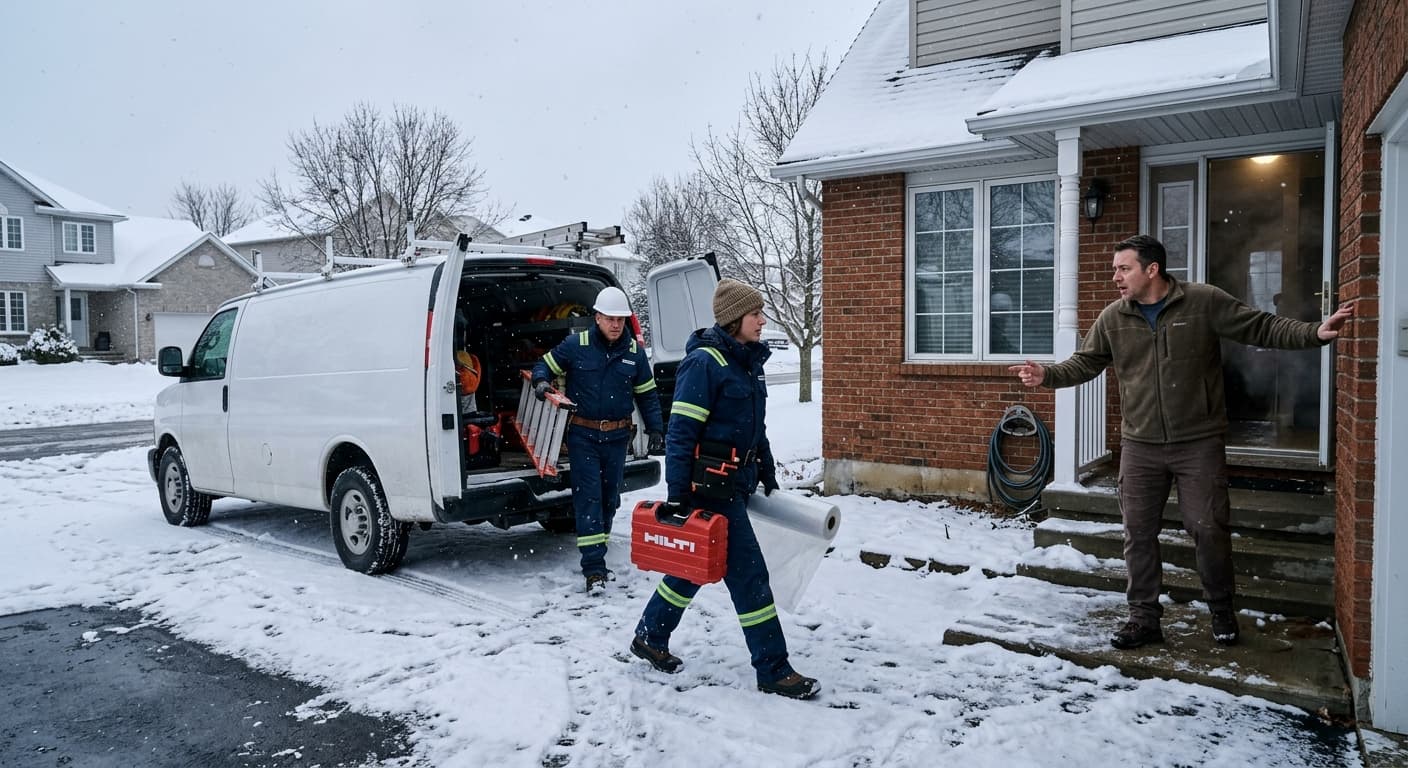
Emergency Contractor Guide: How to Find Help Fast During Home Crises
It's 2 AM on a Tuesday in January. You wake up to a strange dripping sound. By the time you reach the basement, you're standing in three inches of water. A pipe has burst. Your furnace is now soaking wet. And you need an emergency contractor immediately but have absolutely no idea who to call.
This scenario plays out thousands of times every winter across the country. When your home faces an urgent crisis (burst pipes, failed heating, electrical failures, roof damage from ice dams) finding a trustworthy emergency contractor at 2 AM, during a holiday weekend, or in the middle of a winter storm can feel like a problem with no good solution.
The risk is real and measurable. Choose the wrong emergency contractor, and you might pay 3-4 times the fair price, get shoddy work that creates bigger problems, or invite an unlicensed scammer into your home during your most vulnerable moment. But waiting too long to act can turn a $500 repair into a $15,000 disaster.
Before you read further: Download our free Emergency Contractor Contact Sheet (PDF) so you can fill it in as you go. Having this completed and posted on your refrigerator before a crisis hits is the single most valuable thing you can do today.
This guide walks you through exactly how to find, vet, and hire an emergency contractor when every minute counts, without getting taken advantage of when you're desperate.
Note: Emergency contractor availability, pricing, and licensing requirements vary significantly by region. This guide reflects general best practices; check your local and state regulations for specifics.
When You Actually Need an Emergency Contractor: True vs. False Emergencies
Not every broken thing in your home requires an emergency contractor. The distinction matters because emergency rates typically run 1.5 to 3 times higher than standard service calls, according to data from the Bureau of Labor Statistics occupational outlook for plumbers and electricians.
Situations That Require Immediate Professional Help
A true home emergency threatens your safety, your property, or both. These situations justify calling an emergency contractor right away:
Water emergencies include burst pipes, major leaks that can't be stopped with the main shutoff, sewage backups, water heater failures with active flooding, and sump pump failures during heavy rain. Water damage accelerates exponentially. What starts as a small leak can cause $20,000 in mold remediation costs within 48 hours. According to the EPA's mold guidance, mold can begin growing within 24-48 hours of water exposure.
Heating failures in winter become emergencies when outdoor temperatures drop below freezing. Without heat, your pipes can freeze and burst within hours. If you have young children, elderly family members, or anyone with health conditions in the home, heating failures require immediate attention regardless of temperature.
Electrical hazards like sparking outlets, burning smells from electrical panels, exposed live wires, or complete power loss (after confirming it's not a utility issue) demand immediate professional response. The National Fire Protection Association (NFPA) reports that electrical failures are a leading cause of home fires. Always consult a licensed electrician for any electrical work beyond flipping breakers.
Structural dangers including major roof damage during storms, broken windows during severe weather, or compromised structural supports need urgent attention to prevent further damage and maintain security.
Problems That Can Wait Until Morning
Plenty of issues feel urgent but can safely wait for regular business hours. This distinction saves you real money on emergency rates.
A furnace that stops working when it's 45 degrees outside is uncomfortable but not dangerous. You can use space heaters safely for one night. A small roof leak with a bucket underneath it won't cause catastrophic damage overnight. A clogged toilet in a house with multiple bathrooms is annoying but not an emergency.
The general rule: if you can safely contain or work around the problem for 12-24 hours without risking injury or major property damage, wait for regular rates. Practice locating your shutoff valves now, while nothing is broken. That five minutes of preparation changes everything during a real crisis.
The Real Costs of Emergency Contractor Services
Understanding emergency contractor pricing helps you avoid panic-driven overpayment while recognizing what's actually reasonable for after-hours service.
Standard Emergency Rate Structures
An emergency contractor typically charges using one of three pricing models. The trip charge plus hourly rate model includes a flat fee just for showing up (typically $150-$400) plus hourly rates that run $150-$300 per hour depending on the trade and your location. Plumbers and electricians often use this structure.
The flat emergency fee approach charges a single price for the entire job, quoted after the emergency contractor assesses the situation. This works for straightforward repairs like replacing a water heater or fixing a specific electrical issue.
The time-multiplier system applies a premium to normal rates based on when you call. Evening calls (6 PM-midnight) might cost 1.5 times normal rates. Late night (midnight-6 AM) jumps to 2-2.5 times normal rates. Holidays can hit 3 times normal pricing.
What You Should Actually Expect to Pay
For a burst pipe emergency at 3 AM, expect total costs between $500-$1,200 for a straightforward repair. This includes the emergency call fee, 2-3 hours of labor, and basic materials. If walls need to be opened or multiple pipes are affected, costs can reach $2,000-$3,500.
Emergency furnace repairs typically run $400-$800 for common issues like igniter replacement or thermostat problems. Complete system failures requiring major component replacement can hit $1,500-$3,000 in emergency situations.
Electrical emergencies vary widely, but expect $350-$900 for issues like panel repairs, outlet replacements, or fixing specific circuit problems. Whole-house electrical failures requiring extensive troubleshooting can exceed $1,500.
If a quote falls far outside these ranges, push back. If you're quoted $2,000 for a repair that should cost $800, say: "That's significantly above the typical range for this repair. Can you break down the labor, materials, and fees separately?" A legitimate emergency contractor will explain the cost. A scammer will pressure you to just agree. If the breakdown doesn't add up, call a second contractor. Even at 3 AM, a 30-minute wait for another quote beats a $1,200 overpayment.
How to Reduce Emergency Costs Without Compromising Quality
When possible, contain the immediate crisis yourself before the emergency contractor arrives. Shut off the main water valve for plumbing emergencies. Turn off power at the breaker for electrical issues. This reduces the contractor's urgency-driven labor time.
Ask whether any portion of the work can wait until regular business hours. An emergency contractor might stop an active leak at 2 AM, then return at 9 AM to complete the full repair at standard rates.
If you have a home warranty or homeowners insurance that covers the emergency, understand your coverage before calling. Some policies require you to use specific contractors or follow particular procedures. For more details on whether these policies make financial sense, you might want to review whether home warranties are worth the investment.
Finding 24/7 Emergency Contractors Before You Need Them
The absolute worst time to search for an emergency contractor is during the actual emergency. The homeowners who handle crises best are the ones who built their contact list months earlier.
Building Your Emergency Contractor Rolodex
Identify the three most likely emergencies for your home based on its age, location, and systems. Most homeowners need a trusted 24/7 plumber, electrician, and HVAC technician on speed dial.
Start by asking neighbors, friends, and family who they've used for emergency situations. Go beyond "who do you recommend?" and ask specific questions: "Have you called them for an after-hours emergency? How quickly did they actually arrive? What did they charge compared to the estimate?" Personal recommendations from people who've experienced a real crisis carry more weight than online reviews.
Contact these recommended contractors during normal business hours. Ask directly: "Do you offer 24/7 emergency service?" Not all contractors do. Some work with answering services that dispatch on-call technicians. Others truly have someone available at all hours.
Get their emergency contact number and save it in your phone with a clear label like "EMERGENCY PLUMBER - 24/7." Also write these numbers on the Emergency Contractor Contact Sheet and post it somewhere accessible. Your phone might die during a power outage.
Vetting Emergency Contractors When You're Not Desperate
With no water pooling around your feet, you can properly verify credentials. Check that they hold current licenses for their trade in your state using your state's contractor licensing board lookup tool. Verify they carry both liability insurance and workers compensation coverage. You can learn the complete process for verifying contractor insurance to protect yourself.
Ask about their emergency response time. Legitimate emergency contractors typically arrive within 1-3 hours, depending on distance and weather conditions. Anyone promising "15 minutes guaranteed" is probably overpromising.
Request their emergency pricing structure in writing. Reputable emergency contractors can provide clear information about trip charges, hourly rates, and time-based multipliers before you ever need them.
At Homeplexi, we've observed a clear pattern across thousands of emergency contractor requests: homeowners who vet and select contractors before a crisis consistently pay less and report higher satisfaction than those scrambling during an active emergency. The most common mistakes we see are paying deposits over 25% of the job cost, accepting verbal-only estimates under pressure, and hiring contractors who can't produce a verifiable insurance certificate on the spot. Building your list now, while nothing is broken, is the highest-ROI hour you'll spend on your home this year.
The Value of Maintenance Relationships
Contractors who've already worked on your home during non-emergency situations are more likely to prioritize your emergency call. They know your systems, your home's quirks, and your payment reliability.
Consider scheduling annual maintenance for your critical systems: furnace inspections before winter, water heater checks, electrical panel reviews. These relationships mean you're calling a familiar professional during an emergency, not a stranger.
Some emergency contractors offer priority service to existing maintenance customers, sometimes at reduced emergency rates or with waived trip charges.
What to Do While Waiting for Your Emergency Contractor: First 30 Minutes
Your actions in the first half-hour of a home emergency significantly impact the total damage and repair costs. If you haven't already practiced these steps, stop reading and do it today. Knowing where your shutoffs are in theory is not the same as turning them under pressure.
Immediate Crisis Containment
For water emergencies, locate and shut off the water source. Every home has a main water shutoff valve, typically where the water line enters the house. It might be in the basement, crawl space, or near the water heater. Find this valve before you have an emergency. Turning it clockwise shuts off all water to your home.
If you can't locate the main valve or it won't turn, go outside to the curb shutoff. You'll need a special key (available at hardware stores for $10-15) to access the underground valve.
For electrical emergencies with sparking or burning smells, shut off power at the main breaker. Don't touch anything that's sparking or smoking. Kill the power and get out. If there is active fire or smoke, call 911 first.
For heating issues in freezing weather, take steps to prevent pipe freezing while you wait for help. Open cabinet doors under sinks to let warm air reach pipes. Let faucets drip slightly, since moving water freezes more slowly. If you have space heaters, position them safely to maintain above-freezing temperatures.
Documenting the Damage
Before you touch anything, take photos and videos. Document the water level, the damaged area, the broken equipment, and any visible cause if you can identify it. This documentation helps with insurance claims and provides evidence if you later dispute emergency contractor charges.
Note the time the problem started, what you were doing when you discovered it, and any unusual sounds, smells, or signs that preceded the failure.
Making the Emergency Call
When you call an emergency contractor, provide clear, specific information. State the exact problem: "I have water spraying from a burst pipe in the basement ceiling" rather than "I have a plumbing emergency."
Describe what you've already done: "I've shut off the main water valve and the active spraying has stopped, but there's standing water."
Ask for their estimated arrival time and confirm their emergency pricing before they dispatch. Get the name of the specific technician coming to your home.
Red Flags and Scams to Avoid During Emergencies
Emergency home repair scammers specifically target homeowners during crises because desperation clouds judgment. Knowing the warning signs protects you even when you're panicking.
Common Emergency Contractor Scams
The "cash only" pressure play happens when an emergency contractor arrives, quotes an astronomical price, then offers a significant "discount" if you pay cash immediately. This discount often brings the price down to what the job should actually cost, but paying cash eliminates your paper trail and legal recourse.
The unnecessary upsell emergency occurs when the contractor claims your simple problem is actually a catastrophic failure requiring immediate, expensive work. A $300 pipe repair becomes an $8,000 "complete repiping" that must happen right now.
The unlicensed "helper" scam involves companies sending unlicensed, untrained workers on emergency calls to maximize profit. These workers can't legally perform the work and often create bigger problems.
The parts markup scheme charges 300-500% over retail for basic parts. A $40 water heater element becomes a $250 charge because "it's an emergency part."
Protecting Yourself When You're Vulnerable
Even during an emergency, you can take basic protective steps. When the emergency contractor arrives, ask to see their license and insurance certificate. Legitimate professionals carry these documents and expect to show them.
Get a written estimate before work begins, even for emergencies. The estimate should itemize labor, materials, and fees separately. If the emergency contractor refuses to provide anything in writing, refuse service and call someone else.
Never pay the full amount upfront. Standard practice involves paying a portion after work completion and the remainder after you've verified everything works properly. For emergency repairs, 50% down and 50% on completion is reasonable for expensive jobs. Smaller repairs should require payment only after completion.
If something feels wrong, trust that instinct. Calling a second emergency contractor for a second opinion beats authorizing $5,000 in questionable work at 3 AM.
Price Gouging vs. Legitimate Emergency Rates
There's a real difference between fair emergency pricing and exploitation. Emergency rates exist because contractors maintain 24/7 availability, sacrifice sleep and family time, and take on liability for working in urgent, sometimes dangerous conditions.
Legitimate emergency premiums typically range from 1.5 to 2.5 times normal rates, depending on the time and day. A plumber who charges $125/hour during business hours might charge $200-250/hour at 2 AM. That's reasonable.
Price gouging happens when emergency contractors charge 5-10 times normal rates, claim everything requires immediate expensive replacement, or pressure you into unnecessary work using fear tactics. If you suspect price gouging, document the quote and report it to your state attorney general's consumer protection division.
How to Work With Emergency Contractors Effectively
How you communicate with your emergency contractor affects both the quality of work and the final cost.
Clear Communication Under Pressure
Describe symptoms, not diagnoses. Say "the furnace is making a loud grinding noise and blowing cold air" rather than "I think the blower motor is broken." Let the professional diagnose the issue.
Explain any relevant history. If this is the third time this winter your furnace has acted up, mention that. If you recently had work done on the system, share that information.
Be honest about your budget constraints. A good emergency contractor can often provide a temporary fix to get you through the immediate crisis, with a more permanent solution scheduled for regular business hours at standard rates.
Asking the Right Questions
Before authorizing work, ask these critical questions:
"What exactly is broken and what caused it to fail?" Understanding the root cause helps prevent recurrence.
"What are my options for fixing this?" There's often more than one solution. A temporary repair might cost $300 while a permanent fix runs $1,200. Know your choices.
"What happens if we don't fix this right now?" Some "emergencies" can actually wait until morning without significant additional damage.
"What's included in this price and what might cost extra?" Avoid surprise charges by clarifying scope upfront.
"Do you guarantee this work and for how long?" Emergency repairs should still come with warranties.
Supervising Without Micromanaging
Stay aware of what's happening in your home without hovering over the emergency contractor's shoulder. Check in periodically to see progress and ask if they've discovered anything unexpected.
If the contractor finds additional problems, ask them to show you the issue before authorizing more work. Legitimate professionals will gladly explain what they've found.
Take photos of the work area before and after repairs. This documentation protects both you and the contractor.
After Your Emergency Contractor Leaves: Follow-Up and Prevention
Once the immediate crisis is resolved, your work isn't done. Proper follow-up prevents recurrence and protects your investment.
Verifying the Repair Quality
Test everything thoroughly before making final payment. For plumbing repairs, run water and check for leaks. For electrical work, test all affected outlets and switches. For HVAC repairs, run the system through a complete cycle.
If something doesn't work correctly, document it immediately and contact the emergency contractor before making final payment. Most issues are honest mistakes that professionals will gladly correct.
Keep all documentation: the written estimate, final invoice, warranty information, and before/after photos. File these with your home maintenance records. For guidance on managing all your home maintenance tasks and documentation, consider using an AI home management platform to keep everything organized.
Understanding What Went Wrong
Emergency repairs often address symptoms without fixing root causes. A burst pipe might result from water pressure issues, corrosion, or freezing, each requiring different preventive measures.
Schedule a follow-up conversation with your emergency contractor about prevention. Ask: "What can I do to prevent this from happening again?" Good contractors appreciate customers who want to maintain their systems properly.
Consider whether this emergency signals a larger system failure. If your 20-year-old water heater failed catastrophically, your 20-year-old furnace might be next. Planning replacements on your schedule beats dealing with emergency failures.
Implementing Preventive Measures
Most home emergencies are preventable with proper maintenance. After experiencing an emergency, homeowners become much more motivated to prevent the next one.
For plumbing emergencies, consider installing water leak detectors near water heaters, under sinks, and in basements. These $30-50 devices sound an alarm when they detect moisture, catching problems before they become emergencies.
For heating system failures, schedule annual professional maintenance before winter. This $150-200 investment typically prevents the majority of emergency furnace calls, according to ENERGY STAR's heating maintenance guidance.
For electrical issues, have your panel inspected every 3-5 years if your home is over 25 years old. Upgrading outdated electrical systems prevents fires and failures. The NFPA recommends regular inspections for homes with aging wiring.
Insulate pipes in unheated areas like crawl spaces, attics, and exterior walls. This $100-300 investment prevents thousands in burst pipe damage.
Building Your Emergency Response Plan
A written emergency plan eliminates decision-making paralysis during actual emergencies. Use the Emergency Contractor Contact Sheet as your starting point.
Creating Your Emergency Contact List
Compile a physical list (not just digital) with these contacts:
- Emergency plumber with 24/7 service
- Emergency electrician with 24/7 service
- Emergency HVAC technician with 24/7 service
- Your homeowners insurance agent and policy number
- Your home warranty company (if applicable) and policy number
- Water shutoff location and instructions
- Electrical panel location and circuit labels
- Gas shutoff location and instructions (and your local gas utility's emergency number)
- Emergency restoration company for water/fire damage
Post this list in an obvious location like inside a kitchen cabinet door or on your refrigerator. Make sure everyone in your household knows where it is.
Preparing Your Home for Quick Emergency Response
Label your electrical panel clearly. Write what each breaker controls directly on the panel. During an electrical emergency, you don't want to flip 15 breakers trying to find the right one.
Tag your main water shutoff with a brightly colored ribbon or tape so you can find it instantly in a dark basement with water spraying everywhere.
Keep a basic emergency toolkit accessible: flashlights with fresh batteries, a bucket, towels, duct tape, and a pipe wrench. These simple items help you contain damage while waiting for professional help.
Take photos of your utility locations and emergency shutoffs. Keep these photos on your phone so you can reference them or share them with family members during a crisis.
Practice Runs Prevent Panic
Actually practice your emergency procedures when nothing is wrong. Go to your basement and turn off the main water valve, then turn it back on. Flip your main electrical breaker off and on. Locate your gas shutoff and make sure you have the wrench needed to turn it.
This practice accomplishes two things: you confirm everything works properly, and you build muscle memory for crisis situations. When water is spraying everywhere, you'll react automatically instead of fumbling around in panic.
When to Call an Emergency Contractor vs. DIY Repairs
Understanding your limitations prevents turning a manageable problem into a catastrophic one.
Problems You Should Never DIY
Anything involving active electrical current beyond flipping breakers should be left to a licensed electrician. Don't open electrical panels, splice wires, or attempt repairs on live circuits. The risk of electrocution or fire is too high.
Gas line issues require immediate professional help. If you smell gas, evacuate the house and call your gas utility's emergency line and the fire department immediately. Never attempt to repair gas lines yourself.
Structural damage, major water damage affecting multiple rooms, and sewage backups exceed DIY capabilities for most homeowners. These situations require professional equipment and expertise.
The bottom line: if you're reading instructions during an active emergency, stop and call an emergency contractor. DIY is for prevention and minor fixes during business hours, not for urgent crises. A qualified emergency contractor has the tools, experience, and insurance to handle dangerous situations safely.
Temporary Fixes You Can Safely Attempt
You can temporarily stop small water leaks using pipe repair clamps or epoxy putty available at hardware stores. These aren't permanent solutions but can contain damage until a professional arrives during business hours.
Resetting tripped breakers and GFCI outlets is safe and often solves electrical issues without professional help. If breakers trip repeatedly, that's when you call an emergency contractor.
Replacing furnace filters, relighting pilot lights (if you're comfortable doing so), and adjusting thermostats can resolve some heating issues without professional help.
The key question: "If I make this worse, what's the potential damage?" If the answer involves flooding, fire, or structural collapse, call a professional.
How Emergency Contractors Handle Different Crisis Types
Different emergencies require different response strategies from both you and your emergency contractor.
Water and Plumbing Emergencies
Time is your enemy with water damage. Every minute of active flooding causes more damage. Stop the water source first, worry about cleanup second.
Move valuable items and furniture away from water immediately. Electronics, documents, and photos can't be replaced.
Start water extraction and drying as soon as possible. According to the EPA, mold can begin growing within 24-48 hours. If you have a wet/dry vacuum, use it. Open windows if weather permits. Run fans and dehumidifiers.
For sewage backups, don't attempt cleanup yourself. Sewage contains dangerous bacteria and requires professional remediation with proper protective equipment.
Electrical Emergencies
Your safety is more important than your home. If you see sparking, smell burning, or see smoke from electrical sources, cut power at the main breaker and evacuate. Call 911 if there's active fire or smoke.
Don't use water on electrical fires. Use a Class C fire extinguisher designed for electrical fires, or simply evacuate and call the fire department.
Complete power loss might be a utility issue rather than a home emergency. Check whether neighbors have power and contact your utility company before calling an emergency contractor.
Heating and Cooling Emergencies
Heating failures in extreme cold are true emergencies. Cooling failures in extreme heat are emergencies for vulnerable individuals (elderly, very young, or those with certain health conditions) but not typically for healthy adults.
While waiting for an emergency contractor to repair your furnace in winter, use space heaters safely. Keep them three feet from anything flammable, never leave them unattended, and plug them directly into wall outlets, not extension cords.
If you must leave the house during a heating failure, drain your water lines to prevent frozen pipes. Turn off the main water valve, then open all faucets and flush toilets to empty the lines.
Storm Damage Emergencies
After severe weather, prioritize safety over property protection. Don't climb on damaged roofs or attempt repairs during ongoing storms.
For roof damage, contain interior water damage with buckets and tarps. If you can safely access the attic, place tarps over the damaged area from inside. Don't attempt exterior tarping during storms or on steep roofs.
Broken windows during storms need immediate temporary covering to prevent weather damage and security issues. Plywood, heavy plastic, or cardboard taped securely can serve as temporary barriers until glass replacement.
Document all storm damage thoroughly with photos and videos for insurance claims before making temporary repairs.
The Role of Technology in Emergency Response
Modern technology can help you respond faster and smarter to home emergencies.
Smart Home Devices for Emergency Detection
Water leak sensors placed near water heaters, under sinks, and in basements send smartphone alerts the moment they detect moisture. This early warning can catch problems before they become emergencies.
Smart smoke and carbon monoxide detectors alert your phone even when you're not home, enabling faster emergency response.
Smart thermostats can alert you to heating system failures, sometimes before your home gets dangerously cold.
These devices typically cost $30-200 each but can prevent thousands in emergency damage.
Using Apps and Platforms to Find Help
When you need an emergency contractor and don't have one on your list, platforms like Homeplexi can help you quickly connect with verified, licensed professionals even during off-hours. Having these resources bookmarked before an emergency saves precious time.
Your homeowners insurance company may have an app with emergency contractor networks and 24/7 claims support. Download and set up these apps before you need them.
Digital Documentation
Use your smartphone to document emergencies in real-time. Time-stamped photos and videos provide valuable evidence for insurance claims and potential disputes with emergency contractors.
Cloud storage ensures this documentation survives even if your phone gets damaged during the emergency.
Making Smart Decisions Under Pressure
Emergency situations trigger fight-or-flight responses that impair decision-making. Knowing this helps you compensate.
The Pause Technique
Before authorizing expensive emergency work, take a 60-second pause. Step away from the emergency contractor. Take three deep breaths. Ask yourself: "Is this decision based on facts or fear?"
This brief pause helps your logical brain override your panic response.
The Phone-a-Friend Option
If possible, call a trusted friend or family member before authorizing major emergency work. Explaining the situation to someone else helps you think more clearly and may reveal alternatives you hadn't considered.
Setting Decision Limits
Before emergencies happen, decide on your financial threshold for making solo decisions. For example: "I can authorize up to $1,000 in emergency repairs on my own. Anything above that, I'll call my spouse or a trusted friend before proceeding."
Having this predetermined limit prevents panic-driven overspending.
Frequently Asked Questions About Emergency Contractors
How much does an emergency contractor cost?
Emergency contractors typically charge 1.5 to 3 times normal rates depending on the time and day. Expect $500-$1,200 for burst pipe repairs, $400-$800 for furnace issues, and $350-$900 for electrical problems. Trip charges range from $150-$400, with hourly rates of $150-$300 per hour. These ranges reflect national averages; your local market may differ.
How quickly should an emergency contractor arrive?
Legitimate emergency contractors typically arrive within 1-3 hours, depending on distance and weather conditions. Response time varies by location, time of day, and current demand. Always ask for an estimated arrival time when you call, and be skeptical of guarantees under 30 minutes.
Do I need an emergency contractor or can it wait until morning?
Call an emergency contractor immediately if you have active flooding, heating failure in freezing weather, electrical hazards (sparking, burning smells), or structural damage during storms. Issues that can wait include furnace failures in mild weather, small contained leaks, or single toilet clogs in multi-bathroom homes.
How do I find a trustworthy emergency contractor at night?
Build your emergency contact list before you need it by asking neighbors for recommendations, vetting contractors during business hours, and verifying licenses and insurance through your state licensing board. For immediate needs, platforms like Homeplexi connect you with verified professionals 24/7.
What should I do while waiting for an emergency contractor?
Shut off the water main for plumbing emergencies, turn off power at the breaker for electrical issues, and use space heaters safely for heating failures. Document everything with photos and videos. Contain the damage as much as possible without putting yourself at risk.
How can I tell if an emergency contractor is trying to scam me?
Red flags include demanding cash-only payment, refusing to provide written estimates, claiming small problems require immediate expensive replacements, or being unable to show current licenses and insurance. Trust your instincts. If something feels wrong, get a second opinion before authorizing work.
Start Today: Three Actions That Take Less Than an Hour
Home emergencies are stressful, expensive, and happen at the worst possible times. But homeowners who prepare in advance handle these crises with significantly less stress and expense.
The difference between a $500 emergency repair and a $5,000 disaster often comes down to preparation and knowledge.
First, locate and test your main water shutoff, electrical panel, and gas shutoff. Make sure everyone in your household knows where they are. Do it right now, before you close this tab.
Second, build your emergency contractor contact list. Research and vet professionals before you need them. Save their numbers in your phone and fill out the Emergency Contractor Contact Sheet.
Third, take photos of your utility systems and emergency equipment. Document your home's critical infrastructure so you have reference materials during a crisis.
Emergencies will still be stressful when they happen. But you'll face them with confidence instead of panic, knowledge instead of desperation, and preparation instead of vulnerability. That preparation protects both your home and your wallet.
Homeplexi connects homeowners with verified, trustworthy contractors for both emergency situations and planned projects. Building relationships with reliable professionals before emergencies strike gives you someone to call when disaster hits at 2 AM.
Related Articles:
- Contractor Insurance Verification: The Complete Guide to Protecting Your Home and Wallet
- What to Ask a Contractor Before Signing: 12 Questions That Protect You
- How to Avoid Bad Contractors and Protect Your Home Investment: A Complete Guide
- Home Repair Priorities: The 4-Quadrant System for Deciding Which Fixes Come First (When You Can't Afford Everything)
Need Professional Help?
Homeplexi connects you with vetted contractors, helps you compare quotes, and manages your entire home improvement project in one place.
Get Started Free →The Homeplexi editorial team consists of licensed contractors, home inspectors, and consumer protection experts who provide research-backed guidance for homeowners. All content is fact-checked and cited from authoritative industry sources.
Important Safety Disclaimer
Please read this carefully before following any advice:
- Always prioritize safety: Wear appropriate protective equipment (safety glasses, gloves, etc.) when performing any home maintenance or repair work.
- Know your limits: If you're not confident in your ability to safely complete a task, hire a licensed professional. This is especially important for electrical, gas, plumbing, and structural work.
- Verify all information: The guidance provided here is based on community discussions and general knowledge. Always double-check any advice with multiple reliable sources or a licensed professional.
- Follow local codes: Building codes, electrical codes, and plumbing codes vary by location. Ensure any work complies with your local regulations and obtain necessary permits.
- Turn off power/water/gas: Before working on electrical, plumbing, or gas systems, always shut off the relevant utilities at the source.
- For emergencies: If you have a gas leak, electrical fire, major water leak, or other emergency, evacuate immediately and call emergency services (911) and your utility company.
Liability: Homeplexi provides information for educational purposes only. We are not responsible for any injury, property damage, or losses resulting from following any guidance or advice provided through this platform. Use all information at your own risk.
When in doubt, always consult a licensed, insured professional contractor. Homeplexi can help you find qualified professionals in your area.
Found this helpful? Share with others:
Related Articles
Contractor Payment Schedule: The 2024 Guide to Protecting Your Money (With Red Flags to Avoid)
Homeowners confused about standard payment terms vs contractors asking for suspicious payment structures
Contractor Insurance Verification: The Complete Guide to Protecting Your Home and Wallet
Homeowners unsure what insurance documents to request and verify before hiring a contractor
Free Contractor Platforms: Find Quality Pros Without Paying Lead Fees or Dealing With Sales Pressure
Homeowners want to find contractors without paying lead fees or dealing with pushy sales tactics from paid services