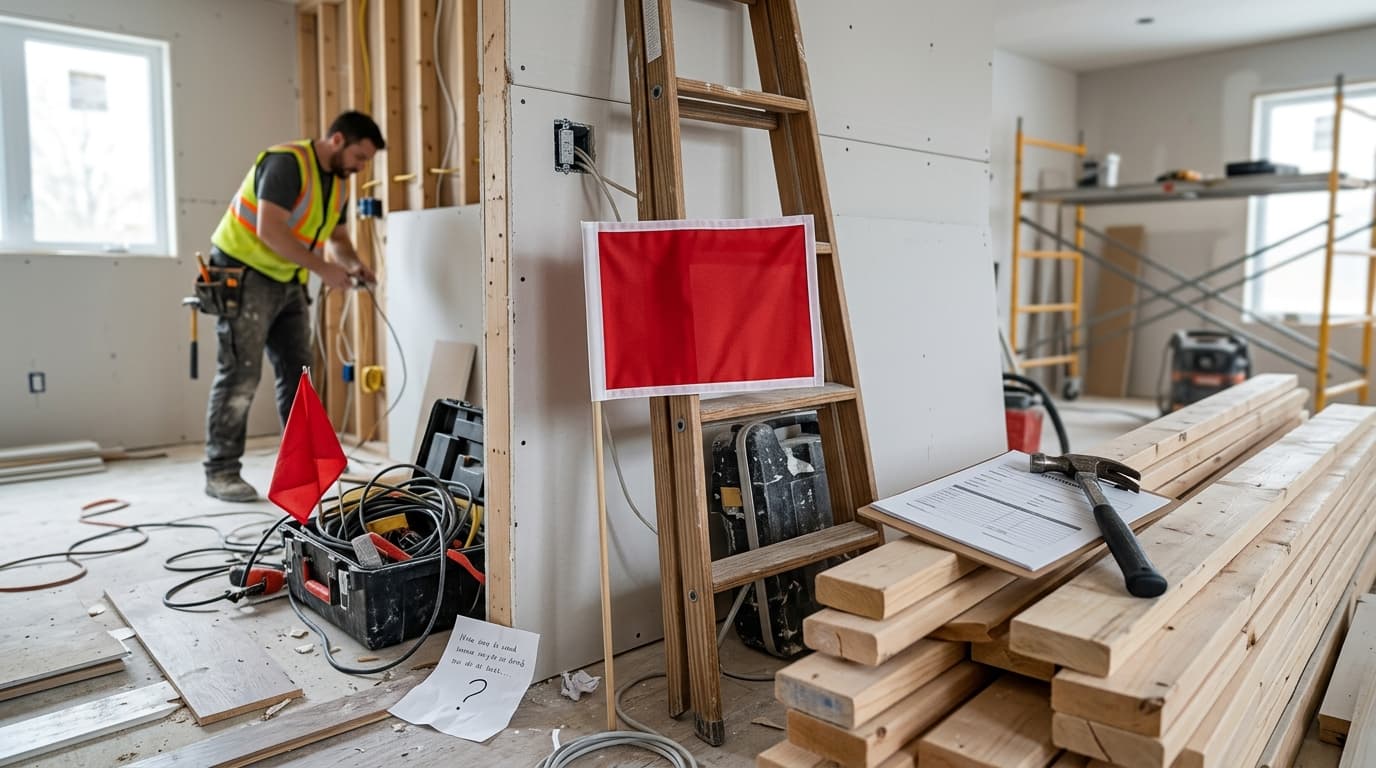
The knock on Sarah's door in Milwaukee came on a Tuesday afternoon. A friendly contractor noticed her roof looked damaged from recent storms. He could fix it today, he said, for just $8,000 - half the typical cost. She paid him $4,000 upfront. He never returned. Sarah is one of thousands: the FTC reports 109,000 home improvement scams since 2007, with Americans losing $206.9 million total, and roof-related projects are the most commonly mentioned in scam reports at 15% of all BBB reports. The usual price because he had extra materials from a nearby job. All she needed to do was sign the contract and pay a $4,000 deposit to secure the deal before he left the neighborhood.
Sarah signed. The contractor cashed her check that same day and never returned. When she tried calling, his phone was disconnected. The business address on his card didn't exist. She'd just lost $4,000 to a scam that happens to thousands of homeowners every year.
The painful truth? Sarah missed a dozen red flags that could have prevented this disaster. According to consumer protection data, nearly 1 in 10 Americans has experienced a home improvement scam, and reported cases of contractor fraud rose 38% from 2023 to 2025, according to the National Insurance Crime Bureau. Professional contractors who deliver quality work follow predictable patterns - and so do the ones who will waste your money or disappear mid-project. Learning to spot these warning signs before you sign anything is the single most important skill for protecting your home and your wallet.
This guide will show you exactly what red flags to watch for at every stage of the contractor hiring process. You'll learn which behaviors signal legitimate professionals versus those you should avoid immediately, backed by real examples and data from thousands of contractor interactions analyzed by Homeplexi.
Phase 1: First Contact Warning Signs
The Unsolicited Knock
Door-to-door contractor solicitation ranks among the highest-risk scenarios for homeowners. According to the FTC, over 63,000 home improvement-related complaints were filed in 2023, representing a 14% increase from the previous year. While not all door-to-door contractors are scammers, many scammers do work door-to-door. In contrast, referral-based contractors close at 64% versus much lower rates for other channels, and referred customers show 37% higher retention rates.
Red flags in initial contact: • Appearing at your door without prior contact • Claiming they "just noticed" your property needs work • Offering "today only" discounts that pressure immediate decisions • Working from unmarked vehicles with out-of-state plates • Unable to provide local business address or phone number
A Denver homeowner learned this lesson after a contractor knocked claiming her driveway desperately needed sealing. The contractor quoted $1,200 and said he could start immediately using leftover sealant from another job. She paid $600 upfront. He applied a thin, watery coating that washed away in the first rain. When she called to complain, his number was disconnected. The driveway actually needed $2,800 in proper repairs - plus another $400 to strip the failed coating.
Professional contractors stay busy through referrals and established marketing. They don't need to knock on random doors hoping for work. For guidance on finding contractors properly, see our complete guide to finding a reliable contractor.
Communication Patterns That Signal Problems
How contractors respond to your initial inquiries reveals volumes about how they'll handle your project. Professional contractors return calls within 24 hours, provide clear information, and welcome questions. Problem contractors are vague, difficult to reach, or provide inconsistent information.
Warning signs in communication: • Taking days to return calls or never calling back • Providing different information each time you speak • Reluctance to put anything in writing • Using only personal email addresses or phone numbers • Getting defensive when asked standard questions • Rushing conversations or seeming impatient with questions
A Phoenix couple noticed their potential contractor took 3-4 days to return calls during the estimate process. They hired him anyway, assuming he was just busy. During their $35,000 kitchen renovation, communication got worse. He'd go silent for days, then make excuses. The project that should have taken 6 weeks stretched to 4 months, largely due to coordination failures that proper communication would have prevented.
Phase 2: Vetting and Verification Red Flags
License and Insurance Evasion
Every contractor should provide current license numbers and insurance certificates immediately upon request. Red flag responses about licensing: • "I'm working under someone else's license" • "You don't need a licensed contractor for this job" • "My license is being renewed right now" • Providing expired license numbers • Claiming licensing "isn't required" for clearly regulated work
Proper contractor license verification takes just 5-10 minutes but can save you thousands. A Seattle homeowner skipped this step when hiring an electrician for a panel upgrade. Midway through the $4,500 project, city inspectors shut down the work - the contractor wasn't licensed. The homeowner had to pay another $3,200 to have a licensed electrician redo everything to code.
Insurance red flags: • Cannot provide current certificates of insurance • Suggests your homeowner's policy will cover workers • Claims insurance isn't necessary for "small jobs" • Provides certificates that can't be verified with the carrier • Resistance to adding you as additional insured
Without proper insurance, you're personally liable if workers get injured on your property. According to legal experts, if the contractor or any subcontractor is injured on the job, it will be the homeowner's responsibility and you could be held liable for damages, as an unlicensed contractor is legally considered to be the employee of the homeowner. Homeowner's insurance may deny claims related to unlicensed repairs, leaving you with significant out-of-pocket expenses. ### Reference Reluctance and Verification Issues
Professional contractors proudly provide recent local references and welcome verification calls. Problem contractors make excuses, provide only old references, or give you numbers for people who seem suspiciously enthusiastic without providing specific project details.
Red flags with references: • "I don't have any recent references available" • Providing only references from years ago • References who can't provide specific details about their project • Resistance to sharing portfolio project addresses • Preventing you from contacting past customers directly
When checking references, drive by completed projects if possible. A Portland homeowner received glowing references for a deck contractor, but when she visited the referenced addresses, she found one deck had serious structural issues and another homeowner said their project went 60% over budget. She chose a different contractor and avoided similar problems.
For specific questions to ask during the vetting process, review our essential questions to ask contractors before hiring.
Phase 3: Estimate and Contract Warning Signs
Pricing That Doesn't Add Up
Quotes that differ dramatically from market rates deserve serious scrutiny. Pricing red flags: • Bids dramatically lower than all other qualified contractors • Vague estimates with no material or labor breakdown • Verbal estimates only, nothing in writing • Unwillingness to itemize costs • Significant price changes after initial quote with no scope changes • Pressure to accept estimates quickly before you can compare
A Chicago couple received three quotes for bathroom renovation: $18,000, $19,500, and $11,000. The low bidder seemed legitimate with proper licensing. They signed, paid a $4,000 deposit, and work began. After demolition, the contractor claimed he'd "found problems" requiring an additional $9,500. The couple was stuck - they'd already paid $4,000 and had a demolished bathroom. The final cost reached $22,000 - $3,000 more than the highest original quote. For guidance on fair pricing, see our home renovation cost estimator.
Payment Structure Red Flags
Professional contractors structure payments around project milestones, not their cash flow needs. Be extremely wary of contractors who demand large upfront payments or unusual payment arrangements.
Payment warning signs: • Requesting more than 15% deposit • Demanding payment for materials before delivery • Requiring cash-only payments • Asking for payment to personal accounts versus business accounts • Front-loading payment schedule heavily • Resistance to milestone-based payment structures
According to consumer protection data, U.S. consumers reported 81,925 home improvement scams in 2024, with a median monetary loss of $1,800, making it the fourth-costliest scam category. Post-disaster contractor fraud alone costs Americans billions of dollars each year, according to the National Insurance Crime Bureau. A typical payment structure should look like: 10% to start, 25% at rough completion, 25% at substantial completion, and 40% upon final satisfactory completion.
Contract Documentation Problems
Professional contractors provide detailed written contracts that protect both parties. Problem contractors prefer verbal agreements, provide vague contracts, or pressure you to sign documents you haven't had time to review properly.
Contract red flags: • Verbal agreements without written documentation • Contracts with blank spaces to be "filled in later" • Vague project specifications using terms like "standard materials" • No specified timeline or completion dates • Missing change order procedures • No warranty information • Pressure to sign immediately without review time • Discouraging you from having a lawyer review contracts
A Sacramento homeowner signed a vague contract for a $45,000 home addition. The contract specified "quality materials" and "standard finishes" without brands or specs. The contractor installed the cheapest possible options. When she objected, he pointed to the contract - technically, the materials met "standard" definitions. She spent another $8,000 upgrading to what she originally expected.
Phase 4: Project Execution Warning Signs
Timeline and Availability Issues
Quality contractors schedule work realistically and maintain those schedules. While unexpected issues can cause delays, patterns of poor time management signal deeper problems.
Red flags during projects: • Starting significantly later than contracted date • Frequent unexplained absences from job site • Working sporadically rather than consecutive days • Crews that seem rushed or working on multiple jobs simultaneously • Missed milestones without communication or explanation • Unrealistic promises to "catch up" on delays
Quality and Workmanship Concerns
Recognizing quality issues early prevents them from becoming expensive problems. Learn basic quality standards for your project type so you can identify issues as they arise.
Warning signs of poor quality: • Work that looks rushed or sloppy • Materials that don't match specifications in contract • Repeated mistakes requiring rework • Workers who seem inexperienced or unfamiliar with proper techniques • Resistance to your questions about quality • Dismissing your concerns as "not a big deal"
For detailed guidance on quality assessment, see our guide on how to evaluate home improvement work quality.
Additional Cost Demands
While legitimate change orders occur when unforeseen issues arise, pattern of frequent additional cost demands often indicates poor initial estimation or intentional low-balling.
Red flags with change orders: • Frequent "unexpected" issues requiring more money • Vague explanations for why additional work is needed • Refusing to provide detailed documentation for additional costs • Threatening to abandon project if you don't pay extra • Discovering "problems" immediately after you've paid deposit • Change orders that seem to convert low bid into market-rate pricing
An Atlanta homeowner hired a contractor for $22,000 in foundation repairs. After starting work, the contractor claimed additional problems required $9,000 more work. A second opinion from another contractor revealed the "additional problems" were normal conditions the first contractor should have identified initially. The homeowner fired the contractor and hired someone else, but lost the $3,500 deposit.
Phase 5: Safety and Compliance Red Flags
Permit Avoidance
Professional contractors understand permit requirements and include permit costs in their estimates. Contractors who suggest skipping permits or claim permits aren't necessary for clearly regulated work are showing serious disregard for legal requirements.
Permit-related warning signs: • Suggesting you skip required permits to "save money" • Claiming permits aren't necessary for major work • Offering to "pull permits later" but starting work immediately • Using someone else's contractor license for permits • Being vague about permit requirements or timeline • Discouraging you from calling city building department
Unpermitted work creates multiple problems: difficulty selling your home later, insurance claim denials, safety issues from uninspected work, potential fines, and requirements to tear out completed work for inspection. A Minneapolis homeowner saved $500 by skipping permits for a bathroom renovation. When she sold the house two years later, inspectors found the unpermitted work. She paid $3,200 to bring everything to code, delaying her closing by three weeks.
Safety Practice Violations
Contractors who cut corners on safety often cut corners elsewhere. Watch for safety violations during initial visits and throughout the project.
Safety red flags: • Workers without appropriate safety equipment • Unsafe ladder or scaffolding practices • No protection for workers or property • Improper handling of hazardous materials • Creating trip hazards or dangerous conditions • Ignoring safety regulations or building codes
Your Protection Plan: What To Do When You Spot Red Flags
If You Haven't Signed Yet
Immediate actions: • Stop all negotiations with the problematic contractor • Get at least 3 quotes from properly vetted contractors (see our guide on getting multiple contractor quotes) • Verify all credentials independently before proceeding • Document all interactions in case of future issues • Trust your instincts - if something feels wrong, investigate further
If You've Already Signed
Damage control steps: • Review your contract for cancellation provisions • Check your state's cooling-off period laws (typically 3 days for door-to-door sales) • Document all red flags with photos, emails, and written notes • Send written notice of contract cancellation if within legal period • Stop all payments immediately • Consult with an attorney for contracts over $10,000
If Work Has Started
Protection strategies: • Document everything with photos and detailed notes • Put all communications in writing (email summaries of phone calls) • Don't make additional payments until issues are resolved • Get second opinions from other contractors for quality concerns • File complaints with state licensing boards if license violations occur • Consider hiring an attorney for significant problems
A Tampa homeowner noticed quality issues three days into a $28,000 pool deck project. She documented everything with photos and stopped payment beyond the initial deposit. The contractor threatened to sue, but when she showed her documentation to a lawyer, they discovered the contractor had violated multiple contract provisions. The contractor ultimately refunded her deposit rather than face legal action.
Building Your Contractor Selection Process
The Verification Checklist
Before signing with any contractor:
License and Insurance (CRITICAL): • [ ] Verified current license with state board • [ ] Confirmed license covers your project type • [ ] Received current general liability insurance certificate • [ ] Verified workers' compensation coverage • [ ] Added as additional insured on contractor's policy • [ ] Contacted insurance company to confirm coverage
Reference and Reputation: • [ ] Received at least 3 recent local references • [ ] Contacted all references and asked specific questions • [ ] Visited recent project sites in person • [ ] Checked Better Business Bureau rating and complaint history • [ ] Verified online reviews across multiple platforms • [ ] Confirmed local business address and presence
Financial Protection: • [ ] Obtained at least 3 written estimates • [ ] Reviewed detailed cost breakdowns • [ ] Understood payment schedule and milestones • [ ] Confirmed deposit doesn't exceed 15% of total cost • [ ] Verified business bank account information • [ ] Reviewed financial stability indicators
Contract and Legal: • [ ] Received detailed written contract • [ ] Contract includes specific materials and specifications • [ ] Timeline with start and completion dates specified • [ ] Change order procedures clearly documented • [ ] Warranty terms explained and documented • [ ] Permit responsibilities assigned • [ ] Had attorney review for large projects
Common Myths About Contractor Red Flags
"But They Gave Me A Good Feeling"
Personal chemistry matters, but it shouldn't override objective verification. Many successful scammers are charming and personable - that's how they earn trust before disappearing. Verify credentials regardless of how friendly someone seems.
"They've Been Recommended By Someone I Trust"
Personal recommendations are valuable starting points but not verification substitutes. Your friend's successful small project doesn't guarantee the same contractor will handle your large renovation well. The contractor's circumstances may have changed. Always verify credentials even for recommended contractors.
"I'll Save Money By Skipping These Steps"
Thorough vetting costs time, not money. Most verification steps are free: checking licenses online, calling references, reviewing contracts carefully. Compare this minimal time investment against the average $8,500 loss homeowners experience with problem contractors. One Milwaukee homeowner spent 6 hours thoroughly vetting contractors for a $50,000 kitchen renovation. Her diligence prevented hiring a contractor later discovered to have three active complaints and a suspended license. Industry research shows that approximately 10% of contractors engage in unethical practices, ranging from cutting corners on materials to outright scams, making thorough vetting essential.
"Small Jobs Don't Need This Level of Scrutiny"
Contractor scams target projects of all sizes. The same verification steps apply whether you're spending $2,000 or $200,000. Small project scammers often collect deposits from multiple homeowners simultaneously before disappearing with all the money.
When Professional Help Makes Sense
Some situations warrant professional assistance beyond DIY contractor selection:
Consider hiring a construction attorney: • Projects over $50,000 • Complex contracts with unusual terms • Situations where you've already encountered contractor problems • Commercial or investment property renovations • Projects requiring complex permitting or zoning variances
Consider hiring a project inspector: • Large structural work (additions, foundations, major renovations) • When you lack time to oversee work personally • Projects in homes you don't occupy • Situations where contractor quality concerns have arisen • Work requiring specialized technical knowledge to evaluate
The Bottom Line: Your Home Deserves Protection
Professional contractors welcome scrutiny because they have nothing to hide. They carry proper licenses and insurance, provide detailed written estimates, offer local references, respect your need to make informed decisions, and deliver quality work at fair prices. When you encounter resistance to reasonable verification requests, you've identified a contractor to avoid.
The time you invest in properly vetting contractors will pay dividends in the form of quality work, fair pricing, and peace of mind throughout your project. Don't let eagerness to start your project override careful contractor selection. The best contractors are worth waiting for, and the wrong contractor can turn your dream renovation into a financial nightmare.
Remember: every red flag you spot is money saved and stress avoided. Trust your instincts, verify everything, and never compromise on the basics of contractor verification. Your home is likely your largest investment, and it deserves contractors who will treat it with professional care.
Related Resources
Need Professional Help?
Homeplexi connects you with vetted contractors, helps you compare quotes, and manages your entire home improvement project in one place.
Get Started Free →The Homeplexi editorial team consists of licensed contractors, home inspectors, and consumer protection experts who provide research-backed guidance for homeowners. All content is fact-checked and cited from authoritative industry sources.
Important Safety Disclaimer
Please read this carefully before following any advice:
- Always prioritize safety: Wear appropriate protective equipment (safety glasses, gloves, etc.) when performing any home maintenance or repair work.
- Know your limits: If you're not confident in your ability to safely complete a task, hire a licensed professional. This is especially important for electrical, gas, plumbing, and structural work.
- Verify all information: The guidance provided here is based on community discussions and general knowledge. Always double-check any advice with multiple reliable sources or a licensed professional.
- Follow local codes: Building codes, electrical codes, and plumbing codes vary by location. Ensure any work complies with your local regulations and obtain necessary permits.
- Turn off power/water/gas: Before working on electrical, plumbing, or gas systems, always shut off the relevant utilities at the source.
- For emergencies: If you have a gas leak, electrical fire, major water leak, or other emergency, evacuate immediately and call emergency services (911) and your utility company.
Liability: Homeplexi provides information for educational purposes only. We are not responsible for any injury, property damage, or losses resulting from following any guidance or advice provided through this platform. Use all information at your own risk.
When in doubt, always consult a licensed, insured professional contractor. Homeplexi can help you find qualified professionals in your area.
Found this helpful? Share with others: