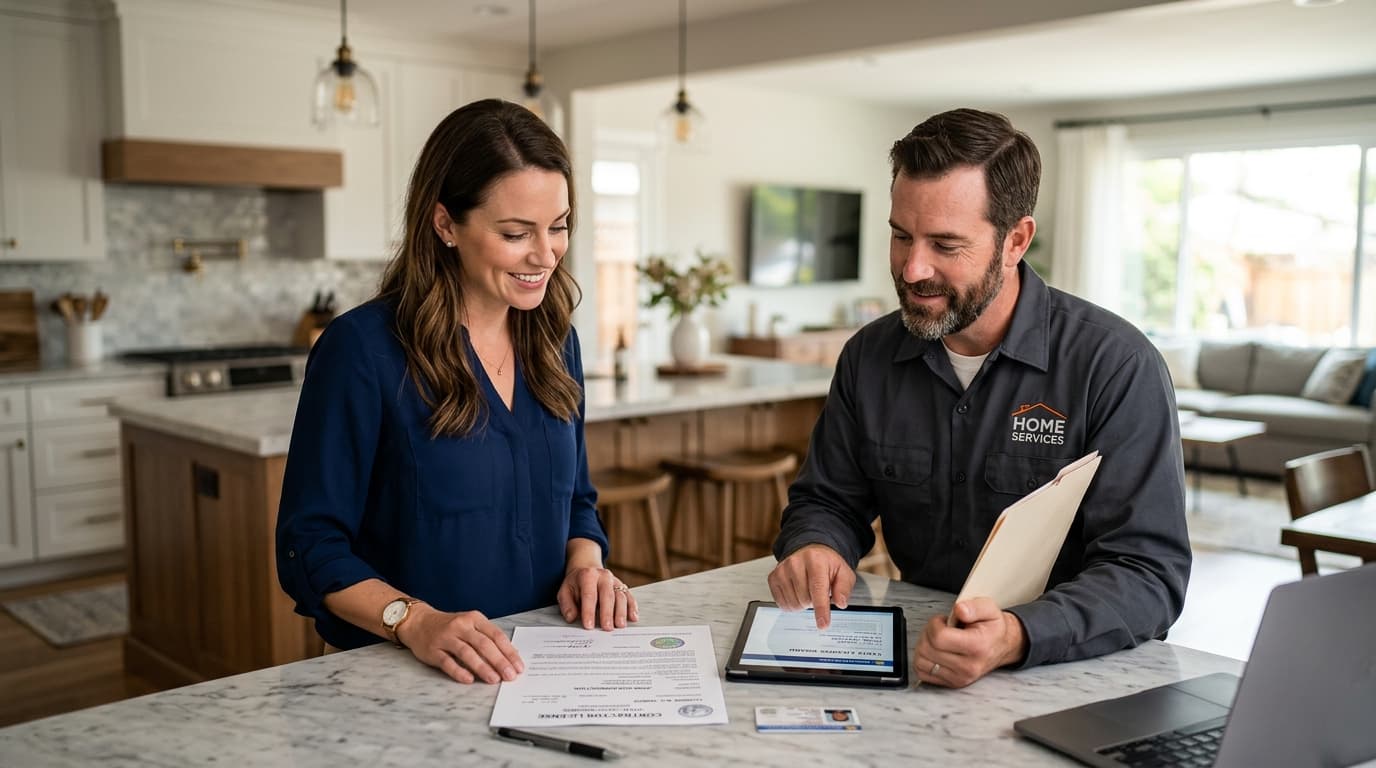
Picture this: You've hired what seems like the perfect contractor for your kitchen renovation. Three weeks later, you discover they're unlicensed, uninsured, and have vanished with your deposit. This scenario is more common than you think: according to industry data, unlicensed contractors are behind more than 20% of all complaints filed with the Better Business Bureau, and only 19.1% of carpenters and 32.2% of general construction laborers hold any professional license or certification. This nightmare happens to thousands of homeowners yearly. Contractor license verification is your first defense against fraud, protecting your investment before work begins.
Learning to verify contractor credentials takes just 15-30 minutes and can save thousands in legal fees and repairs. This guide teaches you exactly how to check licenses, spot red flags, and protect yourself throughout the hiring process.
Why Contractor License Verification Matters More Than You Think
The Hidden Costs of Unlicensed Contractors
When You start with a simple upgrade. Six weeks later the scope has tripled. Her insurance refused coverage because the work wasn't performed by a licensed professional, leaving her with $15,000 in rebuild costs.
Unlicensed contractors create risks beyond poor workmanship:
Financial Protection: Licensed contractors carry liability insurance and workers' compensation. Without this coverage, an injured worker could sue you for tens of thousands.
Code Compliance: Licensed contractors understand building codes and pull required permits. Unlicensed work often fails inspections, forcing expensive do-overs.
Warranty Coverage: Manufacturer warranties often become void without licensed installation. Your $5,000 HVAC system might lose its 10-year warranty.
Resale Value: Unpermitted work flags during home inspections, potentially reducing your sale price or requiring fixes before closing.
What Licensing Actually Means
Licensed contractors have typically:
- Passed examinations covering codes, safety, and standards
- Demonstrated 2-4 years of trade experience
- Provided proof of insurance and bonding
- Submitted to background checks
- Agreed to continuing education
However, requirements vary dramatically. California requires licenses for projects over $500, while some states only license electrical and plumbing work. Always verify your contractor has the specific license for your project and location.
Before you even start the verification process, make sure you understand how to find a reliable contractor and what qualities to look for.
Understanding Different Types of Contractor Licenses
State vs. Local Requirements
When you verify contractor license status, remember licensing happens at multiple levels. Some states issue licenses directly, while others delegate to counties or cities.
State-Level: California, Florida, and Texas maintain centralized databases covering major trades.
Local Licensing: Many areas require additional permits beyond state requirements.
Specialty Licenses: Some contractors need multiple licenses. HVAC contractors might need separate licenses for electrical, gas, and refrigeration work.
Common License Categories
General Contractors: Handle project management and coordinate subcontractors for major renovations.
Specialty Contractors: Focus on specific trades with deeper expertise but limited legal scope.
Handyman Licenses: Cover smaller projects (typically under $1,000-$5,000) but exclude major work.
Home Improvement Contractors: Specific residential licenses with additional consumer protections.
Match your contractor's license type to your project needs—a handyman can't legally perform major plumbing work.
Step-by-Step Guide to Verify Contractor License Status
Phase 1: Gather Essential Information
Before starting your contractor license lookup, collect:
- Full legal business name
- License number(s)
- Contractor's name as it appears on license
- Business address and phone
- Insurance company and policy numbers
Legitimate contractors expect these requests. Those who hesitate should raise red flags. For a complete list of warning signs, check out our guide on critical contractor red flags.
Phase 2: Online Database Searches
Most states offer free online verification systems. According to the National Association of State Contractors Licensing Agencies, 47 states now provide digital access to licensing records.
Search Process:
-
Find Your Database: Search "[your state] contractor license lookup" or visit:
- California: CSLB.ca.gov
- Florida: MyFloridaLicense.com
- Texas: TDLR.texas.gov
-
Enter Information: Use license numbers for most accurate results.
-
Verify Details: Confirm the license is active, matches your contractor, covers your project type, and shows no recent violations.
-
Check Local Requirements: Search city and county databases for additional permits.
If a license shows expired or suspended, request proof of renewal within 48 hours or find another contractor.
Phase 3: Insurance Verification
Never rely solely on contractor-provided certificates. Contact insurance companies directly:
- Use phone numbers from the insurer's official website
- Confirm coverage meets project needs ($500,000-$1,000,000 minimum)
- Verify policy covers your project dates
- Request direct certificate email
Ask insurers: "Can you confirm active coverage for [contractor name]? What are the policy limits? Does this cover residential work?"
Red Flags That Should Stop You in Your Tracks
Warning Signs During Initial Contact
Door-to-Door Solicitation: Legitimate contractors rarely need to knock on doors, especially after storms.
Cash-Only Demands: While some offer cash discounts, insisting on cash often indicates tax evasion.
Missing Business Address: P.O. boxes alone make contractors difficult to track if problems arise.
Pressure Tactics: "This price expires today" is a classic scammer technique.
Documentation Red Flags
Incomplete Estimates: Professional contractors provide detailed, typed breakdowns—not napkin sketches. Learn more about what to expect when you get multiple contractor quotes.
Expired Licenses: Always verify current status and expiration dates.
Mismatched Information: Names on licenses should match business cards and contracts.
Use these scripts when problems arise:
- "I see your license expired. Please provide renewal confirmation within 48 hours."
- "My policy requires fully insured contractors. Thank you, but I'll explore other options."
- "I never make same-day decisions. If your quote expires today, we're not a good fit."
State-by-State Requirements and Resources
High-Regulation States
California: Licenses required for projects over $500 with comprehensive online verification.
Florida: Combines state and local licensing with robust complaint tracking.
New York: State requirements plus strict local rules, especially in NYC.
Moderate-Regulation States
Texas: Licenses specific trades but not general contractors statewide.
Wisconsin: Requires state registration for home improvement plus trade-specific licenses. Milwaukee and Madison add local requirements.
Even in low-regulation states, contractors need business licenses and insurance. Research your specific requirements before starting verification.
Beyond Basic Verification: Advanced Due Diligence
Additional Verification Steps
Professional Associations: Check BBB ratings and trade organization memberships like NAHB.
Financial Stability: For major projects, verify bonding and request bank references.
Project-Specific Checks: Confirm permit-pulling ability and subcontractor licensing.
Contractors maintaining consistent crews score 62% higher in satisfaction—something traditional verification misses.
What to Do When Verification Reveals Problems
Minor Issues
Recently Expired Licenses: Request renewal proof if expired within 30 days.
Address Changes: Small discrepancies might indicate recent moves—ask for updated documentation.
Major Red Flags
Suspended Licenses: Never hire contractors with suspended or revoked licenses.
Unresolved Complaints: Patterns indicate systemic problems.
No Insurance: The savings aren't worth potential lawsuits.
If good contractors are scarce, consider manufacturer-recommended installers or owner-builder permits rather than compromising standards.
Protecting Yourself Throughout the Project
Documentation Best Practices
After you check contractor credentials, maintain protection with:
Written Contracts specifying:
- Exact scope and materials
- Timeline with milestones
- Payment schedule
- Change procedures
- Warranty terms
Payment Protection:
- Limit deposits to 10-15%
- Tie payments to completed milestones
- Withhold 10-15% until final inspection
- Use credit cards for chargeback protection
Ongoing Monitoring: Visit regularly, build inspector relationships, and document progress with photos.
When planning your budget for major projects, refer to our home renovation cost estimator guide to ensure you're financially prepared.
Technology Tools for Modern Verification
Mobile Apps: Many states offer verification apps. California's CSLB app provides real-time lookups.
Verification Platforms: Services like Angi and HomeAdvisor include background checks and reviews.
For projects over $50,000, consider professional verification services ($200-$500) providing comprehensive checks and ongoing monitoring. If you're planning a major renovation like a kitchen or roof replacement, check out our detailed cost guides for kitchen remodels and roof replacements.
Building Your Contractor Network
Once you find reliable contractors, nurture these relationships:
- Use them for maintenance to stay on priority lists
- Ask for referrals to other trades
- Book seasonal work early
Re-verify annually—even trusted contractors need updated insurance and license checks.
Verification Checklist
Initial Contact:
- Legal business name
- License numbers
- Insurance information
- Physical address
- Recent references
Verification:
- Active license status
- Appropriate license type
- Clean disciplinary record
- Direct insurance confirmation
- Adequate coverage
- Workers' comp if applicable
Documentation:
- Written contract
- Milestone payments
- Change procedures
- Warranty terms
- Permit responsibility
Frequently Asked Questions
How long does verification take? Basic online checks take 15-30 minutes. Comprehensive verification including insurance takes 2-4 hours.
What if the license is expired? Don't proceed without proof of renewal. Recent expirations (under 30 days) might be renewing.
Do handymen need licenses? Most states require licenses for projects over $500-$1,000. Check our home repair costs guide to understand when professional licensing is required.
Can I verify licenses myself? Yes, use free state databases and call insurers directly.
What's the difference between licensed and bonded? Licensed means legal to work. Bonded provides financial backing if work isn't completed.
How often should I re-verify? Annually for regular contractors, always before new projects.
Thorough contractor license verification requires just a few hours but prevents thousands in potential losses. Whether you handle verification yourself or use Homeplexi's pre-vetted network, never skip this crucial step. Your home—and wallet—will thank you.
Need Professional Help?
Homeplexi connects you with vetted contractors, helps you compare quotes, and manages your entire home improvement project in one place.
Get Started Free →The Homeplexi editorial team consists of licensed contractors, home inspectors, and consumer protection experts who provide research-backed guidance for homeowners. All content is fact-checked and cited from authoritative industry sources.
Important Safety Disclaimer
Please read this carefully before following any advice:
- Always prioritize safety: Wear appropriate protective equipment (safety glasses, gloves, etc.) when performing any home maintenance or repair work.
- Know your limits: If you're not confident in your ability to safely complete a task, hire a licensed professional. This is especially important for electrical, gas, plumbing, and structural work.
- Verify all information: The guidance provided here is based on community discussions and general knowledge. Always double-check any advice with multiple reliable sources or a licensed professional.
- Follow local codes: Building codes, electrical codes, and plumbing codes vary by location. Ensure any work complies with your local regulations and obtain necessary permits.
- Turn off power/water/gas: Before working on electrical, plumbing, or gas systems, always shut off the relevant utilities at the source.
- For emergencies: If you have a gas leak, electrical fire, major water leak, or other emergency, evacuate immediately and call emergency services (911) and your utility company.
Liability: Homeplexi provides information for educational purposes only. We are not responsible for any injury, property damage, or losses resulting from following any guidance or advice provided through this platform. Use all information at your own risk.
When in doubt, always consult a licensed, insured professional contractor. Homeplexi can help you find qualified professionals in your area.
Found this helpful? Share with others:
Related Articles
Contractor Payment Schedule: The 2024 Guide to Protecting Your Money (With Red Flags to Avoid)
Homeowners confused about standard payment terms vs contractors asking for suspicious payment structures
Contractor Insurance Verification: The Complete Guide to Protecting Your Home and Wallet
Homeowners unsure what insurance documents to request and verify before hiring a contractor
Free Contractor Platforms: Find Quality Pros Without Paying Lead Fees or Dealing With Sales Pressure
Homeowners want to find contractors without paying lead fees or dealing with pushy sales tactics from paid services