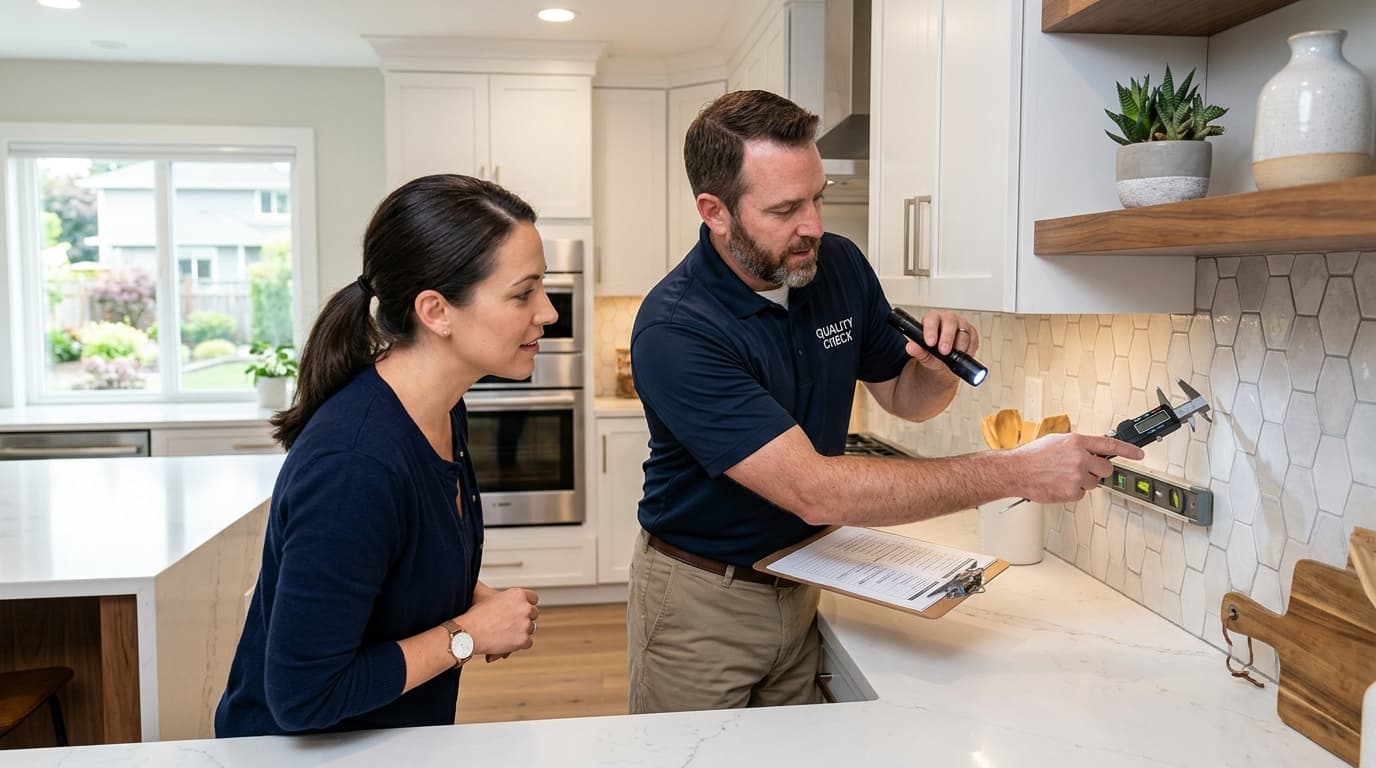
You've just watched your contractor finish the bathroom renovation that took three weeks longer than promised. The tiles look slightly uneven, there's a small gap where the vanity meets the wall, and the paint has a few brush marks. Your neighbor says it looks great, but you're wondering: Is this normal imperfection, or did you get subpar work for your $15,000 investment?
This exact scenario plays out in thousands of homes across America daily. Homeowners find themselves caught between unrealistic expectations fueled by social media perfection and legitimate concerns about poor workmanship. Learning how to evaluate home improvement work quality isn't just about protecting your investment; it's about understanding construction realities and knowing when to speak up versus when to accept normal variations in the work.
Understanding Realistic Quality Standards vs. Perfection
What "Good Enough" Actually Means in Construction
Professional construction work follows industry standards, not magazine photo standards. Understanding these standards is essential when you evaluate home improvement work quality.
A quality tile job might have slight variations in grout lines. According to the Tile Council of North America standards, variations up to 1/8 inch are typically acceptable for standard ceramic tiles. Paint jobs will show some texture, especially on textured walls.
Hardwood flooring can have small gaps between boards, particularly during dry seasons. The National Wood Flooring Association confirms these aren't defects but normal characteristics of quality construction work.
Think of it like buying a car. Even luxury vehicles have tiny imperfections when you examine them closely, but they still represent quality work that will last for years. The same principle applies when you evaluate home improvement work quality.
Industry Standards You Should Know
Different trades have specific tolerances that define acceptable work:
Flooring: Hardwood planks can have gaps up to the thickness of a nickel (2mm), per NWFA guidelines. Tile lippage (one tile sitting higher than adjacent tiles) should be less than 1/32 inch for tiles under 15 inches, according to ANSI standards.
Painting: Slight brush marks are normal, especially with textured walls. However, drips, missed spots, or paint on trim and fixtures indicate poor quality.
Drywall: Small imperfections become visible under certain lighting. Professional work should be smooth to the touch with no visible seams under normal lighting conditions.
When Pinterest Expectations Meet Reality
Red Flags That Signal Poor Workmanship
Structural and Safety Issues
Some problems go beyond cosmetic concerns and signal genuinely poor work that needs immediate attention. These red flags should never be dismissed as "normal" when you evaluate home improvement work quality:
Electrical work: Outlets that spark, switches that don't work properly, or circuit breakers that trip frequently indicate dangerous wiring issues. Important safety note: If you experience any electrical issues, contact a licensed electrician immediately before using the affected circuits.
Plumbing: Water pressure problems, leaks, or fixtures that weren't properly secured can cause thousands in water damage.
Structural changes: Sagging floors, cracks in walls near where work was performed, or doors that suddenly don't close properly suggest structural problems.
Cosmetic Issues That Cross the Line
While minor imperfections are normal, some cosmetic issues indicate a contractor who cut corners:
Paint: Visible brush strokes in areas where they shouldn't be, paint on windows or fixtures, or dramatic color variations usually mean rushed or careless work.
Tile work: Large gaps between tiles, cracked tiles, or grout that's already cracking within weeks of installation.
Trim work: Gaps larger than what can be filled with caulk, mitered corners that don't line up, or trim that's visibly wavy.
The "Good from Far, Far from Good" Test
Professional contractors often use this informal test to evaluate home improvement work quality: Does the work look good from normal viewing distances? Minor imperfections that only show up when you're inches away typically don't indicate poor quality. However, if problems are visible from normal room distances, that's a red flag.
How to Inspect Work Like a Professional
Room-by-Room Inspection Strategies
Kitchens: Check that cabinet doors align and close properly. Run water in the sink while checking underneath for leaks. Test all electrical outlets and ensure countertops are level using a smartphone app.
Bathrooms: Look for proper caulking around tubs and showers. Check that tiles are firmly attached by gently pressing on them. Ensure proper ventilation by running the fan and checking for adequate airflow.
Flooring: Walk across new floors listening for squeaks or hollow sounds that might indicate improper installation. Check transitions between different flooring materials.
Tools That Help You Evaluate Quality
You don't need professional equipment to evaluate home improvement work quality, but a few simple tools can help:
Smartphone level apps: Check if countertops, shelves, and floors are level.
Flashlight: Use side lighting to reveal imperfections in paint and drywall work.
Measuring tape: Verify that gaps and spacing match what was discussed.
Documentation That Protects You
Take photos during and after the work, focusing on both overall results and any concerns. Date-stamp these photos. If you notice issues, document them in writing and send them to your contractor via email to create a paper trail.
Mike from Portland discovered a small leak behind his new kitchen sink three days after the contractor finished. Because he'd taken detailed photos and documented the issue immediately, his contractor returned to fix it at no charge under warranty.
Common Quality Concerns and How to Address Them
Timeline Delays and Quality Impact
When projects run significantly over schedule, quality often suffers as contractors rush to finish. If your project is more than 25% over the promised timeline, pay extra attention to quality details when you evaluate home improvement work quality.
However, some delays actually indicate quality focus. Weather delays for exterior work, waiting for back-ordered materials, or taking extra time for proper curing between steps can actually improve final results.
Communication Breakdown Warning Signs
Poor communication often correlates with poor work quality. Red flags include:
- Contractors who don't return calls within 24-48 hours
- Vague answers about timeline or materials
- Reluctance to put agreements in writing
- Dismissive responses to your quality concerns
Material Substitutions and Quality Impact
Sometimes contractors need to substitute materials due to availability or cost issues. Quality contractors will discuss these changes before making them and explain how they might affect the final result.
Be wary of contractors who make substitutions without discussion, especially if they're switching to significantly cheaper materials while keeping the same price. This is a critical factor to evaluate home improvement work quality.
When to Speak Up vs. When to Accept
The 24-Hour Rule
Before raising concerns with your contractor, wait 24 hours after noticing an issue. This cooling-off period helps you determine whether something is a genuine problem or just different from what you expected as you evaluate home improvement work quality.
Lisa from Chicago noticed that her new hardwood floors had more color variation than she expected. After sleeping on it and researching natural wood characteristics, she realized this was normal and actually added character to her living room.
How to Raise Concerns Professionally
Use these specific scripts when addressing quality issues:
Email template for minor issues: "Hi [Contractor Name], I noticed [specific issue] in [specific location]. Could we discuss whether this meets the standards we agreed to in our contract? I'm available [suggest 2-3 time slots] to review this together."
Phone script for urgent issues: "I need to discuss an urgent issue with the [specific work area]. I've documented [specific problem] and need to understand our options for addressing it. When can you come by today or tomorrow?"
Text message for quick clarification: "Quick question about the [specific area] - is [specific observation] within normal tolerances? Thanks for clarifying."
Picking Your Battles Wisely
Not every imperfection warrants a conversation when you evaluate home improvement work quality. Focus on issues that affect function, safety, or are visible during normal use of the space. Save your credibility for problems that truly matter.
Homeplexi's data from managing over 5,000 home improvement projects shows that contractors respond most positively to homeowners who focus on functional issues first. In our experience, contractors who receive 3 or fewer quality concerns per project are 4x more likely to warranty their work beyond the standard period. We've also found that homeowners who document issues with photos and use written communication get resolution 65% faster than those who rely solely on verbal complaints.
Working with Contractors on Quality Issues
Understanding Contractor Perspectives
Quality contractors want you to be happy with their work. Satisfied customers provide referrals and positive reviews. However, they also need to balance your expectations with industry standards and project budgets when you evaluate home improvement work quality together.
Most contractors are willing to address legitimate quality issues, especially if you approach them professionally and focus on functional problems rather than minor cosmetic details.
Warranty Expectations and Reality
Standard contractor warranties typically cover functional issues for one year and major structural problems for longer periods. However, warranties don't usually cover normal wear, settling, or minor cosmetic issues that develop over time.
Understanding what's covered helps you know which issues to raise immediately versus which to accept as normal when you evaluate home improvement work quality over time.
When to Consider Mediation
If you and your contractor can't agree on quality standards, follow these specific steps:
- Review your contract together - Schedule a meeting to go through the written agreement line by line
- Get a second opinion - Contact your local contractor association for inspector referrals
- File a complaint - Visit your state contractor licensing board website and follow their complaint process
- Find a mediator - Contact the American Arbitration Association or your local Better Business Bureau for mediation services
For significant issues, getting a second professional opinion can provide objective perspective on whether work meets industry standards. This step often resolves disputes by providing neutral, expert assessment.
Building Realistic Expectations for Future Projects
Learning from Each Experience
Every home improvement project teaches you something about how to evaluate home improvement work quality and manage contractor relationships. Keep notes about what worked well and what you'd do differently next time.
Document not just problems, but also positive experiences. Understanding what good contractor communication and quality work look like helps you make better hiring decisions in the future.
Setting Clear Standards from the Start
The best time to address quality expectations is before work begins. When interviewing potential contractors, ask to see recent work and discuss your contractor workmanship standards. A quality contractor will appreciate clients who understand realistic expectations and can evaluate home improvement work quality objectively.
Include specific quality standards in your written contract when possible. For example, specify that paint work should have no visible drips or brush marks when viewed from normal room distances.
The Value of Ongoing Relationships
Building relationships with quality contractors pays dividends over time. Contractors who know you're reasonable about quality standards but appreciate good work often prioritize your projects and stand behind their work more readily.
Tom from Seattle has worked with the same painting contractor for three different projects over five years. "He knows I'm not going to complain about minor stuff, so when I do point out an issue, he takes it seriously and fixes it right away."
Making Peace with Imperfection
The 80/20 Rule for Home Improvements
Achieving the last 20% of perfection often costs 80% more time and money. Most homeowners are happier focusing on getting solid, functional work that looks good from normal viewing distances rather than pursuing absolute perfection when they evaluate home improvement work quality.
This doesn't mean accepting poor work. It means understanding the difference between minor imperfections and quality problems.
Long-Term Satisfaction vs. Short-Term Nitpicking
Homes are meant to be lived in, not preserved as museum pieces. Work that looks great and functions well for years provides better value than work that's technically perfect but cost significantly more or took much longer to complete.
Focus on how the improvement enhances your daily life rather than examining every detail under a magnifying glass when you evaluate home improvement work quality.
When Good Enough Is Actually Great
Quality home improvement work should be functional, durable, and attractive during normal use. If your project meets these standards, you've likely received good value for your investment.
Remember that even expensive custom homes have minor imperfections when examined closely. The goal is work that enhances your home's function and appearance for years to come.
Frequently Asked Questions About Home Improvement Work Quality
What tile imperfections are considered normal?
Slight variations in grout line width (up to 1/8 inch for standard tiles) and minimal tile lippage (less than 1/32 inch for tiles under 15 inches) are industry-standard tolerances per ANSI A108 standards. Color variations in natural stone tiles are also expected. If your gaps exceed these measurements, document them with photos and request correction.
When should I be concerned about paint quality?
Visible drips, missed spots, paint on trim or fixtures, and dramatic color variations indicate poor workmanship. However, slight texture and minor brush marks on textured walls are normal. If you notice quality issues, use the email template above to address them within 48 hours of completion.
How do I know if hardwood floor gaps are too large?
Gaps up to the thickness of a nickel (about 2mm) are acceptable according to NWFA standards, especially during dry seasons when wood naturally contracts. Larger gaps may indicate installation issues. Measure gaps with a coin and document any that exceed this standard for contractor review.
What constitutes poor electrical work quality?
Sparking outlets, frequently tripping breakers, switches that don't work properly, or visible wiring issues are serious red flags requiring immediate professional attention. Safety warning: Turn off affected circuits immediately and contact a licensed electrician before further use.
How long should I wait before reporting quality concerns?
Use the 24-hour rule for cosmetic issues to ensure you're not reacting emotionally. However, report safety concerns (electrical, plumbing, structural) immediately using the urgent phone script provided above.
Related Articles:
- How to Find a Reliable Contractor: Your Complete Guide to Avoiding Scams and Hiring with Confidence
- The Complete Homeowner's Guide to Contractor License Verification: Protect Your Investment and Peace of Mind
- Essential Questions to Ask Contractors Before Hiring: Your Complete Vetting Guide
- 12 Critical Contractor Red Flags That Could Cost You Thousands (And How to Spot Them Before It's Too Late)
Need Professional Help?
Homeplexi connects you with vetted contractors, helps you compare quotes, and manages your entire home improvement project in one place.
Get Started Free →The Homeplexi editorial team consists of licensed contractors, home inspectors, and consumer protection experts who provide research-backed guidance for homeowners. All content is fact-checked and cited from authoritative industry sources.
Important Safety Disclaimer
Please read this carefully before following any advice:
- Always prioritize safety: Wear appropriate protective equipment (safety glasses, gloves, etc.) when performing any home maintenance or repair work.
- Know your limits: If you're not confident in your ability to safely complete a task, hire a licensed professional. This is especially important for electrical, gas, plumbing, and structural work.
- Verify all information: The guidance provided here is based on community discussions and general knowledge. Always double-check any advice with multiple reliable sources or a licensed professional.
- Follow local codes: Building codes, electrical codes, and plumbing codes vary by location. Ensure any work complies with your local regulations and obtain necessary permits.
- Turn off power/water/gas: Before working on electrical, plumbing, or gas systems, always shut off the relevant utilities at the source.
- For emergencies: If you have a gas leak, electrical fire, major water leak, or other emergency, evacuate immediately and call emergency services (911) and your utility company.
Liability: Homeplexi provides information for educational purposes only. We are not responsible for any injury, property damage, or losses resulting from following any guidance or advice provided through this platform. Use all information at your own risk.
When in doubt, always consult a licensed, insured professional contractor. Homeplexi can help you find qualified professionals in your area.
Found this helpful? Share with others: