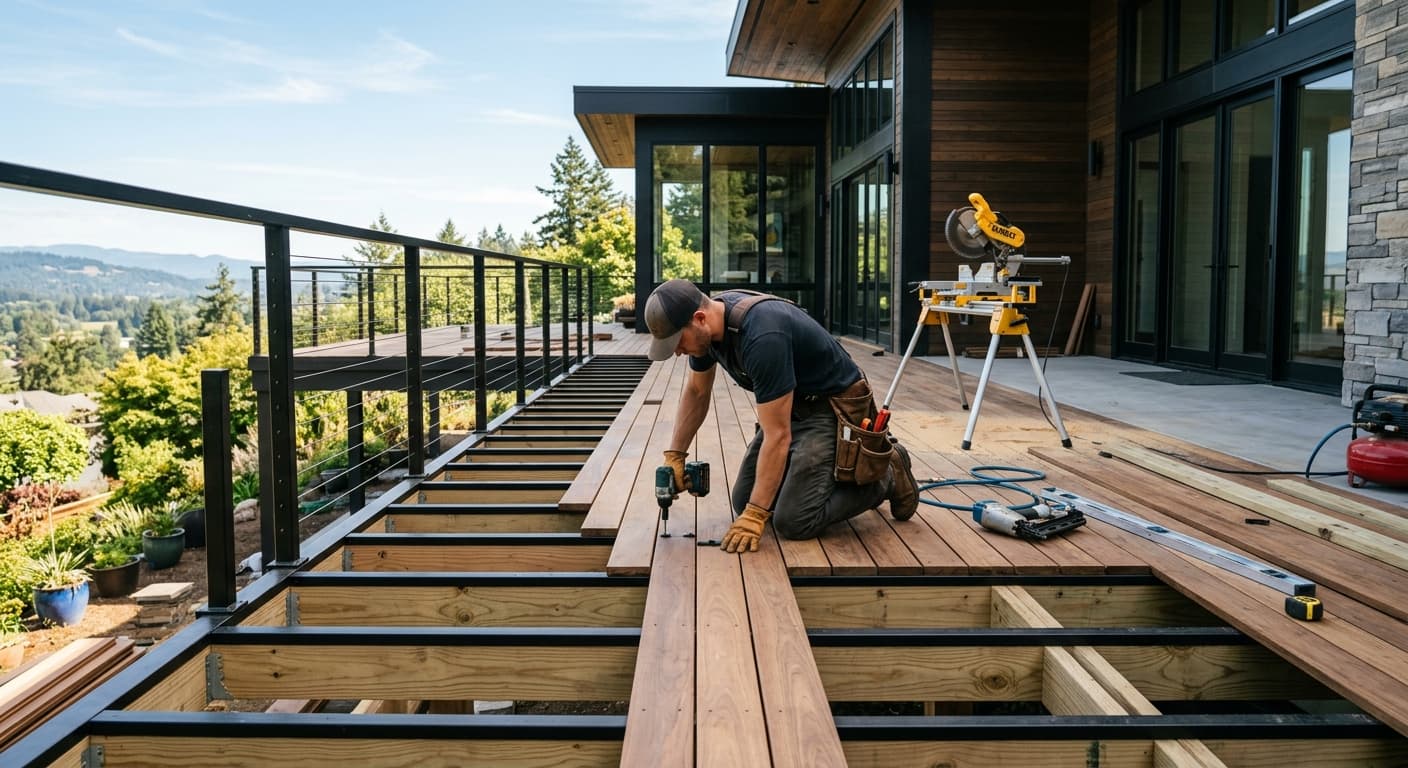
Deck Building Cost: What You'll Actually Pay for Your Dream Outdoor Space
You've been dreaming about that perfect deck for months. You can picture the weekend barbecues and the morning coffee ritual that finally gets you outside. Then you start getting quotes, and reality hits hard. One contractor says $8,000. Another quotes $25,000. A third comes in at $15,500. Same deck size, same location, wildly different numbers.
Deck building costs vary dramatically based on material choices, size, design complexity, and your region. Without realistic expectations, you'll either overpay out of fear or choose the cheapest bid and regret it later. This guide breaks down exactly what drives deck costs, what you should expect to pay in 2026, and how to get the best value without cutting corners that matter.
Quick Navigation: Material Costs | Size-Based Pricing | Hidden Costs | Contractor Selection | DIY vs Pro | Regional Variations | Financing
Understanding the Real Deck Building Cost Factors
Before we dive into specific numbers, you need to understand why deck quotes swing so wildly. It's not contractors throwing darts at a board. Several concrete factors drive every estimate.
Material Choice: The Biggest Cost Driver
Your material selection will account for 40–60% of your total deck building cost, based on contractor quotes reviewed through the Homeplexi platform. This isn't just about wood versus composite. Within each category, you'll find massive price variations.
Pressure-treated lumber remains the budget option at $15-25 per square foot installed (2026 estimates based on national contractor pricing data from HomeAdvisor). It's real wood that resists rot and insects thanks to chemical treatment. You'll need to stain or seal it every 2-3 years, and it won't last as long as premium options. For a basic 12x16 foot deck, you're looking at roughly $3,000-5,000 in materials and labor.
Cedar and redwood step up the game at $25-35 per square foot. These naturally rot-resistant woods look beautiful and smell amazing when first installed. They'll fade to silver-gray without regular maintenance, which some homeowners love and others hate. That same 192 square foot deck jumps to $5,000-7,000.
Composite decking hits $30-45 per square foot for mid-range brands like Trex or TimberTech. You're paying for virtually zero maintenance and 25-year warranties. No staining, no sealing, no splinters. Premium composites with realistic wood grain can push $50-60 per square foot. Your 12x16 deck now costs $6,000-9,000, or up to $11,500 for top-tier materials.
PVC decking represents the premium end at $40-65 per square foot. It's completely synthetic, extremely durable, and handles moisture better than anything else. Perfect for pool decks or humid climates. Budget $8,000-12,500 for that same deck.
Size and Height: Simple Math with Complex Implications
Deck building cost scales with square footage, but not linearly. A 200 square foot deck won't cost exactly twice as much as a 100 square foot deck because fixed costs like permits, design, and equipment rental don't double.
Ground-level decks (less than 30 inches high) cost significantly less than elevated decks. You'll save on foundation work, railing materials, and labor. An elevated deck requiring stairs adds $1,000-3,000 just for safe access.
Second-story decks multiply costs fast. You need stronger foundations, more complex framing, professional engineering in most jurisdictions, and extensive safety railings. Expect to pay 30-50% more than a ground-level deck of the same size.
Regional Labor Rates: Location Changes Everything
A deck that costs $12,000 in rural Mississippi might run $22,000 in Seattle or Boston. Labor rates vary based on local cost of living, contractor availability, and regional building requirements.
Major metropolitan areas see rates of $45-75 per hour for skilled deck builders, according to data from the Bureau of Labor Statistics and regional contractor surveys. Rural and suburban areas produce qualified contractors at $30-50 per hour. A 200 square foot deck requires 40-80 labor hours depending on complexity, meaning labor alone ranges from $1,200 to $6,000.
Design Complexity: When Simple Becomes Expensive
A basic rectangular deck costs far less than a multi-level design with built-in planters, curved edges, and custom railings. Every angle that's not 90 degrees adds labor time. Every level change requires additional framing and transition details.
Built-in features multiply costs quickly:
- Built-in benches: $500-1,500
- Planters: $300-800 each
- Lighting systems: $800-3,000
- Privacy screens: $1,000-4,000
- Pergola or roof structure: $3,000-10,000
Average Deck Building Cost by Project Size
Let's get specific with real-world numbers you can use for planning (2026 rates, sourced from contractor quotes aggregated across the Homeplexi network and cross-referenced with Angi's cost data).
Small Decks (100-200 Square Feet)
This covers most basic 10x10 to 12x16 foot decks. Perfect for a small seating area, bistro table, or grill station.
Budget Option (Pressure-Treated Pine):
- Materials: $1,500-2,500
- Labor: $1,500-3,000
- Permits and prep: $300-600
- Total: $3,300-6,100
Mid-Range Option (Composite Decking):
- Materials: $3,500-5,500
- Labor: $2,000-4,000
- Permits and prep: $300-600
- Total: $5,800-10,100
Premium Option (High-End Composite or PVC):
- Materials: $5,000-8,000
- Labor: $2,500-5,000
- Permits and prep: $300-600
- Total: $7,800-13,600
Medium Decks (200-400 Square Feet)
This range covers most family-sized decks, roughly 12x20 to 16x24 feet. Room for dining furniture plus a seating area.
Budget Option:
- Materials: $3,000-5,500
- Labor: $3,000-6,000
- Permits and prep: $400-800
- Total: $6,400-12,300
Mid-Range Option:
- Materials: $6,000-11,000
- Labor: $4,000-8,000
- Permits and prep: $400-800
- Total: $10,400-19,800
Premium Option:
- Materials: $9,000-16,000
- Labor: $5,000-10,000
- Permits and prep: $400-800
- Total: $14,400-26,800
Large Decks (400+ Square Feet)
These substantial outdoor living spaces include multiple zones, stairs, and custom features.
Budget Option:
- Materials: $6,000-12,000
- Labor: $6,000-12,000
- Permits and prep: $600-1,200
- Total: $12,600-25,200
Mid-Range Option:
- Materials: $12,000-22,000
- Labor: $8,000-16,000
- Permits and prep: $600-1,200
- Total: $20,600-39,200
Premium Option:
- Materials: $18,000-35,000
- Labor: $10,000-20,000
- Permits and prep: $600-1,200
- Total: $28,600-56,200
Hidden Costs That Surprise Homeowners
The deck building cost estimates you receive rarely include everything. Budget an extra 15-25% for these commonly overlooked expenses.
Site Preparation and Foundation Work
Your yard isn't perfectly flat. Tree roots need removal. Old landscaping must go. These realities add costs quickly.
Grading and leveling runs $500-2,000 for most projects. If your yard slopes significantly, you might need retaining walls ($3,000-8,000) or extensive fill dirt ($800-2,500).
Foundation work varies by deck height and soil conditions. Concrete footings cost $100-200 each, and you'll need one every 6-8 feet. A medium deck requires 12-20 footings, adding $1,200-4,000 to your project.
Permits, Inspections, and Engineering
Most jurisdictions require permits for decks over 200 square feet or 30 inches high. Permit costs range from $150 to $1,500 depending on location and project scope.
Elevated decks require engineered plans in most areas, adding $500-2,000. Some regions mandate multiple inspections throughout construction, each costing $75-150.
Failing to get proper permits creates nightmare scenarios. When you sell your home, unpermitted work must be disclosed. Buyers either walk away or demand you bring everything up to code retroactively, costing 2-3 times the original permit fees.
Important: The structural and safety advice in this article is for general planning purposes only. Always consult a licensed structural engineer or building professional for load calculations, foundation specifications, and code compliance specific to your property and jurisdiction.
Railings and Stairs
Basic code-compliant railings add $25-60 per linear foot. A 12x16 deck needs roughly 44 feet of railing, adding $1,100-2,640.
Upgrade to cable railings or glass panels, and costs jump to $100-300 per linear foot. That same deck now needs an extra $4,400-13,200 just for railings.
Stairs cost $100-200 per step for basic construction, or $500-1,000 per step for wider, more decorative designs. A deck requiring 6-8 steps to reach ground level adds $600-8,000 depending on your choices.
Utilities and Extras
Want electrical outlets for string lights or a sound system? Budget $500-1,500 for basic electrical work, more if your panel is far from the deck.
Gas lines for built-in grills run $500-2,000 depending on distance from your main line. Plumbing for outdoor sinks or bars adds $800-3,000.
Homeowners who add these features later pay double: once for the initial deck, again to retrofit utilities afterward.
How to Get Accurate Quotes and Compare Contractors
Understanding deck building cost ranges helps, but you still need contractor quotes that reflect your specific project. Here's how to get estimates you can actually compare.
Creating a Detailed Project Specification
Before contacting contractors, document exactly what you want. Vague descriptions lead to vague quotes that are impossible to compare.
Here's the exact email template you should send to every contractor you contact:
Subject: Deck Project Quote Request - [Your Address]
Hi [Contractor Name],
I'm requesting an itemized quote for a new deck at [address]. Here are the project details:
- Dimensions: [e.g., 12x20 feet, 240 sq ft]
- Material preference: [e.g., Trex Enhance Naturals composite]
- Height from ground: [e.g., approximately 36 inches]
- Railing: [e.g., composite balusters, matching deck color]
- Stairs: [e.g., one set, 5-6 steps, 4 feet wide]
- Built-in features: [e.g., none / bench seating / planter boxes]
- Electrical: [e.g., two weatherproof outlets, low-voltage stair lighting]
- Ideal start date: [month/year]
- Ideal completion date: [month/year]
Please include in your quote: itemized materials by category, labor hours and rates, permit costs, site preparation, waste removal, projected timeline, payment schedule, and warranty details.
I'm collecting 3-5 quotes and will make a decision by [date]. Can you visit the site for measurements by [date]?
Thank you, [Your name and phone number]
Using this template forces consistency across every bid you receive, making comparison straightforward.
Getting Multiple Bids Without Wasting Time
Three to five quotes gives you enough data to identify outliers without drowning in paperwork. More than five becomes overwhelming and delays your project unnecessarily.
If a contractor refuses to itemize their quote or responds with "one price for everything," move on. That approach prevents you from understanding where your money goes and makes comparison impossible.
What We See Go Wrong Most Often
At Homeplexi, we source quotes and manage deck projects across the Midwest and beyond, and three patterns account for the majority of homeowner complaints we handle. First, deposits over 25% of the project total: contractors who demand half upfront are signaling cash flow problems, and they're the ones most likely to disappear mid-project. Second, verbal change orders: once framing starts, contractors will suggest modifications on-site. If those changes aren't documented in writing with updated pricing, you'll face a surprise bill at completion with no recourse. Third, unverifiable insurance: we've seen homeowners held liable for on-site injuries because their contractor's policy had lapsed months earlier. Always request a current certificate of insurance directly from the insurer, not a photocopy from the contractor. Our founder learned this firsthand managing a duplex renovation in Milwaukee, where a subcontractor's expired policy nearly created a five-figure liability problem.
Red Flags in Deck Building Quotes
A quote significantly lower than others deserves scrutiny, not celebration. Contractors cutting corners on your deck create safety hazards and code violations that cost more to fix than doing it right initially.
Watch for these specific warning signs:
Missing permit costs: If other quotes include $500-800 for permits but one doesn't mention them, that contractor plans to skip permitting entirely.
Vague material descriptions: "Composite decking" without specifying a brand and product line means the contractor will use whatever's cheapest at purchase time. Ask: "Which specific product and color line are you quoting?" If they can't answer, they haven't priced it seriously.
No timeline: Professional contractors provide realistic schedules. If you hear "we'll get it done when we get it done," you're not a priority and the project will drag for months.
Unusual payment terms: Be wary of contractors demanding 50% or more upfront. Standard practice is 10-30% to start, progress payments at milestones, and final payment after completion and inspection. Large upfront payments signal financial instability.
No insurance verification: Every legitimate contractor carries general liability and workers' compensation insurance. If they dodge this question or can't provide current certificates, walk away. You're liable for injuries on your property if they're uninsured. Understanding contractor insurance verification protects you from devastating liability.
DIY vs. Professional: The Real Deck Building Cost Comparison
Building your own deck can save 30-50% on labor costs, but only under specific conditions. Here's how to evaluate honestly.
When DIY Makes Financial Sense
You need genuine carpentry skills, not just enthusiasm. Building a safe, code-compliant deck requires understanding structural engineering basics, proper fastener selection, joist spacing, and load calculations. YouTube videos help, but they don't replace experience.
You need time. A professional crew builds a medium deck in 3-7 days. First-time DIYers take 4-8 weekends, assuming good weather. Calculate your hourly wage. If you earn $50 per hour at work and spend 80 hours building a deck, you've "paid" yourself $4,000 in lost time. Did you actually save money?
You need tools. Circular saw, drill, level, post-hole digger, and basic hand tools are just the start. Renting a concrete mixer, power auger, and miter saw adds $300-600 to your project. If you don't own these tools already, factor in purchase or rental costs.
The Hidden Costs of DIY Deck Building
Beyond time and tools, DIY projects carry risks that professionals avoid through experience.
Mistakes cost more than labor: Incorrectly spaced joists, undersized beams, or improper flashing lead to structural failure or water damage. Fixing these mistakes requires tearing out and rebuilding sections, doubling your material costs.
Code violations create legal liability: If your DIY deck collapses and injures someone, you're personally liable. Homeowners insurance may not cover injuries from unpermitted, non-code-compliant construction. Professional contractors carry liability insurance specifically for this risk.
Resale complications: When selling your home, unpermitted DIY work must be disclosed. Buyers walk away from homes with unpermitted additions, or demand price reductions exceeding what you "saved" by doing it yourself.
Physical injury: Deck building involves heavy lifting, power tools, and working at heights. Homeowners lack the safety equipment and training professionals use daily. A serious injury costs far more than hiring a contractor.
The Hybrid Approach
Some homeowners save money by handling demolition, site prep, and finishing work while hiring professionals for structural elements.
You might remove an old deck yourself, saving $500-1,500 in demo costs. After professionals complete the structure, you could apply stain or install deck lighting, saving another $500-1,000.
This approach captures real savings while ensuring structural integrity and code compliance. Communicate clearly with your contractor about which tasks you're handling. Most professionals prefer to control the entire project but will work with motivated homeowners who understand their limitations.
Maximizing Value Without Compromising Quality
There are concrete ways to reduce deck building cost without creating future problems. Here's where to save and where to invest.
Where to Spend More
Foundation and framing: Never compromise on structural elements. Undersized joists or improperly spaced footings lead to sagging, bouncing, or collapse. These hidden elements determine your deck's lifespan and safety.
Flashing and waterproofing: Proper flashing where your deck attaches to your house prevents water infiltration that causes rot in your home's structure. This $200-400 detail prevents $10,000+ in future repairs.
Quality fasteners: Stainless steel or coated screws cost more than basic deck screws but prevent rust stains and structural failure. The $100-300 upgrade lasts decades.
Where to Save Smartly
Material timing: Lumber and composite prices fluctuate seasonally. Late fall and winter bring lower prices as demand drops. If you can wait for off-season construction, you'll save 10-20% on materials.
Simpler designs: Every angle, curve, and level change adds labor hours. A simple rectangular deck costs significantly less than a complex multi-level design but provides the same square footage of usable space.
Standard sizes: Decking boards come in standard lengths (8, 10, 12, 16, 20 feet). Designing your deck to minimize cutting waste saves money. A 12x16 foot deck uses 12-foot boards efficiently. A 12x15 foot deck creates more waste.
Railing choices: Cable railings look stunning but cost 3-4 times more than traditional wood or composite balusters. If budget matters, save this upgrade for a future project.
Staged features: Build the basic deck now, add the pergola or built-in seating later. Spreading costs over time makes large projects manageable while ensuring you get the deck you want eventually.
How Region Affects Deck Building Cost
Your location dramatically impacts what you'll pay. Understanding regional differences helps you evaluate whether quotes are reasonable.
High-Cost Regions
West Coast metropolitan areas (Seattle, Portland, San Francisco, Los Angeles) see the highest deck building costs in 2026. Expect to pay 30-60% above national averages. A $15,000 deck in Dallas might cost $22,000 in Seattle.
Northeast corridor cities (Boston, New York, Philadelphia) run 25-50% above average. Higher labor costs, stricter building codes, and challenging site access drive prices up.
Moderate-Cost Regions
Midwest and Mountain West regions align with national averages. Cities like Denver, Minneapolis, Kansas City, and Indianapolis offer reasonable labor rates and material costs.
Southern metropolitan areas (Atlanta, Charlotte, Nashville) sit slightly below national averages, though rapid growth in these markets is narrowing the gap.
Low-Cost Regions
Rural areas throughout the South and Midwest offer the lowest deck building costs. Labor rates stay reasonable, and contractors compete actively for projects. You'll pay 20-40% below national averages.
However, lower costs sometimes reflect lower standards. Verify that contractors follow current building codes and carry proper insurance, even in areas where enforcement seems lax.
Financing Your Deck Project
Most homeowners don't have $15,000-30,000 sitting in savings for a deck. Understanding deck building cost financing options helps you move forward without derailing your finances.
Cash Payment Benefits
Paying cash yields 3-5% discounts from contractors who avoid credit card processing fees. You also avoid interest charges that can add 20-40% to your total cost over time.
If you need a few months to save, that's better than financing. A $15,000 deck financed at 8% APR over five years costs $18,200 total, an extra $3,200 for the privilege of having it now instead of next spring.
Home Equity Options
Home equity loans or lines of credit offer lower interest rates (currently 7-10%) than personal loans or credit cards. You're borrowing against your home's value, which lenders see as lower risk.
The downside: your home secures the loan. Defaulting puts your house at risk. Only use home equity financing if you're confident in your ability to repay.
Personal Loans and Credit Cards
Personal loans for home improvements run 8-15% APR depending on your credit. They work well for smaller projects ($5,000-15,000) with 3-5 year repayment terms.
Credit cards make sense only if you can pay the balance within promotional 0% APR periods (typically 12-18 months). Otherwise, 18-25% interest rates make them the most expensive option.
Contractor Financing
Contractors who offer financing through partners frequently feature promotional periods with no interest if paid in full within 12-24 months.
Read the terms carefully. If you don't pay the full balance before the promotional period ends, deferred interest applies retroactively to your original balance at rates of 20-30%. What seemed like interest-free financing becomes extremely expensive.
Maintaining Your Investment
Your deck building cost doesn't end at installation. Proper maintenance protects your investment and prevents expensive repairs.
Pressure-Treated Wood Maintenance
Plan to clean and reseal pressure-treated decks every 2-3 years. Professional cleaning and sealing costs $300-800 for a medium deck, or you can DIY for $100-200 in materials plus your time.
Skip this maintenance and your deck weathers rapidly. Within 5-7 years, you'll need extensive repairs or replacement, negating any savings from choosing budget materials.
Composite and PVC Maintenance
These low-maintenance materials still need occasional cleaning. Soap and water remove most dirt, but stubborn stains might require specialized cleaners ($20-40).
Composite decking can fade over time, especially in intense sun. Some manufacturers offer restoration products ($100-200) that revive color, though results vary.
Annual Inspections
Spend 30 minutes each spring inspecting your deck for problems:
- Loose or popped fasteners
- Cracked or split boards
- Wobbly railings
- Soft spots indicating rot
- Flashing gaps or damage
- Insect damage
Catching small problems early prevents major repairs. A $50 box of screws and an afternoon tightening loose connections beats a $3,000 railing replacement.
Common Deck Building Cost Questions
What's the cheapest deck material?
Pressure-treated pine is the most affordable option at $15-25 per square foot installed. However, it requires regular maintenance (staining/sealing every 2-3 years) and has a shorter lifespan than composite or PVC alternatives. Factor in 15-20 years of maintenance costs when comparing to low-maintenance materials.
Do I need a permit for a deck?
Most jurisdictions require permits for decks over 200 square feet or 30 inches high. Permit costs range from $150-1,500. Skipping permits risks fines, forced removal, and complications when selling your home. Always check local building codes before starting your project.
How long does it take to build a deck?
Professional crews complete a medium-sized deck (200-400 sq ft) in 3-7 days. Complex designs with multiple levels, built-ins, or second-story construction take 2-3 weeks. Weather delays can extend timelines significantly. DIY projects take 4-8 weekends for first-time builders.
Is composite decking worth the extra cost?
Composite costs 50-100% more upfront ($30-60 per sq ft vs $15-25 for pressure-treated wood) but eliminates maintenance costs over its 25+ year lifespan. If you plan to stay in your home 10+ years, composite breaks even and then saves money. It also increases resale value and appeals to buyers seeking low-maintenance homes.
What's the average cost per square foot for a deck?
Average deck building cost ranges from $15-65 per square foot installed, depending on materials and complexity. Pressure-treated wood averages $15-25/sq ft, composite $30-45/sq ft, and premium PVC $40-65/sq ft. These prices include materials, labor, and basic railings but may not include permits, site prep, or custom features.
Making the Final Decision
You've gathered quotes, compared options, and checked references. Now you need to choose a contractor and commit to your deck project.
Beyond Price: Evaluating Total Value
The lowest bid isn't always the best value. Consider these factors alongside deck building cost:
Warranty coverage: Better contractors offer 2-5 year workmanship warranties beyond material warranties. This protects you if structural issues emerge.
Timeline reliability: A contractor who commits to completing your deck in three weeks and delivers beats one who quotes two weeks but takes six.
Communication quality: Contractors who respond promptly, explain clearly, and keep you updated throughout the project make the experience far less stressful.
Previous work quality: Visit completed projects if possible. Photos can hide problems that become obvious in person.
Payment Protection Strategies
Never pay the full amount upfront. Use this payment schedule as your starting point for contract negotiations:
- 10-30% deposit to start
- 30-40% when materials arrive
- 20-30% at framing completion
- Final 10-20% after completion and inspection
This schedule ensures contractors have working capital while protecting you from abandonment or poor work. If problems arise, you have leverage to ensure they're fixed before final payment.
Get everything in writing. Verbal agreements and handshake deals create disputes when memories differ about what was promised. A detailed contract protects everyone. The American Bar Association's home improvement contract checklist and your state's consumer protection office both provide free contract templates worth reviewing before you sign. For more guidance on protecting yourself during the payment process, review how to verify contractor work quality before payment.
Starting Your Project
Once you've selected a contractor and signed contracts, most deck projects follow this timeline:
Week 1: Permits, material ordering, site prep Week 2-3: Foundation and framing Week 3-4: Decking installation Week 4-5: Railings, stairs, finishing details Week 5-6: Final inspection and cleanup
Weather delays are common. A rainy week can push timelines back significantly. Build buffer time into your expectations, especially if you're planning an event on your new deck.
Your Next Steps
Start by defining exactly what you want. Measure your space, choose your material preference, and document desired features. This clarity helps contractors provide accurate quotes and prevents expensive mid-project changes.
Get at least three detailed, itemized quotes from licensed, insured contractors. Use the email template above to ensure consistency. Don't rush this step: taking an extra week to gather proper estimates prevents years of regret from choosing poorly.
Check references thoroughly. Ask previous clients about timeline reliability, communication quality, and whether they'd hire the contractor again. These conversations reveal more than any sales pitch.
Your deck is a long-term investment in your home and lifestyle. Choosing based solely on the lowest upfront number leads to higher lifetime expenses through maintenance, repairs, or premature replacement. Balance your budget with quality to build an outdoor space you'll actually use for decades.
When you're ready to connect with qualified deck builders in your area, Homeplexi helps homeowners find vetted contractors who provide transparent pricing and quality work. Our platform simplifies the process of gathering quotes, comparing options, and making confident decisions about your deck project.
Related Articles:
- How Much Does a Contractor Charge? A Real Breakdown by Project Type
- What to Ask a Contractor Before Signing: 12 Questions That Protect You
- Home Repair Priorities: The 4-Quadrant System for Deciding Which Fixes Come First (When You Can't Afford Everything)
- Kitchen Remodel Cost Breakdown: Where the Money Really Goes
Need Professional Help?
Homeplexi connects you with vetted contractors, helps you compare quotes, and manages your entire home improvement project in one place.
Get Started Free →The Homeplexi editorial team consists of licensed contractors, home inspectors, and consumer protection experts who provide research-backed guidance for homeowners. All content is fact-checked and cited from authoritative industry sources.
Important Safety Disclaimer
Please read this carefully before following any advice:
- Always prioritize safety: Wear appropriate protective equipment (safety glasses, gloves, etc.) when performing any home maintenance or repair work.
- Know your limits: If you're not confident in your ability to safely complete a task, hire a licensed professional. This is especially important for electrical, gas, plumbing, and structural work.
- Verify all information: The guidance provided here is based on community discussions and general knowledge. Always double-check any advice with multiple reliable sources or a licensed professional.
- Follow local codes: Building codes, electrical codes, and plumbing codes vary by location. Ensure any work complies with your local regulations and obtain necessary permits.
- Turn off power/water/gas: Before working on electrical, plumbing, or gas systems, always shut off the relevant utilities at the source.
- For emergencies: If you have a gas leak, electrical fire, major water leak, or other emergency, evacuate immediately and call emergency services (911) and your utility company.
Liability: Homeplexi provides information for educational purposes only. We are not responsible for any injury, property damage, or losses resulting from following any guidance or advice provided through this platform. Use all information at your own risk.
When in doubt, always consult a licensed, insured professional contractor. Homeplexi can help you find qualified professionals in your area.
Found this helpful? Share with others:
Related Articles
Foundation Repair Cost: What You Should Actually Pay in Your Region
Foundation repair quotes vary wildly by region and homeowners don't know what's fair pricing vs price gouging
The Complete Home Renovation Cost Estimator Guide: Budget Like a Pro in 2026
Uncertain about realistic budgets for major home improvement projects
Lawn Service vs Buying Mower Cost Comparison: The Complete Financial Guide for Homeowners
Unsure whether hiring lawn service or buying equipment saves more money long-term