Foundation Repair Cost: What You Should Actually Pay in Your Region
Foundation repair cost ranges from $500 for minor cracks to $40,000+ for major structural work, but regional factors like soil type and climate create wild quote variations. Learn what's fair pricing versus price gouging in your area.
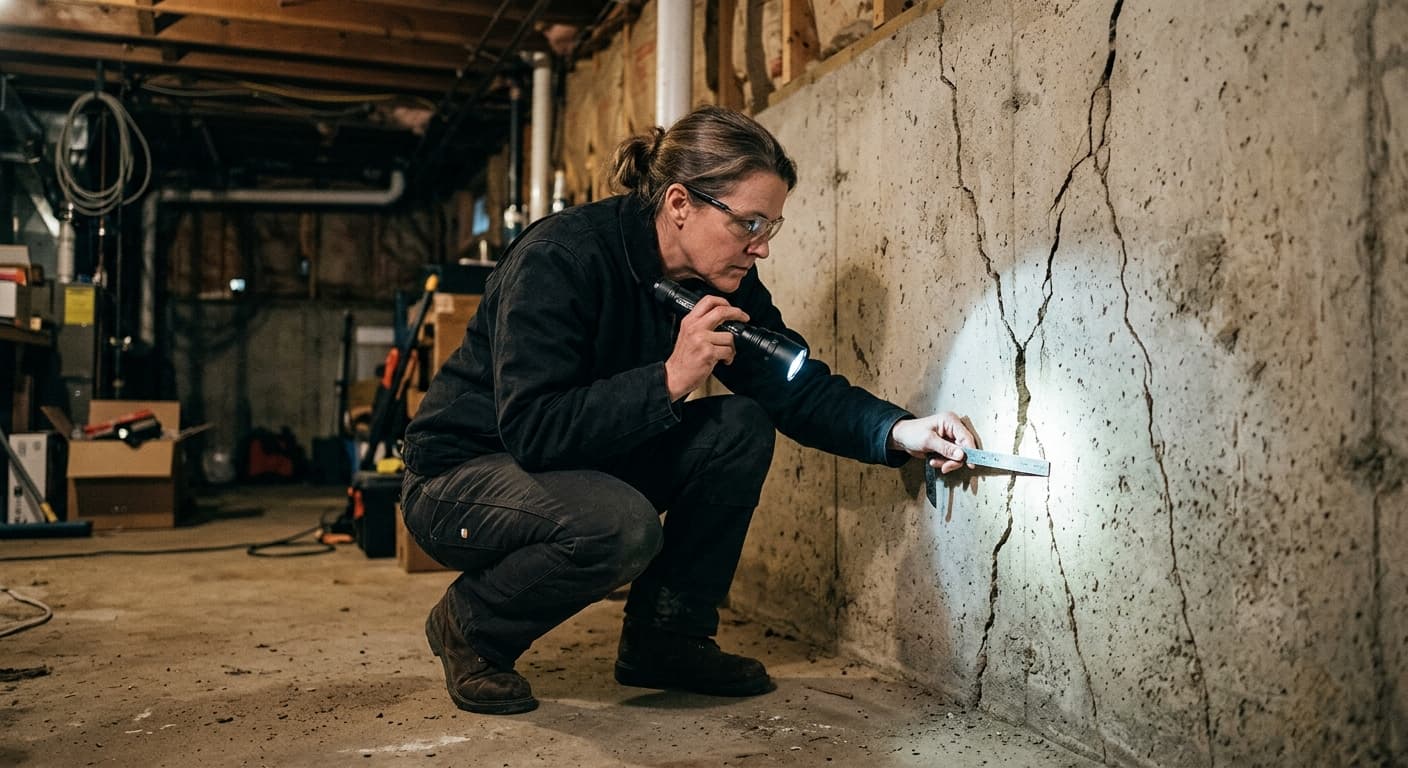
Foundation repair cost is confusing. You've noticed cracks in your basement wall. Or maybe your doors won't close properly anymore. You call three foundation repair companies, and the quotes come back at $3,500, $12,000, and $28,000 for what seems like the same problem.
How is that even possible? Are two contractors trying to rip you off? Is the cheap quote too good to be true? And most importantly, what's the actual fair price for foundation repair in your area?
Foundation repair costs vary dramatically by region, repair method, and the severity of your problem. But here's what most people miss: the wild variation in quotes often has less to do with price gouging and more to do with contractors diagnosing completely different problems or proposing vastly different solutions. Understanding what drives foundation repair cost, and what's normal for your specific situation, can save you thousands of dollars and protect you from both overpriced work and dangerously cheap shortcuts.
Let's break down exactly what foundation repairs actually cost, why prices differ so much by location, and how to spot fair pricing versus genuine red flags.
Foundation Repair Cost Breakdown: What Each Type Actually Costs
Foundation repair pricing isn't like buying a gallon of paint where the cost is relatively standard. It's more like car repair: the final bill depends on what's actually broken, how bad the damage is, and what method the contractor uses to fix it.
Quick Cost Reference by Repair Type:
| Repair Type | Typical Cost Range | Timeline |
|---|---|---|
| Minor crack repairs | $500–$1,500 | 1 day |
| Moderate structural repairs | $2,500–$7,000 | 2–5 days |
| Major pier installation | $8,000–$25,000 | 1–2 weeks |
| Complete foundation replacement | $40,000–$100,000+ | 3–6 weeks |
National Average Costs (And Why They're Misleading)
Most websites will tell you the national average foundation repair cost falls between $4,000 and $12,000. That's technically true, but it's also practically useless information. That range is so broad it could include everything from filling a few cosmetic cracks to installing dozens of steel piers under your entire house.
Here's what actually matters: the specific type of repair you need.
Minor crack repairs run $500 to $1,500. These are surface-level fixes using epoxy or polyurethane injections for small cracks that aren't structural threats. The work takes less than a day, and the materials cost is minimal. You're primarily paying for the contractor's expertise in identifying whether cracks are truly cosmetic or signal deeper problems.
Moderate repairs involving some structural reinforcement cost $2,500 to $7,000. This might include carbon fiber straps, wall anchors, or a handful of piers in one section of your foundation. These projects address actual structural issues but are limited to specific areas rather than affecting your entire home.
Major structural repairs range from $8,000 to $25,000 or more. These projects involve extensive pier installation, complete wall rebuilding, or addressing severe foundation settlement issues affecting large portions of your home. The higher foundation repair cost reflects both the amount of materials needed and the complexity of lifting and stabilizing significant portions of your structure.
The most expensive scenarios, complete foundation replacement or major underpinning of the entire structure, can exceed $40,000 to $100,000. These are rare but necessary when foundations have catastrophically failed. This level of work essentially involves rebuilding your home's entire support system while keeping the house above it intact.
Why Your Neighbor Paid $5,000 and Your Quote Is $18,000
Let's say you and your neighbor both have foundation cracks. You compare notes and discover vastly different quotes. This doesn't automatically mean someone's getting ripped off.
Your neighbor might have hairline cracks from normal settling that require simple sealing. You might have horizontal cracks with bowing walls that need wall anchors or helical piers to prevent collapse. Same symptom (cracks), completely different problems, dramatically different foundation repair costs.
Soil type matters enormously. Expansive clay soil, common in Texas, Colorado, and parts of California, causes more severe foundation movement than stable sandy soil. Fixing foundation damage caused by expansive soil requires more aggressive (and expensive) solutions because the underlying problem keeps applying pressure to your foundation. According to the USDA's Web Soil Survey, expansive clay soils are present in roughly half of U.S. states, and these clays can swell significantly when saturated and shrink equally when dry, creating constant stress on your foundation.
The depth of your foundation also affects what you'll pay. A shallow crawlspace foundation is easier and cheaper to access than a full basement. Pier installation in a 10-foot-deep foundation costs more than the same repair in a 4-foot crawlspace simply because of the additional materials and labor required to reach stable soil.
Regional Foundation Repair Cost Differences That Actually Matter
Geography dramatically impacts foundation repair cost. But it's not just about "expensive cities versus cheap rural areas." The real cost drivers are soil conditions, climate patterns, and local building codes.
High-Cost Regions and What Drives Prices Up
The Dallas-Fort Worth area has some of the highest foundation repair costs in the country, with major repairs frequently exceeding $20,000. Why? Expansive clay soil that swells when wet and shrinks when dry, creating constant foundation movement. The solution requires deeper piers (sometimes 15–20 feet deep to reach stable soil) and more aggressive stabilization than other regions. A DFW home commonly needs 12–18 piers where a home in stable soil would need 6–8.
Homeowners in the San Francisco Bay Area face elevated costs due to seismic requirements. Foundation repairs must meet strict earthquake standards, which means more engineering, specialized materials, and labor from contractors with specific certifications. A pier installation that costs $8,000 in Ohio might run $15,000 in the Bay Area for the same number of piers, with the difference going to seismic-rated materials and additional engineering oversight.
The Houston area deals with both expansive soil and high water tables, creating a perfect storm for foundation problems. Repairs need to address both structural foundation settlement and water management, increasing complexity and foundation repair cost. Houston repairs frequently include drainage systems and moisture barriers that wouldn't be necessary in drier climates.
Lower-Cost Regions (And Why Cheap Isn't Always Better)
Parts of the Midwest and Northeast with stable soil conditions see lower foundation repair costs. In areas with bedrock relatively close to the surface, foundation problems are less common and repairs are more straightforward.
A homeowner in Michigan might pay $6,000 for a repair that would cost $14,000 in Texas. Not because Michigan contractors are cheaper, but because the repair itself is simpler when you're not fighting aggressive soil movement. Piers may only need to extend 8–10 feet instead of 18–20 feet, and the soil doesn't require as many stabilization points.
However, lower regional costs don't mean you should accept the cheapest quote. A $3,000 quote in a region where repairs run $6,000 to $8,000 is a red flag. The contractor might be cutting corners, using substandard materials, or simply not understanding the full scope of the problem.
Climate Impact on Foundation Repair Pricing
Drought-prone areas see more foundation problems as soil pulls away from foundations, removing support. Areas with heavy rainfall face hydrostatic pressure issues pushing against foundation walls. Both require repairs, but the solutions differ.
In the Southwest, many foundation repair costs include addressing drainage issues to prevent future problems. This adds $1,500 to $5,000 to the total bill but prevents the same damage from recurring after you've paid for repairs. Without fixing the water management problem, you're just paying for temporary stabilization.
Freeze-thaw cycles in northern states create different foundation challenges. Frost heave can push foundations upward, requiring different repair approaches than foundation settlement issues. Contractors in these regions have developed efficient methods for addressing these specific problems, which can keep costs more reasonable despite the harsh climate.
Breaking Down Foundation Repair Methods and Their Costs
The repair method your contractor recommends has the single biggest impact on foundation repair cost. Understanding these methods helps you evaluate whether a quote makes sense.
Pier and Piling Systems: The Heavy Hitters
Steel push piers are the gold standard for lifting and stabilizing settled foundations. Each pier costs $1,200 to $1,500 installed, according to data from the Foundation Repair Association. Most homes need 8 to 20 piers for adequate support, putting total foundation repair cost at $10,000 to $30,000 for pier systems.
Steel piers are driven deep into stable soil or bedrock, creating permanent support that won't shift with soil movement. They're expensive, but they work. If your foundation has genuinely settled and needs lifting, piers are the right solution despite the cost. The steel is galvanized to prevent corrosion, and properly installed piers can support 60,000+ pounds each.
Helical piers (also called screw piers) cost slightly less at $1,000 to $1,400 per pier. They're screwed into the ground rather than pushed, which works well in certain soil conditions. The installation is faster and creates less disturbance, but they're not appropriate for every situation. Rocky soil or extremely dense clay can prevent helical piers from reaching adequate depth.
Concrete pressed pilings run $400 to $800 per pier and are common in some regions. They're cheaper but not always as reliable as steel in unstable soil conditions. Concrete can crack under stress, and the lower material cost sometimes attracts contractors more interested in profit margin than providing the best solution for your home.
Wall Repair Methods and What They Actually Fix
Carbon fiber straps cost $200 to $400 per strap, with most walls requiring 4 to 8 straps. Total foundation repair cost runs $2,000 to $5,000. These work for walls with minor bowing (less than 2 inches) that need stabilization to prevent further movement. Carbon fiber is incredibly strong, stronger than steel by weight, but it only prevents additional bowing. It doesn't push walls back into position.
Wall anchors (also called earth anchors) cost $400 to $600 each, with installations requiring 5 to 10 anchors. These are mechanical systems that use the weight of soil outside your foundation to pull bowed walls back into position. They're more invasive than carbon fiber but can actually correct significant bowing rather than just preventing it from getting worse. Installation requires excavation outside your foundation and drilling through the wall.
Steel I-beams installed vertically against basement walls cost $4,000 to $6,000 per beam. They're old-school but effective for severely compromised walls. The downside is they take up interior space (4–6 inches from your wall) and create permanent obstructions in your basement. They're less common now that carbon fiber and wall anchors provide less intrusive alternatives.
Foundation Stabilization Costs: Slabjacking and Mudjacking
Slabjacking (pumping material under settled concrete to lift it) costs $3 to $6 per square foot. For a 400-square-foot garage floor, that's $1,200 to $2,400. It's a cost-effective solution for concrete slabs that have settled but aren't severely cracked. The process involves drilling small holes, pumping a cement-based slurry underneath, and filling the void that caused settling.
Polyurethane foam injection is the modern version of mudjacking, costing $5 to $25 per square foot. It's more expensive but lighter (won't add weight that causes additional settling), faster-curing (ready to use in hours instead of days), and more precise. The higher foundation repair cost is justified by better results and less disruption.
These methods only work for concrete slabs, not for structural foundation problems affecting your home's walls or support system. Some contractors will suggest slabjacking for problems that actually need piers, which is like putting a Band-Aid on a broken bone. It might look better temporarily, but it won't solve the underlying issue.
Hidden Costs That Inflate Your Foundation Repair Bill
The quoted repair cost is rarely your final foundation repair cost. Understanding what else you might need to pay for prevents budget-busting surprises.
Engineering Reports and Structural Assessments
Many foundation repairs require a structural engineer's report, costing $500 to $1,500. Some contractors include this in their quote; others don't. In areas with strict building codes, you might not have a choice. The permit office requires an engineer's stamp before approving foundation work.
This cost is frustrating but valuable. An independent engineer's assessment protects you from unnecessary repairs. If a contractor says you need $20,000 in pier work but an engineer determines the cracks are cosmetic, you've saved thousands by spending $800 on the report. The engineer's analysis should include soil testing, foundation measurements, and specific recommendations for repair methods.
Permits and Inspections
Foundation repair permits cost $200 to $1,000 depending on your location and the scope of work. Some contractors pull permits as part of their service, others charge separately, and some try to skip permits entirely to save money.
Never agree to unpermitted foundation work. At Homeplexi, we've tracked contractor performance data across thousands of home repair projects, and contractors who pull permits have far fewer first-year complaints than those who don't. Beyond that pattern, unpermitted work creates serious legal and financial problems if the repair fails or you sell your home. Future buyers' home inspectors will spot foundation repairs, and if there's no permit record, you'll face questions about the work's quality and legality. When comparing quotes, ask explicitly whether permits are included in the foundation repair cost.
Drainage Improvements You Can't Skip
Your foundation problem might stem from poor drainage. Fixing the foundation without addressing water issues means you'll need repairs again in a few years.
French drain installation costs $2,000 to $6,000. These underground drainage systems collect water before it reaches your foundation and redirect it away from your home. Regrading your yard runs $1,000 to $3,000 and ensures water flows away from rather than toward your foundation. Gutter system improvements add $800 to $2,500. These aren't padding the bill; they're preventing you from paying for foundation repairs twice.
A contractor who recommends drainage improvements alongside foundation work is usually more honest than one who promises a foundation-only fix will solve everything. Water management is the difference between a permanent repair and a temporary patch that fails within 3–5 years.
Cosmetic Repairs After Foundation Work
Foundation repairs damage interior finishes. Drywall cracks, tile breaks, and doors need rehinging after your foundation moves back into position.
Budget an additional 10–20% of your foundation repair cost for cosmetic repairs. A $10,000 foundation job might require $1,500 in drywall and paint work. Some foundation companies offer these services; others don't. Know upfront who's responsible for making your home look normal again. Get this in writing. "We'll fix any drywall damage we cause" is vague. "We'll repair and paint up to 40 linear feet of drywall cracks" is specific.
How to Evaluate Foundation Repair Quotes Like a Pro
You've got three quotes on your kitchen table. Here's how to determine which represents fair pricing versus potential problems.
What Every Legitimate Quote Should Include
A detailed quote specifies the exact repair method, number of piers or anchors, warranty terms, and timeline. Vague quotes like "foundation stabilization: $12,000" are red flags. You need to know exactly what $12,000 buys.
Look for itemized costs breaking down materials, labor, permits, and additional services. This transparency lets you compare quotes accurately. One contractor might include drainage work in their $15,000 quote while another quotes $11,000 for foundation work alone, expecting you to handle drainage separately.
Warranty information matters enormously. Transferable lifetime warranties on the structural repair (not just materials) indicate a company stands behind their work. Short warranties or warranties that don't transfer to future homeowners suggest less confidence in the repair's longevity. Use this exact question: "If I sell my home in five years and the new owner has foundation issues, does your warranty transfer to them automatically, or is there a transfer process?"
Red Flags That Signal Problems
Pressure tactics like "this price is only good today" or "we can start tomorrow if you sign now" indicate a sales-focused company rather than a repair-focused one. Legitimate foundation contractors are booked weeks or months out. They don't need to pressure you into immediate decisions.
Quotes significantly lower than others deserve scrutiny. A $5,000 quote when others are $12,000 to $15,000 might mean the contractor doesn't understand the problem's severity, plans to use inferior materials, or will hit you with change orders once work begins. That foundation repair cost difference should make you ask questions, not celebrate savings.
Contractors who discourage getting multiple quotes or disparage competitors without explaining technical reasons why their approach is better are showing their insecurity, not their expertise. Industry experts consistently recommend getting at least three estimates for major foundation work. For more on this process, see our guide on how to compare contractor quotes.
Questions That Reveal Contractor Quality
Ask how many piers or anchors they're installing and why that number. A contractor should explain their calculation based on your home's weight, soil conditions, and damage severity. A red flag answer: "We typically do 10–12 piers for homes your size." That's a guess. An acceptable answer: "Your home has 2,400 square feet of living space, weighing approximately 240,000 pounds, and we're installing 14 piers rated at 20,000 pounds each to provide adequate support." That shows engineering knowledge.
Request references from jobs completed at least three years ago. Foundation repairs should last decades. Recent references only prove the contractor can make things look good initially, not that their repairs hold up over time. Contact these references and ask: "Has the repair held up? Any callbacks? Would you use them again?" If a contractor can't produce references older than a year, that's a warning sign.
Ask about their warranty claim process. Say this: "How many warranty claims did you handle last year, and what's your average response time?" A defensive or evasive answer suggests problems. A confident contractor will give specifics: "We handled about 15 warranty calls last year out of 300 jobs, mostly for minor settling adjustments, and we respond within 48 hours."
Inquire about soil testing and engineering involvement. For major repairs, proper soil analysis should inform the repair strategy. Contractors who skip this step are guessing about the best solution. Ask: "Will you do soil bearing tests to determine pier depth?" If they say it's not necessary for a repair over $10,000, walk away.
DIY Foundation Repair: When It's Possible and When It's Dangerous
Some foundation issues are DIY-friendly. Others will make your problems catastrophically worse if you tackle them yourself.
What Homeowners Can Actually Handle
Minor crack filling with epoxy or polyurethane is reasonable for handy homeowners. Kits cost $30 to $100 and work fine for hairline cracks (less than 1/8 inch wide) that aren't structural. This doesn't address underlying foundation movement, but it prevents water infiltration and stops small cracks from expanding. The process is straightforward: clean the crack, inject the filler, and smooth the surface.
Improving drainage around your foundation is excellent DIY work. Extending downspouts, adding splash blocks, and regrading soil away from your foundation costs $200 to $500 in materials and prevents many foundation problems from developing. This is preventive maintenance that reduces future foundation repair cost significantly.
Installing a sump pump in your crawlspace or basement runs $400 to $800 for a quality system. This is manageable for homeowners with basic plumbing skills and prevents water-related foundation damage. The installation involves digging a sump pit, placing the pump, and running discharge lines away from your foundation.
These DIY approaches don't reduce foundation repair cost if you already have structural damage, but they prevent minor issues from becoming expensive repairs. For guidance on when to tackle home repairs yourself versus hiring professionals, consider the risk-to-savings ratio.
When DIY Becomes Dangerous and Expensive
Attempting to install piers yourself is a terrible idea. Piers must reach stable soil or bedrock at precise angles with specific weight-bearing capacity. Improper installation can accelerate foundation failure rather than stop it. Professional pier installation requires specialized hydraulic equipment, engineering calculations, and experience reading soil conditions as the pier is driven.
Jacking up your foundation without proper support planning can crack your foundation or collapse your house. This isn't like changing your car's oil. The stakes are your home's structural integrity. Professional contractors use multiple jacks simultaneously, lift in small increments (1/8 inch at a time), and monitor stress points throughout the process.
Excavating around your foundation without understanding soil mechanics can undermine the very support you're trying to save. Homeowners who dig too deep or in the wrong locations cause additional settling. One homeowner reported paying $32,000 to fix damage from a DIY pier installation attempt that would have cost $14,000 if done professionally from the start.
The cost of fixing DIY foundation repair mistakes exceeds what professional repair would have cost originally. Foundation work has high risk and minimal savings potential; that's a bad combination for DIY.
Financing Foundation Repairs and Managing Foundation Repair Cost
Foundation repair cost arrives at the worst possible time. Few homeowners have $15,000 sitting in savings waiting for foundation problems.
Payment Options That Actually Work
Financing Comparison for a $12,000 Foundation Repair:
| Option | Typical Rate | Monthly Payment (3 yr) | Total Cost | Approval Speed |
|---|---|---|---|---|
| Contractor 0% promo (18 mo) | 0% then 22% | $667 (18 mo), then varies | $12,000 if paid in 18 mo; ~$15,800 if not | 24 hours |
| HELOC | 7–10% | $370–$390 | $13,320–$14,040 | 2–4 weeks |
| Personal loan | 10–15% | $387–$416 | $13,932–$14,976 | Same day |
| Credit card | 18–25% | $434–$480 | $15,624–$17,280 | Immediate |
Contractor financing through third-party lenders deserves careful reading. Those "0% interest" deals charge deferred interest if you don't pay the balance before the promotional period ends. That $12,000 repair becomes $15,800 if you miss the payoff deadline by one month.
Home equity loans or HELOCs offer lower interest rates if you have sufficient equity and good credit. The downside is longer approval times (2–4 weeks versus 24 hours for contractor financing) and closing costs that might add $500 to $1,000 to your total expense.
Personal loans are faster but carry higher interest rates. For smaller repairs under $10,000, they might make sense if you can pay them off within 2–3 years. The approval is quick (often same-day), and you're not using your home as collateral.
Credit cards should be your last resort unless you can pay the balance immediately. As the table shows, a $10,000 repair at 22% interest paid over five years costs $17,000 total.
Insurance Coverage: Don't Get Your Hopes Up
Standard homeowners insurance rarely covers foundation repair. Most policies specifically exclude damage from settling, soil movement, and poor maintenance. This surprises homeowners who assumed their insurance would help with major home repairs.
Insurance might cover foundation damage caused by specific covered events like burst pipes or certain natural disasters, but you'll need to prove the damage resulted directly from the covered event, not from pre-existing foundation issues. The burden of proof is on you, and insurance adjusters are skilled at finding reasons to deny claims.
Earthquake insurance and flood insurance have their own foundation coverage rules. If you live in an area requiring these policies, review what they actually cover before assuming you're protected. Most earthquake policies have high deductibles (10–20% of your home's value) that make them impractical for all but catastrophic damage.
Negotiating Foundation Repair Cost (Yes, It's Possible)
Foundation repair pricing has some flexibility, though less than car buying. Here are specific tactics that work:
Leverage timing. Say: "I'm flexible on scheduling. If I let you fit this in during a slow week, can you reduce the price by 5–10%?" Winter is the slow season for most foundation contractors, and filling schedule gaps saves them money they can pass along.
Bundle services. If you need both foundation repair and basement waterproofing, say: "I'd like to do both projects with one contractor to save on mobilization costs. What's the bundled price versus doing them separately?" You're saving them the cost of moving equipment and crews twice, and that savings should show up in your quote.
Challenge the scope, not the structure. Don't negotiate on the number of piers or quality of materials. Instead, try: "I've received quotes at $12,000 and $15,000 for similar scope. Can you walk me through why your estimate is $18,000 and where there might be flexibility?" This invites explanation rather than defensiveness.
You can also negotiate payment terms (paying half upfront instead of all), warranty upgrades (lifetime warranty instead of 25-year), or inclusion of minor additional services at no extra cost (sealing additional small cracks, extending one downspout).
Preventing Future Foundation Problems and Costs
The best foundation repair cost is the one you never have to pay. Proactive maintenance prevents many foundation issues from developing.
Moisture Management Is Everything
Consistent soil moisture prevents the expansion and contraction that damages foundations. Water your foundation during dry periods. Yes, really. In drought-prone areas, soaker hoses around your foundation perimeter keep soil moisture stable.
This costs $50 to $150 for soaker hoses and adds $20 to $40 monthly to your water bill during dry months. That's dramatically cheaper than foundation repairs. Run the soaker hoses for 30–45 minutes twice weekly during drought conditions, keeping soil consistently moist but not saturated.
Maintain gutters and downspouts to direct water at least 6 feet away from your foundation. Clogged gutters dump thousands of gallons directly against your foundation, creating hydrostatic pressure and soil erosion. Clean gutters twice yearly (spring and fall) and check downspout extensions after heavy storms.
Grading and Drainage Maintenance
Your yard should slope away from your foundation at least 6 inches over the first 10 feet. This grade naturally directs water away from your home.
Check this grade annually. Settling soil, landscaping changes, and erosion can eliminate proper grading over time. Regrading a small area costs $200 to $500 and prevents thousands in foundation damage. Use a level and measuring tape to verify the slope. If you've lost the proper grade, fix it before water damage occurs.
Tree and Vegetation Management
Large trees within 20 feet of your foundation can cause problems. Their roots seek water under your foundation during dry periods, and their water consumption dries soil unevenly. According to the U.S. Forest Service, a mature oak tree can consume 50–100 gallons of water daily from the surrounding soil during peak growing season.
You don't necessarily need to remove trees, but understand the risk. Root barriers cost $500 to $1,500 and prevent roots from growing under your foundation. Consistent watering between trees and your foundation keeps soil moisture stable, preventing the tree from pulling water from under your home.
Regular Inspections Catch Problems Early
Walk around your home's exterior quarterly looking for new cracks, gaps between walls and ground, or doors and windows that suddenly stick. Early detection means repairs cost hundreds instead of thousands. Take photos during each inspection to track whether cracks are growing.
Annual professional inspections cost $200 to $400 and catch problems before they become visible inside your home. This is especially valuable in regions with aggressive soil conditions like Texas, Oklahoma, and Colorado.
Using home maintenance management apps helps you stay on top of these regular inspections and maintenance tasks before small issues become expensive foundation repairs. Set reminders for quarterly exterior inspections, seasonal gutter cleaning, and annual professional assessments.
Making Your Foundation Repair Decision With Confidence
Foundation problems are stressful and expensive, but understanding what drives foundation repair cost helps you make informed decisions rather than panicked ones.
Start by getting at least three detailed quotes from reputable contractors. Don't just compare bottom-line numbers; evaluate the proposed repair methods, warranties, and company reputations. Before signing any contract, review what to ask a contractor before signing to protect yourself from common pitfalls.
Consider hiring an independent structural engineer for a second opinion on major repairs. The $800 investment might save you thousands if it reveals that expensive repairs aren't actually necessary or if it confirms that a lower-cost repair approach would be adequate. Engineers have no financial incentive to recommend expensive repairs; they're paid for their analysis, not the work itself.
Verify that your chosen contractor is licensed, insured, and has a solid track record. Check online reviews, but focus on reviews from at least 2–3 years ago that discuss how the repair has held up, not just how friendly the sales rep was. Recent reviews tell you about customer service; old reviews tell you about repair quality.
Don't delay necessary repairs to save money. Foundation damage worsens over time, and the longer you wait, the more expensive repairs become. A $4,000 repair today might be $12,000 in two years if the problem continues deteriorating. Foundation settlement is progressive; it doesn't fix itself.
The cheapest quote isn't always the best value. Foundation repairs should last decades. Paying 20% more for a contractor with better warranties, more experience, and higher-quality materials is the smarter financial decision long-term. Calculate the cost per year of expected service life, not just the upfront foundation repair cost.
The foundation repair cost that matters most isn't the one on the quote. It's the total cost of ownership including how long the repair lasts, whether it actually solves your problem, and whether you'll need additional repairs in five years. Choose contractors and repair methods based on long-term value, not just initial price.
Related Articles:
Need Professional Help?
Homeplexi connects you with vetted contractors, helps you compare quotes, and manages your entire home improvement project in one place.
Get Started Free →The Homeplexi editorial team consists of licensed contractors, home inspectors, and consumer protection experts who provide research-backed guidance for homeowners. All content is fact-checked and cited from authoritative industry sources.
Important Safety Disclaimer
Please read this carefully before following any advice:
- Always prioritize safety: Wear appropriate protective equipment (safety glasses, gloves, etc.) when performing any home maintenance or repair work.
- Know your limits: If you're not confident in your ability to safely complete a task, hire a licensed professional. This is especially important for electrical, gas, plumbing, and structural work.
- Verify all information: The guidance provided here is based on community discussions and general knowledge. Always double-check any advice with multiple reliable sources or a licensed professional.
- Follow local codes: Building codes, electrical codes, and plumbing codes vary by location. Ensure any work complies with your local regulations and obtain necessary permits.
- Turn off power/water/gas: Before working on electrical, plumbing, or gas systems, always shut off the relevant utilities at the source.
- For emergencies: If you have a gas leak, electrical fire, major water leak, or other emergency, evacuate immediately and call emergency services (911) and your utility company.
Liability: Homeplexi provides information for educational purposes only. We are not responsible for any injury, property damage, or losses resulting from following any guidance or advice provided through this platform. Use all information at your own risk.
When in doubt, always consult a licensed, insured professional contractor. Homeplexi can help you find qualified professionals in your area.
Found this helpful? Share with others:
Related Articles
Deck Building Cost: What You'll Actually Pay for Your Dream Outdoor Space
Deck quotes vary dramatically based on material choice, size, and region - homeowners need realistic cost expectations
The Complete Home Renovation Cost Estimator Guide: Budget Like a Pro in 2026
Uncertain about realistic budgets for major home improvement projects
Lawn Service vs Buying Mower Cost Comparison: The Complete Financial Guide for Homeowners
Unsure whether hiring lawn service or buying equipment saves more money long-term