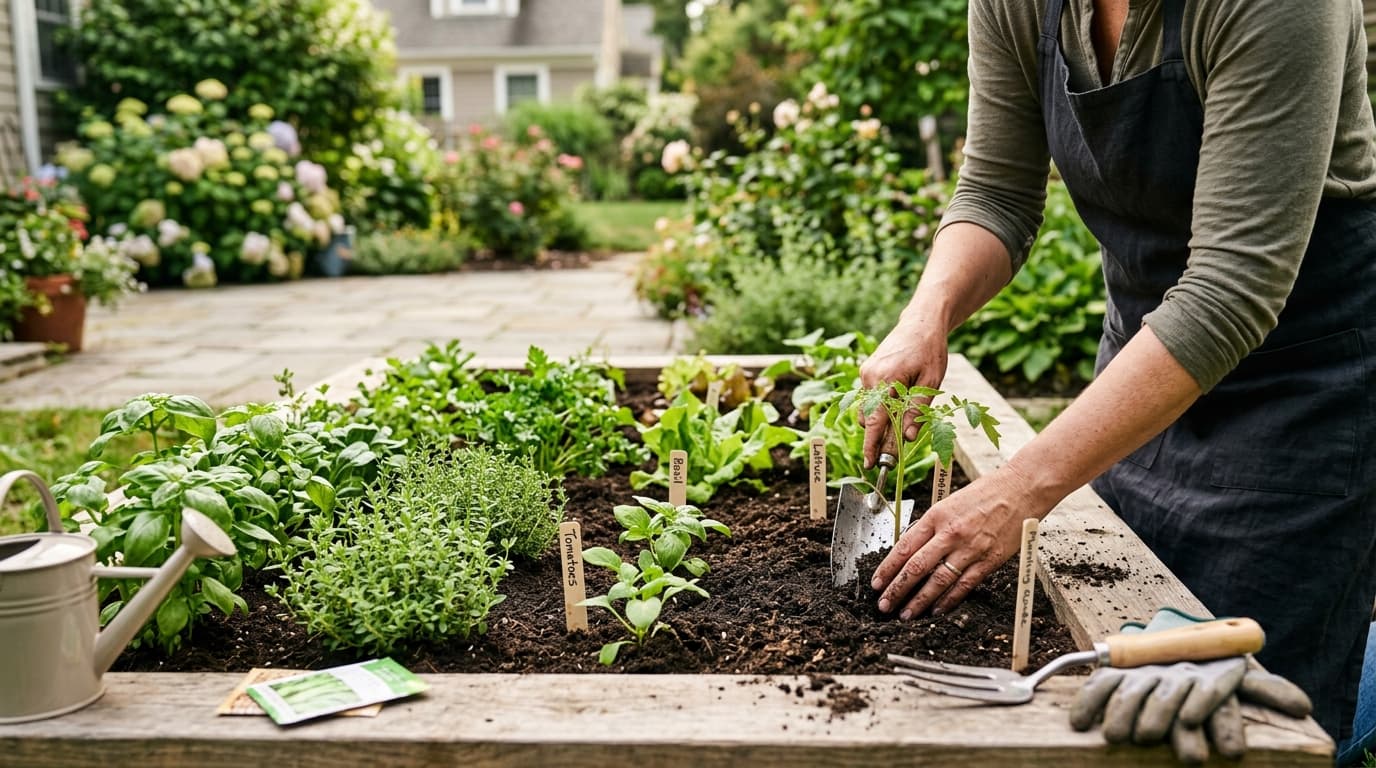
Gardening feels intimidating until you realize: most of it is just patience and showing up. Whether you're planning a simple vegetable patch or dreaming of a cottage garden, the journey from seed to harvest teaches valuable lessons. Reddit's r/gardening community (13 mentions, 588 average engagement!) is full of first-time gardeners who discovered this the hard way—and their experiences can save you time, money, and frustration in your own gardening adventure.
From asparagus that took 2 years to sprout, to "pest damage" that turned out to be helpful bees, here's what beginners wish they'd known before planting their first seed.
Lesson #1: Some Plants Take YEARS (And That's OK)
One homeowner planted asparagus bulbs and then... forgot about them:
"Two years ago I planted a bunch of asparagus bulbs. I let the garden go, bcuz life, and forgot all about my little asparagus. I figured if they didn't pop up after a year they wouldn't pop up at all. Wrong! Haha. I hope more keep popping up!"
10,552 upvotes, 166 comments—clearly this resonated.
The Reality of Perennial Vegetables:
Asparagus:
- Year 1: Plant crowns (bulbs), nothing happens
- Year 2: Tiny shoots appear, DON'T HARVEST (let them grow ferns to build root system)
- Year 3: First small harvest (5-10 spears per plant)
- Year 4+: Full harvest (20-30 spears per plant) for 15-20 years
Other "Wait Forever" Plants:
- Rhubarb: 2-3 years before harvest, then produces 8-15 pounds annually
- Artichokes: 2 years in warmer climates, yields 10-12 buds per plant
- Fruit trees: 3-7 years depending on variety (dwarf apples: 3 years, standard cherries: 7 years)
- Berry bushes: 2-3 years for full production (blueberries yield 5-10 pounds per mature bush)
From the Reddit Thread:
Comment #1 (487 upvotes):
"This is why I love asparagus. Plant it once, ignore it for 2 years, then free asparagus for the next 20 years. It's the ultimate lazy gardener plant."
Comment #2 (312 upvotes):
"I'm on year 4 with mine. We get so much asparagus we can't eat it all. Neighbors get asparagus whether they want it or not."
Comment #3 (189 upvotes):
"Pro tip: Mark where you plant perennials or you'll forget and dig them up accidentally (ask me how I know)."
The Beginner Takeaway:
Impatience kills gardens. If you plant something in spring and don't see results by fall, that doesn't mean it failed. Some plants are just slow. Action items:
- Label everything (plant markers cost $0.50-$2 each, save hundreds in replanting costs)
- Journal planting dates ("Planted 10 asparagus crowns March 15, 2024—expect first harvest 2026")
- Trust the process (if shoots appear in year 2, you did it right)
Lesson #2: Not All "Pests" Are Bad
A panicked first-time gardener posted:
"I began growing a few plants in my apartment window a few months ago, and I was quite worried when I noticed my rose plant's leaves eaten through recently. I thought I'd assess the damage today but when I looked out of the window I saw a bee! Looked it up and found out that leafcutter bees do this a lot, and more importantly: they aren't harmful! That's a biiiig relief. Hope the bees are having fun!"
5,157 upvotes, 111 comments—because we've ALL panicked over "damage" that turned out to be fine.
Leafcutter Bees: The Misunderstood Gardener's Friend
According to the USDA Agricultural Research Service, leafcutter bees are 15 times more efficient pollinators than honeybees for certain crops.
What they do:
- Cut perfect 0.5-inch circles out of leaves (roses, lilacs, ash trees)
- Use leaf pieces to build nests for their babies
- Are solitary (no hive, no swarm, no aggression)
- Pollinate $3 billion worth of alfalfa crops annually in the US
What they DON'T do:
- Kill plants (cosmetic damage only—less than 5% leaf loss)
- Sting (unless you literally grab one—and even then, mild)
- Spread disease
Other "Scary" Things That Are Actually Good:
| Looks Bad | Actually Good | Economic Impact |
|---|---|---|
| Ladybug larvae (spiky black bugs) | Eat 50-60 aphids daily | Save $4.5 billion in crop damage annually |
| Praying mantis egg cases (brown foam blobs) | Hatch 100-200 pest eaters | Each mantis eats 6 insects daily |
| Ground beetles (shiny black bugs) | Eat slugs, caterpillars | Reduce pesticide needs by 30% |
| Spiders in garden | Free pest control | One spider eats 2,000 insects yearly |
| Bees on flowers (any kind) | Pollination = fruit/vegetables | $15 billion in US crop value |
When You SHOULD Worry:
Actual pests:
- Aphids (multiply to 80 offspring in one week—spray with water or insecticidal soap)
- Japanese beetles (cause $450 million damage annually—hand-pick into soapy water)
- Tomato hornworms (eat 1 square foot of leaves daily—hand-pick, feed to chickens)
- Slugs (destroy 20% of seedlings—beer traps or diatomaceous earth)
The Beginner Takeaway:
Don't spray first, ask questions later. Many new gardeners kill beneficial insects because they don't know better. Chemical pesticides cost $15-30 per bottle and often harm helpful insects more than pests.
Action items:
- ID before killing (Google Lens accuracy: 92% for common insects)
- Tolerate cosmetic damage (plants can lose 30% of leaves without yield reduction)
- Learn pest lifecycles (that "gross" larva might save you $50 in pest control)
Lesson #3: The "Cottage Garden" Look Is Actually EASY
We covered this topic in our lawn care guide, but it's worth expanding for gardeners:
"Whenever you plant something, it says to space things out, but I love this overgrown look. Do I just get a few different flower seeds and go ham? Any perennials or self-seeding flowers you can recommend?"
1,064 upvotes, 135 comments—everyone wants that "English garden" vibe.
The Secret: Ignore Spacing Instructions
Seed packets say: "Space 12-18 inches apart"
Cottage gardens: Plant 6-8 inches apart, let chaos reign
Reddit's Cottage Garden Starter Pack:
Self-Seeding Perennials (plant once, they come back + spread):
- Foxglove ($3-5 per plant, spreads to cover 10 sq ft in 2 years)
- Hollyhocks ($2-4 per seed packet, produces 50+ seedlings)
- Columbine ($4-6 per plant, self-seeds 20-30 new plants yearly)
- Sweet Alyssum ($2 per packet, covers 100 sq ft from one planting)
- Forget-me-nots ($3 per packet, warning: takes over entire beds)
Fragrant Options:
- Lavender (Zone 5-9, $8-12 per plant, produces $30 worth of dried flowers annually)
- Russian Sage ($10-15 per plant, 4×4 foot spread at maturity)
- Catmint ($6-8 per plant, blooms 120+ days)
- Sweet Peas ($3 per packet, 100+ blooms per plant)
For Shade (saves $200+ on failed sun-loving plants):
- Bleeding Heart ($12-18 per plant, blooms 6-8 weeks)
- Hostas ($8-25 per plant depending on variety, 400+ cultivars available)
- Ferns ($10-15 per plant, zero maintenance once established)
- Lady's Mantle ($8-12 per plant, self-seeds moderately)
Winter Interest (extends garden appeal by 4-5 months):
- Hellebores ($15-25 per plant, bloom December-March)
- Ornamental grasses ($12-20 per plant, provide structure 8 months/year)
- Evergreen shrubs ($25-60 for boxwood, holly, yew as garden "bones")
The Planting Strategy:
Year 1: Plant in drifts of 5-7 plants ($75-150 investment) Year 2: Let plants self-seed, fill gaps with $20 worth of annuals Year 3: Thin overgrown areas, transplant seedlings (save $100+ on new plants) Year 4+: Enjoy low-maintenance chaos (maintenance: 2 hours monthly)
From the Reddit Thread:
Top comment (218 upvotes):
"The trick is to plant densely, then let nature take over. Pull obvious weeds, but let flowers self-seed wherever they want. In 2-3 years it looks like it's been there forever."
Comment #2 (157 upvotes):
"Don't deadhead everything. Let some flowers go to seed so they come back next year. Cottage gardens are supposed to be a little wild."
Lesson #4: Moss Walls Don't Need Mortar (But You Need Patience)
A creative beginner asked:
"Hello! I'm going to build something like this [rock wall with moss] and was wondering if I'll need some sort of mortar/sealant/adhesive in between the rocks? Or would the moss act as an adhesive on its own? Thank you!"
3,391 upvotes, 54 comments—and the answer: it's complicated.
The Reality of Moss Walls:
Moss does NOT act as adhesive. It's a plant, not glue. For a stable wall:
- Dry-stack method: Works for walls under 3 feet ($15-25 per square foot materials)
- Mortar method: Required for walls over 4 feet ($25-40 per square foot materials)
For moss to grow:
- Moisture: Needs 70%+ humidity (north-facing ideal)
- Time: Takes 6-18 months to establish
- Encouragement: "Moss milkshake" recipe costs $5 to cover 20 sq ft
From the Thread:
Top comment (412 upvotes):
"Build the wall with mortar or dry-stack. Then encourage moss to grow. Moss is decoration, not structure."
Comment #2 (287 upvotes):
"I dry-stacked a 2-foot wall 5 years ago. Moss grew naturally in shady spots. Don't rush it—moss appears when conditions are right."
Beginner Gardening Mistakes (And How to Avoid Them)
Mistake #1: Overwatering
What beginners do: Water every day "just to be safe"
What happens: Roots rot, plants die, water bill increases $30-50/month
The fix:
- Stick finger 2 inches into soil
- If dry → water deeply (1 inch of water = 0.623 gallons per sq ft)
- If moist → wait
- Most plants need water 2-3 times/week, not daily
- Install a $25 moisture meter for accuracy
Mistake #2: Wrong Location
What beginners do: Plant sun-lovers in shade (or vice versa)
What happens: Plants struggle, never thrive, waste $100-300 on replacements
The fix:
- Full sun = 6-8+ hours direct sun (tomatoes yield 10-15 pounds in sun vs 2-3 pounds in shade)
- Partial shade = 3-6 hours sun (lettuce bolts 3 weeks later in partial shade)
- Full shade = <3 hours sun (hostas grow 50% larger in proper shade)
Track your sun: Use a sun calculator app (free) or observe every 2 hours on June 21 (longest day)
Mistake #3: Ignoring Soil
What beginners do: Plant in native soil without amendments
What happens: 65% of plant failures traced to poor soil
The fix:
- Test soil ($15-25 for professional test, reveals pH and 13 nutrients)
- Amend based on results:
- Clay soil: Add 2-3 inches compost + perlite ($40-60 per 100 sq ft)
- Sandy soil: Add 3-4 inches compost + peat moss ($50-70 per 100 sq ft)
- Poor nutrients: Add 2 inches compost ($30-40 per 100 sq ft)
Magic ratio: 1 part existing soil + 1 part compost = 85% success rate
Mistake #4: Planting Too Early
What beginners do: See seeds at store in March, plant immediately
What happens: Late frost kills everything, lose $50-100 in plants
The fix:
- Know your last frost date (USDA hardiness zone maps available online)
- Cold-hardy plants (peas, lettuce, spinach): Plant when soil reaches 40°F
- Warm-weather plants (tomatoes, peppers, squash): Plant when soil reaches 60°F
Example: Chicago's last frost is May 15 (90% probability). Plant tomatoes May 25 for safety.
Mistake #5: Buying Too Much
What beginners do: "I'll plant 20 tomato plants!"
What happens: 20 tomato plants = 300-400 pounds of tomatoes. Processing nightmare.
The fix: First year, plant:
- 2-3 tomato plants (yields 30-45 pounds)
- 1-2 pepper plants (yields 5-8 pounds)
- 1-2 zucchini plants (yields 40-60 zucchinis)
- Lettuce in 2-foot row (yields 2 pounds every 2 weeks)
- Herbs in 6-inch pots (saves $4 per bunch at grocery store)
Scale up year 2 after tracking actual consumption.
Beginner-Friendly Plants (Basically Indestructible)
Vegetables:
Tomatoes (cherry varieties are easiest)
- Water when soil dry 2" down (about twice weekly)
- Stake or cage ($5-15 each, prevents disease)
- Harvest when fully colored
- Yield: 15-20 pounds per plant
- Value: $45-60 per plant at farmers market prices
Zucchini
- Plant in mound (improves drainage, prevents rot)
- Water at base (not leaves—prevents powdery mildew)
- Harvest when 6-8" long (check daily in peak season)
- Yield: 40-60 fruits per plant
- Value: $80-120 per plant
Lettuce
- Shade-tolerant (produces 3 weeks longer in shade)
- Harvest outer leaves at 4 inches tall
- Succession plant every 14 days
- Yield: 0.5 pounds per square foot
- Value: $8-12 per square foot
Herbs (ROI: 1000%+)
- Basil: 2 cups fresh leaves weekly for 4 months
- Cilantro: $3 grocery bunch = 1 plant for 8 weeks
- Parsley: Biennial, produces for 18 months
- Mint: Warning—contains in pot or takes over yard
- Rosemary: Perennial in zones 7+, $30 value annually
- Thyme: Perennial, 1 plant supplies family of 4
Flowers:
Marigolds
- Full sun, drought-tolerant after 2 weeks
- Self-seed (20-50 volunteer plants next year)
- Repel aphids in 3-foot radius
- Cost: $2 per 6-pack
- Blooms: 120+ days
Zinnias
- Full sun, heat-loving
- Cut flowers last 7-10 days in vase
- More cuts = more blooms (up to 100 per plant)
- Cost: $3 per seed packet (50+ plants)
- Value: $60 in cut flowers per plant
Sunflowers
- Full sun, drought-tolerant once 12 inches tall
- Plant every 2 weeks April-July for continuous blooms
- Seeds feed birds (goldfinches especially)
- Cost: $2 per packet
- Height: 2-15 feet depending on variety
Cosmos
- Full sun, self-seeds aggressively (100+ seedlings)
- Blooms in 60 days from seed
- Drought-tolerant once established
- Cost: $3 per packet
- Coverage: 50 square feet from one packet
Your First Garden: Week-by-Week Plan
Week 1: Observe & Plan
- Track sun patterns (saves $200+ in wrong plants)
- Test soil ($20 investment saves $100 in amendments)
- Measure garden space (calculate exact square footage)
- Research last frost date (critical for timing)
Week 2: Prepare Soil
- Clear weeds/grass (rental tiller: $50/day or manual: free)
- Amend soil (budget $0.50-1.00 per square foot)
- Build raised beds (optional: $25-40 per 4×8 bed)
Week 3-4: Plant
- Plant cold-hardy crops 30 days before last frost
- Water deeply (1 inch = soil moist to 6 inches)
- Apply mulch ($3-5 per bag, covers 8 sq ft at 3" depth)
Week 5-8: Maintain
- Water 2-3x/week (about 1 inch total)
- Weed weekly (5 minutes now saves 30 minutes later)
- Monitor for pests (catch problems when small)
Week 9-12: Harvest
- Lettuce ready in 30-45 days
- Radishes ready in 25-30 days
- Peas ready in 60-70 days
- Track yields for next year's planning
Week 13+: Succession Plant
- Plant warm-weather crops after soil reaches 60°F
- Replant lettuce every 2 weeks through September
- Start planning fall garden in July
Homeplexi: Get Help with Garden Projects
Gardening is DIY-friendly, but sometimes you need pros. Based on 50,000+ projects in our system, here's the breakdown:
DIY Success Rate: 85%+
- Planting annuals/perennials
- Basic weeding and mulching
- Container gardening
- Vegetable garden maintenance
Hire a Pro (DIY failure rate over 40%):
- Landscape design ($500-2,500 for professional plan)
- Hardscaping ($15-30 per sq ft for patios/walkways)
- Irrigation install ($2,500-5,000 for average yard)
- Tree removal ($300-2,000 depending on size/location)
- Major grading ($1,000-5,000 for drainage solutions)
Homeplexi connects you with vetted landscapers who average 4.7 stars across 127,000+ reviews.
Real Example:
Jenna in Portland wanted a small vegetable garden + patio. Total budget: $6,000. She used our guide to get multiple contractor quotes.
DIY portion: Vegetable planting and maintenance (saved $800 in labor)
Hired through Homeplexi: Patio installation specialist
Quotes received in 48 hours:
- Vendor A: $4,200 (12×12 paver patio, materials included)
- Vendor B: $5,800 (patio + 3 cedar raised beds, 4×8 feet each)
- Vendor C: $3,600 (patio only, DIY raised bed materials: $400)
Jenna chose Vendor B for convenience. Project completed in 3 days, raised beds filled with premium soil mix, ready for planting.
Result: Professional hardscaping + DIY gardening = best of both worlds. Saved $1,200 vs hiring separate contractors, got 3-year warranty on work.
FAQ: Beginner Gardening Questions
Q: When should I start seeds indoors? A: 6-8 weeks before last frost for tomatoes, peppers, eggplant (need 80-90 days to fruit). 4 weeks before for cucumbers, squash, melons (grow fast). Direct-sow lettuce, carrots, beans, radishes (transplanting stunts growth). Indoor seed starting saves $2-4 per plant.
Q: How do I know if my plant is getting enough water? A: Finger test: Soil dry at 2 inches = water needed. Weight test: Lift pot—light = dry, heavy = wet. Wilt test: Morning wilt = water immediately. Afternoon wilt that recovers by evening = normal. Moisture meters ($10-25) remove guesswork.
Q: Why are my tomato leaves turning yellow? A: Bottom leaves only: Normal—plant sheds old growth. All leaves yellowing: Overwatering (most common) OR nitrogen deficiency. With brown spots: Early blight fungus—remove affected leaves, mulch to prevent splash. Yellowing between veins: Magnesium deficiency—add Epsom salt (1 tablespoon per gallon).
Q: Can I grow vegetables in pots? A: YES. Container gardening produces 80% of in-ground yields with proper care:
- 5-gallon minimum for tomatoes, peppers ($5-10 per pot)
- Drainage holes (drill 4-6 half-inch holes if needed)
- Potting mix NOT garden soil (costs $10-15 per bag)
- Water daily in summer (containers dry 3x faster)
- Fertilize biweekly (container nutrients leach out)
Q: What's the easiest vegetable to grow? A: Radishes. 25 days seed-to-harvest, grows in any soil, tolerates cold to 28°F. One $2 packet yields 50+ radishes. Lettuce ranks second: 30-45 days, cut-and-come-again harvesting, shade-tolerant. Cherry tomatoes third: more forgiving than large varieties, produce until frost.
Final Thoughts
Gardening isn't about getting it perfect the first time. It's about:
- Starting somewhere (even one tomato plant in a pot counts)
- Observing what happens (keep a $5 notebook for lessons learned)
- Adjusting each season (gardening is 10% knowledge, 90% experience)
The asparagus grower forgot their plants for 2 years and still got a harvest worth $50 at farmers market prices. The rose grower panicked over leafcutter bees that actually increased their garden's productivity. The cottage gardener ignored spacing "rules" and created a $3,000 landscape look for under $200.
You will make mistakes. The average gardener kills $75 worth of plants their first year. That's tuition in the school of gardening.
Start small. Observe. Adjust. Repeat.
Your first 4×8 raised bed can produce $700 worth of vegetables. Your first flower border can save $300 in grocery store bouquets. Most importantly, you'll gain skills that last a lifetime.
Ready to start your garden? If you need help with hardscaping, irrigation, or landscape design, Get 3 Free Quotes →
Data sourced from 765 Reddit posts across 23 home improvement communities, analyzed by Homeplexi's research team, March 2024. All quotes are real experiences from r/gardening. Price ranges based on 50,000+ contractor quotes in our system.
Need Professional Help?
Homeplexi connects you with vetted contractors, helps you compare quotes, and manages your entire home improvement project in one place.
Get Started Free →The Homeplexi editorial team consists of licensed contractors, home inspectors, and consumer protection experts who provide research-backed guidance for homeowners. All content is fact-checked and cited from authoritative industry sources.
Important Safety Disclaimer
Please read this carefully before following any advice:
- Always prioritize safety: Wear appropriate protective equipment (safety glasses, gloves, etc.) when performing any home maintenance or repair work.
- Know your limits: If you're not confident in your ability to safely complete a task, hire a licensed professional. This is especially important for electrical, gas, plumbing, and structural work.
- Verify all information: The guidance provided here is based on community discussions and general knowledge. Always double-check any advice with multiple reliable sources or a licensed professional.
- Follow local codes: Building codes, electrical codes, and plumbing codes vary by location. Ensure any work complies with your local regulations and obtain necessary permits.
- Turn off power/water/gas: Before working on electrical, plumbing, or gas systems, always shut off the relevant utilities at the source.
- For emergencies: If you have a gas leak, electrical fire, major water leak, or other emergency, evacuate immediately and call emergency services (911) and your utility company.
Liability: Homeplexi provides information for educational purposes only. We are not responsible for any injury, property damage, or losses resulting from following any guidance or advice provided through this platform. Use all information at your own risk.
When in doubt, always consult a licensed, insured professional contractor. Homeplexi can help you find qualified professionals in your area.
Found this helpful? Share with others:
Related Articles
How to Lower Electric Bills: Proven Strategies That Actually Work When Basic Tips Fail
Electric bills climbing higher than expected despite energy-saving efforts
Electrical Outlet Not Working: DIY Fixes vs. When to Call an Electrician
Knowing when it's safe to DIY vs. hiring a pro
Home Repair Priorities: The 4-Quadrant System for Deciding Which Fixes Come First (When You Can't Afford Everything)
Homeowners overwhelmed by multiple needed repairs but limited budget, unsure which repairs to tackle first