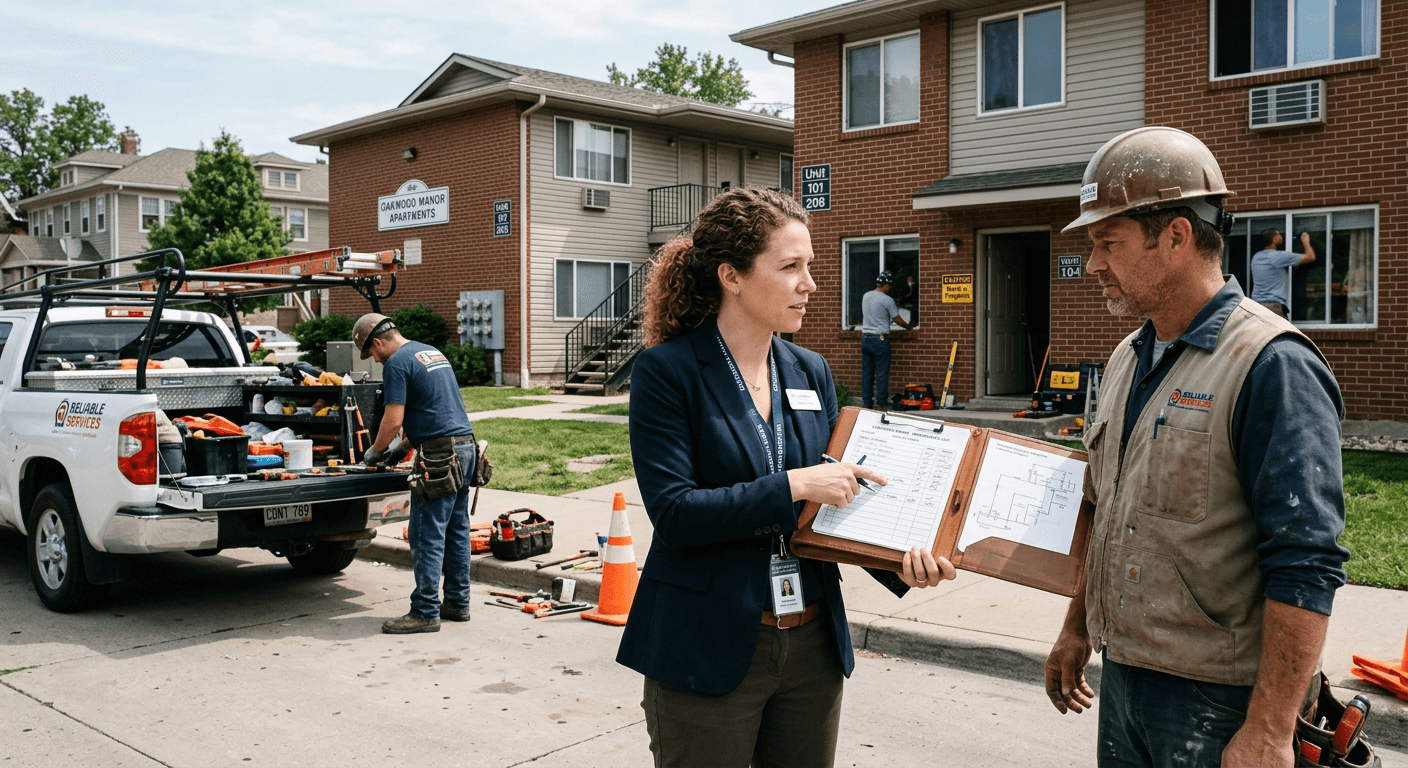
Property Management Nightmares: How to Coordinate Multiple Contractors
Picture this: It's Tuesday morning, and your phone is already buzzing with calls. The plumber was supposed to finish the kitchen work at Property A before the electrician arrived, but he's running two days behind. Meanwhile, the flooring contractor at Property B can't start because the HVAC team hasn't completed the ductwork. And don't even get started on Property C, where three different contractors are somehow all scheduled for the same day in the same room.
Sound familiar? If you're managing multiple properties, you've probably lived this nightmare more than once.
Managing property management contractors isn't just about finding good people—it's about orchestrating a complex dance of schedules, dependencies, and moving parts. When done wrong, it leads to costly delays, frustrated contractors, and stressed-out property managers. When done right, it's the difference between profitable properties and money pits.
The Real Cost of Poor Contractor Coordination
Before diving into solutions, let's talk about what's really at stake when property management contractors aren't properly coordinated:
- Time delays that push projects weeks or months behind schedule
- Increased labor costs from contractors charging rush fees or having to return multiple times
- Property vacancy losses when units can't be rented due to incomplete work
- Contractor relationship damage that makes it harder to book reliable pros in the future
- Stress and burnout from constantly firefighting coordination problems
The average property manager juggling multiple contractors wastes 15-20 hours per week just on scheduling conflicts and miscommunication issues. That's time you could be spending growing your business or actually enjoying life.
At Homeplexi, we've analyzed thousands of contractor projects and found that poor coordination typically adds 30-40% to total project costs. Even worse, it creates a ripple effect: one delayed project throws off your entire portfolio's maintenance schedule, leading to emergency repairs that could have been prevented with proper planning.
Hidden Costs Most Property Managers Miss
Beyond the obvious expenses, poor coordination creates several hidden costs:
Tenant dissatisfaction and turnover: When repairs drag on for weeks, tenants get frustrated. We've seen property managers lose excellent long-term tenants simply because a bathroom renovation that should have taken five days stretched into three weeks of coordination chaos.
Contractor quality degradation: When good contractors constantly deal with scheduling conflicts and other trades' mistakes, they start avoiding your properties. You're left working with whoever's available, not whoever's best.
Legal and compliance risks: Overlapping contractors can create liability issues. If an electrician gets injured because a plumber left water on the floor, who's responsible? Poor coordination increases these risks exponentially.
When to DIY vs. When to Hire Professional Project Coordination
Not every contractor coordination challenge requires professional help, but knowing when to handle it yourself versus when to bring in experts can save you thousands.
DIY Coordination Works When:
- You're managing 3 or fewer properties simultaneously
- Projects are simple and don't require trade dependencies (like painting after electrical work)
- You have reliable, long-term contractor relationships
- Timelines are flexible with no hard deadlines
- You have at least 10 hours per week to dedicate to active management
- Your properties are within a 30-minute drive of each other
Professional Help Makes Sense When:
- You're coordinating 5+ contractors across multiple properties
- Projects involve complex trade sequences (electrical → plumbing → drywall → flooring)
- You're dealing with tenant-occupied properties requiring precise scheduling
- Missing deadlines would cost significant rental income
- Properties are spread across different cities or regions
- You're managing commercial properties with strict compliance requirements
The Hybrid Approach
Many successful property managers use a hybrid approach: they handle routine maintenance coordination themselves but bring in professionals for major renovations or when managing multiple complex projects simultaneously. This balances cost control with sanity preservation.
5 Proven Strategies to Master Contractor Coordination
1. Create a Master Project Timeline
Stop managing projects in your head or on sticky notes. Successful property management contractors coordination starts with visual project mapping.
Create a timeline that shows:
- Which contractors need to complete work before others can start
- Buffer time between trades (always add 20% extra time)
- Material delivery schedules
- Inspection requirements
- Final walkthrough dates
Pro tip: Use color coding for different properties and trade types. This makes it easy to spot scheduling conflicts at a glance.
Building Your Master Timeline
Start by listing every task in reverse order, beginning with your target completion date and working backward. This reverse engineering approach helps identify unrealistic timelines before work begins.
For example, if you need a unit ready for a new tenant on June 1st:
- May 28-31: Final cleaning and walkthrough
- May 25-27: Touch-up painting and minor repairs
- May 20-24: Flooring installation
- May 15-19: Painting (walls and ceilings)
- May 10-14: Electrical and plumbing updates
- May 5-9: Drywall repairs and prep work
This approach immediately shows if your timeline is realistic and where you might need to adjust expectations or add resources.
2. Establish Clear Communication Protocols
The biggest source of contractor coordination nightmares? Poor communication. Set these ground rules:
- Daily check-ins via text or project management app
- Photo updates showing work progress
- 24-hour advance notice for any schedule changes
- Single point of contact (you) for all scheduling questions
Make it clear to all property management contractors that communication isn't optional—it's part of the job requirements.
Communication Templates That Work
Create standardized messages for common situations:
Daily Check-in Template: "Hi [Contractor Name], please confirm:
- Today's progress (send photos)
- Tomorrow's plan
- Any issues or delays
- Materials needed for next phase"
Schedule Change Template: "Schedule update for [Property Address]:
- Original date: [Date]
- New date: [Date]
- Reason: [Brief explanation]
- Impact on other trades: [List affected contractors]"
Having templates reduces communication friction and ensures nothing gets missed.
3. Build in Buffer Time and Backup Plans
Murphy's Law applies double to property management. Whatever can go wrong, will go wrong, and usually at the worst possible moment.
Smart coordination includes:
- 20% buffer time between dependent tasks
- Backup contractor contacts for each trade
- Weather contingency plans for exterior work
- Material shortage alternatives researched in advance
Creating Effective Contingency Plans
Your contingency planning should include:
The "Three Deep" Rule: Have three qualified contractors for each trade type. Your primary, a reliable backup, and an emergency option who might cost more but can mobilize quickly.
Material Substitution Lists: Work with contractors to pre-approve acceptable substitutions for commonly used materials. When your preferred tile is backordered six weeks, you'll already know what alternatives work.
Scope Flexibility Plans: Identify which project elements are must-haves versus nice-to-haves. If timelines compress, you'll know exactly what can be postponed without impacting property rentability.
4. Use Technology to Your Advantage
Stop trying to manage everything with phone calls and handwritten notes. Modern property managers use:
- Project management apps that show real-time progress
- Shared calendars that contractors can access and update
- Photo documentation to track work completion
- Digital contracts and change orders
The goal is creating transparency where everyone knows what's happening, when, and what comes next.
Tech Stack for Property Management Coordination
Essential Tools:
- Scheduling Software: Tools like Buildertrend or CoConstruct designed for construction coordination
- Communication Platforms: Slack or Microsoft Teams for real-time updates
- Document Management: Cloud storage with organized folders for each property
- Time Tracking: Apps that log when contractors arrive and leave
Advanced Tools:
- 3D Scanning Apps: Document property conditions before and after work
- Drone Services: For roof and exterior inspections without scheduling conflicts
- Smart Locks: Give contractors temporary access codes, eliminating key handoffs
5. Create Contractor Accountability Systems
Great property management contractors appreciate clear expectations and consequences. Poor ones need them.
Implement systems like:
- Performance scorecards tracking timeliness, quality, and communication
- Financial incentives for projects completed on time and on budget
- Penalty clauses for delays that aren't weather or permit related
- Regular performance reviews with constructive feedback
Building Your Contractor Scorecard System
Track these key metrics:
Timeliness Score (40% weight):
- Arrival within scheduled window
- Project completion vs. estimated timeline
- Response time to communications
Quality Score (40% weight):
- Work passes inspection first time
- Tenant satisfaction ratings
- Need for callbacks or repairs
Communication Score (20% weight):
- Provides daily updates without prompting
- Notifies of delays immediately
- Maintains professional communication
Contractors scoring above 85% get priority scheduling and potential rate increases. Those below 70% get improvement plans or replacement.
Advanced Coordination Strategies for Scaling Property Managers
As your portfolio grows, basic coordination strategies aren't enough. Here's what separates professional property managers from overwhelmed landlords:
Zone-Based Scheduling
Group properties by geographic area and schedule all maintenance for that zone on specific days. This reduces contractor travel time and makes it easier to handle emergencies.
For example:
- Mondays: North side properties
- Tuesdays: Downtown units
- Wednesdays: South side properties
- Thursdays: Suburban properties
- Fridays: Emergency repairs and catch-up
Seasonal Batch Processing
Instead of handling HVAC maintenance as units need it, batch all properties together:
- March: All AC tune-ups
- October: All heating system checks
- June: All exterior painting projects
- September: All gutter cleaning
This approach gives you negotiating power with contractors and reduces coordination complexity.
The Contractor Summit Approach
Quarterly, bring your key contractors together for a planning session. Cover:
- Upcoming major projects
- Scheduling preferences and blackout dates
- Process improvements
- Introduction of new team members
- Appreciation and recognition
These summits build team cohesion and catch coordination issues before they become problems.
Red Flags: When Contractor Coordination is Breaking Down
Watch for these warning signs that your coordination system needs immediate attention:
- Contractors regularly showing up at wrong times or wrong properties
- Multiple trades trying to work in the same space simultaneously
- Materials sitting on job sites for weeks without being installed
- Contractors complaining about other trades or asking "who's in charge here?"
- Projects consistently running 50% over estimated timelines
- Increasing contractor no-shows or last-minute cancellations
- Rising costs from rush fees and emergency scheduling
- Tenant complaints about extended disruption
- Your best contractors becoming "too busy" for your projects
If you're seeing these patterns, it's time to step back and rebuild your coordination systems before taking on new properties.
The Coordination Audit Process
When things aren't working, conduct a systematic audit:
- Track every coordination failure for two weeks: Note what went wrong, why, and the cost impact
- Interview your contractors: Ask what would make their jobs easier at your properties
- Review your communication logs: Look for patterns in misunderstandings
- Calculate the true cost: Include your time, delays, and opportunity costs
- Identify the top three friction points: Focus on fixing these first
Case Studies: From Chaos to Coordination
Case Study 1: The 12-Unit Disaster Turnaround
Sarah managed 12 rental units and was drowning in contractor chaos. Projects averaged 65% over budget and 3x longer than estimated. Here's how she fixed it:
The Problems:
- No central scheduling system
- Contractors had her personal cell and called at all hours
- No buffer time between trades
- Payment disputes due to unclear scope
The Solutions:
- Implemented project management software
- Created office hours for non-emergency contractor calls
- Added 25% buffer time to all schedules
- Required written scope approval before work began
The Results:
- Projects now complete within 10% of budget
- Timeline accuracy improved by 80%
- Contractor satisfaction increased
- Sarah reclaimed 15 hours per week
Case Study 2: The Geographic Challenge
Mike's properties spread across three cities, making coordination a logistics nightmare. His solution:
The Approach:
- Hired local project coordinators in each city
- Created city-specific contractor networks
- Implemented video walkthrough requirements
- Standardized materials across all properties
The Outcome:
- Reduced travel time by 75%
- Cut emergency response time in half
- Improved contractor reliability
- Scaled from 20 to 45 units without adding stress
Building Long-Term Contractor Relationships
The secret to easier coordination? Working with the same reliable contractors repeatedly. Here's how to build those relationships:
Be the Client Contractors Want to Work For
- Pay promptly and fairly
- Provide clear scopes of work
- Respect their expertise and time
- Offer steady work flow
- Give positive referrals
Create Mutual Success Systems
Homeplexi data shows that property managers who retain contractors for 3+ years spend 40% less on maintenance overall. Why? These contractors:
- Know your properties' quirks
- Understand your standards
- Communicate in your preferred style
- Prioritize your emergencies
- Offer fair pricing without constant negotiation
The Preferred Contractor Program
Create formal agreements with your best contractors:
- Guaranteed minimum monthly work volume
- First right of refusal on new projects
- Annual rate negotiations (not per-project)
- Shared marketing opportunities
- Performance bonuses for exceptional service
The Future of Contractor Coordination
Technology continues to evolve, making coordination easier:
Emerging Trends to Watch
- AI-powered scheduling: Algorithms that optimize contractor routes and timing
- Predictive maintenance: IoT sensors that schedule repairs before things break
- Virtual reality walkthroughs: Contractors can assess jobs without site visits
- Blockchain contracts: Automatic payments when work milestones are photographed
- Augmented reality training: Ensuring all contractors meet your standards
Preparing for Tomorrow
Start building systems that can adapt to new technology:
- Digitize all property information
- Create detailed property profiles
- Build contractor databases with skills and certifications
- Document standard procedures
- Track performance metrics consistently
The Bottom Line: Systems Beat Stress
Managing property management contractors across multiple properties doesn't have to be a nightmare. The difference between chaos and smooth operations comes down to having repeatable systems that create predictability for everyone involved.
Remember: contractors want to do good work and get paid fairly. Property managers want projects completed on time and on budget. The magic happens when you create systems that align everyone's interests and make coordination feel effortless.
Start with one property and perfect your coordination system there. Then scale it across your portfolio. Your future self (and your blood pressure) will thank you.
The most successful property managers we see at Homeplexi aren't necessarily the ones with the most properties—they're the ones with the best systems. They've learned that investing time in coordination systems pays dividends in reduced stress, lower costs, and happier tenants.
Whether you're managing three properties or thirty, the principles remain the same: clear communication, realistic scheduling, strong relationships, and consistent accountability. Master these, and you'll transform contractor coordination from your biggest nightmare into your competitive advantage.
Related Articles:
Need help finding reliable contractors for your properties? Homeplexi connects property managers with vetted professionals, helps you compare quotes, and tracks contractor performance across your entire portfolio. Get started free →
Need Professional Help?
Homeplexi connects you with vetted contractors, helps you compare quotes, and manages your entire home improvement project in one place.
Get Started Free →Important Safety Disclaimer
Please read this carefully before following any advice:
- Always prioritize safety: Wear appropriate protective equipment (safety glasses, gloves, etc.) when performing any home maintenance or repair work.
- Know your limits: If you're not confident in your ability to safely complete a task, hire a licensed professional. This is especially important for electrical, gas, plumbing, and structural work.
- Verify all information: The guidance provided here is based on community discussions and general knowledge. Always double-check any advice with multiple reliable sources or a licensed professional.
- Follow local codes: Building codes, electrical codes, and plumbing codes vary by location. Ensure any work complies with your local regulations and obtain necessary permits.
- Turn off power/water/gas: Before working on electrical, plumbing, or gas systems, always shut off the relevant utilities at the source.
- For emergencies: If you have a gas leak, electrical fire, major water leak, or other emergency, evacuate immediately and call emergency services (911) and your utility company.
Liability: Homeplexi provides information for educational purposes only. We are not responsible for any injury, property damage, or losses resulting from following any guidance or advice provided through this platform. Use all information at your own risk.
When in doubt, always consult a licensed, insured professional contractor. Homeplexi can help you find qualified professionals in your area.
Found this helpful? Share with others:
Related Articles
Why Does My Dishwasher Have Standing Water?
Dishwasher not draining properly
7 Lawn Care Mistakes Real Homeowners Made (So You Don't Have To)
Your lawn looks worse than your neighbor's despite all the work you put in. Here's what Reddit's lawn care community learned the hard way—from gopher invasions to getting shorted on soil delivery.
Flooring Choices: What Reddit Learned from $20K Contractor Nightmares
You're about to spend thousands on new flooring and terrified of hiring the wrong contractor or choosing the wrong material. Here's what went wrong for real homeowners—and how they fixed it.