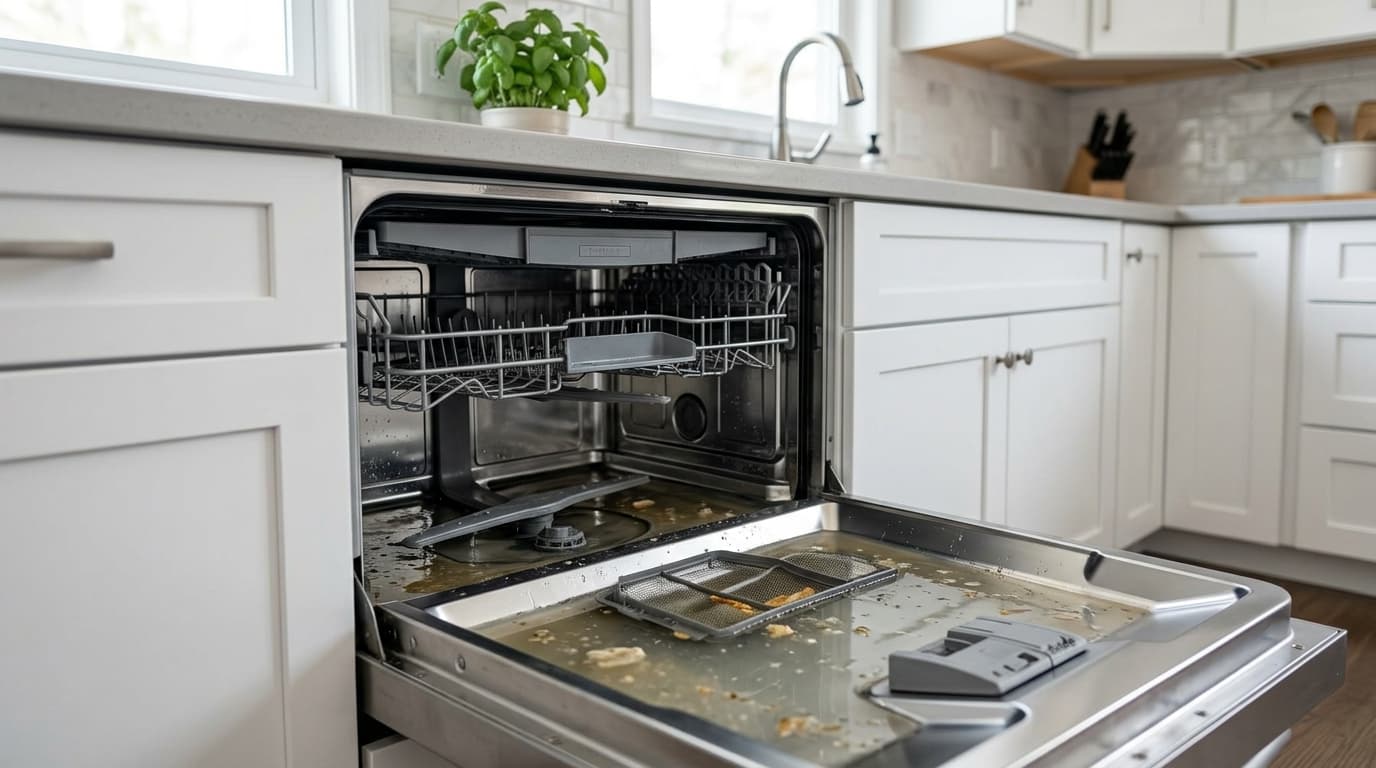
Picture this: You open your dishwasher expecting to find sparkling clean dishes. Instead, you're greeted by a pool of murky water sitting at the bottom. Sound familiar? You're not alone. Dishwasher standing water is one of the most common appliance issues homeowners face. The good news? It's often fixable without calling in the pros.
If you've been staring at that puddle of water wondering what went wrong, don't panic. We'll walk you through exactly why this happens. More importantly, we'll show you how to get your dishwasher back to its drain-happy self.
What Causes Standing Water in Your Dishwasher?
When your dishwasher won't drain properly, something is usually blocking the water's path out of the machine. Think of your dishwasher's drainage system like a highway. When there's a traffic jam somewhere along the route, everything backs up.
According to Consumer Reports survey data from more than 66,000 members covering 77,000 dishwashers across 27 brands purchased between 2015 and 2025, dishwashers account for 14.6% of all appliance service calls. Appliance repair industry data from 2026 shows that about 65% of standing water issues stem from simple maintenance problems, while the remaining 35% require professional intervention.
Here are the most common culprits behind dishwasher standing water:
- Clogged filter: Food particles and grease build up over time
- Blocked garbage disposal: If connected, a clogged disposal affects dishwasher drainage
- Kinked or clogged drain hose: The hose that carries water out can get twisted or blocked
- Dirty spray arms: When these get clogged, water can't circulate properly
- Faulty drain pump: The pump that pushes water out may be malfunctioning
- Improper installation: New dishwashers installed incorrectly can have drainage issues
- Hard water buildup: Mineral deposits can restrict water flow over time
Let's dive deeper into each cause. Understanding the root problem helps you choose the right solution.
The Filter Factor
Your dishwasher filter acts as the first line of defense against food debris. Modern dishwashers typically have self-cleaning filters or manual filters. Manual filters need cleaning every 1-3 months, depending on usage.
When filters clog, water flow reduces by up to 50%. This creates a cascade effect. Water can't circulate properly during wash cycles. The result? Standing water that won't drain.
Garbage Disposal Connection
About 75% of dishwashers connect to the garbage disposal. This shared drainage system means a clogged disposal directly impacts your dishwasher. Food waste, grease, and fibrous materials create blockages over time.
Common disposal-clogging culprits include:
- Coffee grounds
- Eggshells
- Potato peels
- Pasta and rice
- Grease and oil
Drain Hose Dilemmas
The drain hose carries water from your dishwasher to the disposal or drain pipe. This flexible tube can develop several problems:
Kinking: Improper installation or shifting can create bends that restrict flow Internal clogs: Grease and debris accumulate inside over 3-5 years Connection issues: Loose connections at either end cause drainage problems
Spray Arm Struggles
Spray arms distribute water throughout the dishwasher during cycles. Each arm contains multiple small holes. These holes clog easily with food particles, grease, and mineral deposits.
Clogged spray arms reduce cleaning efficiency by 40-60%. They also contribute to poor drainage. Water that doesn't circulate properly can't drain effectively.
DIY Solutions You Can Try First
Before calling a repair technician, try these troubleshooting steps. Most homeowners can complete these tasks in 30-60 minutes. Always disconnect power to your dishwasher before attempting any repairs.
Check and Clean the Filter
Your dishwasher's filter catches food debris before it enters the drain system. Regular cleaning prevents most drainage issues.
Here's how to clean it:
- Remove the bottom dish rack completely
- Locate the cylindrical filter at the bottom of the tub
- Look for it under the lower spray arm
- Turn the upper filter counterclockwise to remove
- Lift out both the upper and lower filter components
- Rinse thoroughly under hot water for 2-3 minutes
- Use a soft brush to remove stubborn debris
- Check for damage like tears or warping
- Reinstall filters in reverse order
- Ensure they're properly seated and locked
Pro tip: Set a monthly reminder to clean your filter. This 5-minute task prevents 80% of drainage problems.
Clear the Garbage Disposal
A clogged disposal creates immediate dishwasher drainage issues. Regular maintenance keeps both appliances running smoothly.
Quick disposal check:
- Run cold water at full pressure
- Turn on the disposal for 30-45 seconds
- Listen for unusual grinding or humming sounds
- Check if water drains quickly from the sink
If drainage is slow, try these steps:
- Pour 1 cup of ice cubes into the disposal
- Add 1/2 cup of rock salt
- Run cold water and the disposal for 1 minute
- This breaks up grease buildup effectively
For stubborn clogs:
- Mix 1/2 cup baking soda with 1 cup white vinegar
- Pour the mixture into the disposal
- Let it foam for 15 minutes
- Flush with hot water for 1 minute
Inspect the Spray Arms
Dirty spray arms cause multiple problems beyond standing water. They reduce cleaning performance and increase cycle times.
Cleaning spray arms step-by-step:
Lower spray arm:
- Remove the bottom dish rack
- Lift out the lower spray arm (some twist off, others lift straight up)
- Hold the arm up to light to check for clogs
- Use a toothpick or wire to clear each hole
- Soak in warm, soapy water for 20 minutes
- Rinse thoroughly under hot water
- Shake to ensure no debris remains inside
Upper spray arm:
- Remove the upper dish rack
- Check how your model's upper arm attaches
- Some clip on, others require removing a holding nut
- Clean using the same method as the lower arm
- Pay special attention to the arm's connection point
Middle spray arm (if equipped):
- Located under the upper rack
- Usually twists off counterclockwise
- Clean thoroughly, as this arm often clogs first
Run a Cleaning Cycle
Deep cleaning your dishwasher monthly prevents buildup that causes drainage issues. Commercial cleaners cost $5-10 per treatment. Natural methods work equally well for $0.50.
Try this natural cleaning method:
Vinegar cycle:
- Remove all dishes and racks
- Check the bottom for visible debris
- Place a dishwasher-safe bowl on the top rack
- Fill the bowl with 2 cups white vinegar
- Run the hottest, longest cycle available
- The vinegar breaks down soap scum and mineral deposits
Baking soda cycle:
- After the vinegar cycle completes, remove the bowl
- Sprinkle 1 cup baking soda across the bottom
- Run a short hot water cycle
- This removes stains and deodorizes
For heavy buildup:
- Add 1/4 cup citric acid to the vinegar
- This removes stubborn mineral deposits
- Especially effective in hard water areas
Check the Door Seals
Damaged door seals affect more than just leaking. They can impact the dishwasher's ability to maintain proper water pressure for drainage.
Seal inspection process:
- Open the dishwasher door fully
- Run your hand along the entire rubber seal
- Feel for cracks, tears, or hard spots
- Check for food debris stuck in the seal
- Clean with warm, soapy water
- Apply a thin layer of petroleum jelly to keep seals supple
Advanced DIY Troubleshooting
When basic solutions don't work, these advanced steps might help. Proceed carefully, as these involve more complex repairs.
Testing the Drain Pump
The drain pump moves water out of your dishwasher. Testing it requires basic mechanical skills.
Signs of pump failure:
- Humming sound during drain cycle
- No sound when draining should occur
- Error codes related to draining
- Water drains very slowly
Basic pump test:
- Disconnect power completely
- Remove the bottom panel (usually 2-4 screws)
- Locate the pump motor (check your manual)
- Look for visible damage or debris
- Spin the impeller manually with a pencil
- It should turn freely without grinding
Checking Water Temperature
Proper water temperature affects drainage indirectly. Cold water doesn't dissolve detergent effectively. This creates soap buildup that restricts drainage.
Optimal dishwasher water temperature: 120°F (49°C)
To check your water temperature:
- Run hot water at the kitchen sink for 2 minutes
- Fill a glass and measure with a thermometer
- Adjust your water heater if below 120°F
- Never exceed 140°F to prevent scalding
Examining the Control Board
Modern dishwashers use electronic control boards. These can malfunction and cause drainage issues.
Warning signs of control board problems:
- Inconsistent cycle behavior
- Display showing error codes
- Buttons not responding properly
- Cycles ending prematurely
Control board replacement costs $150-300 for parts alone. This typically requires professional installation.
When to Call a Professional
While many dishwasher drainage issues respond to DIY methods, some problems require professional expertise. Don't attempt these repairs yourself:
Drain Hose Problems
Professional intervention is needed when:
- The hose is kinked behind the dishwasher
- Internal clogs won't clear with basic methods
- The hose shows signs of damage or wear
- Installation requires moving the dishwasher
Average professional cost: $150-250
Faulty Drain Pump
Drain pump replacement involves:
- Removing the dishwasher from its cabinet
- Disconnecting water and electrical lines
- Disassembling the pump housing
- Installing and calibrating new components
Average professional cost: $200-350
Electrical Issues
Never attempt electrical repairs without proper training. Signs include:
- Dishwasher trips circuit breaker
- Burning smell during operation
- Visible wire damage
- Intermittent power issues
Average professional cost: $175-300
Plumbing Complications
Call a plumber immediately for:
- Sewage backing up into the dishwasher
- Multiple drains affected simultaneously
- Water appearing under cabinets
- Persistent sewer gas odors
Average professional cost: $200-500
Prevention Tips to Avoid Future Problems
An ounce of prevention truly is worth a pound of cure. These habits keep your dishwasher draining smoothly for years.
Daily Habits
Proper dish preparation:
- Scrape large food particles into trash
- Don't pre-rinse dishes completely
- Modern detergents need some soil to work effectively
- Remove sticky labels from jars
Loading best practices:
- Face soiled surfaces toward spray arms
- Don't overcrowd racks
- Ensure spray arms can rotate freely
- Place cups and bowls face-down
Weekly Maintenance
Quick weekly checks:
- Wipe door seals with damp cloth
- Remove visible debris from the filter area
- Run hot water before starting cycles
- Check spray arm holes for obvious clogs
Monthly Deep Cleaning
Set a monthly reminder for:
- Thorough filter cleaning
- Running a cleaning cycle
- Checking and cleaning spray arms
- Inspecting door seals
Track your maintenance:
- Keep a log of cleaning dates
- Note any unusual sounds or behaviors
- Record when you replace filters
- Monitor cleaning performance
Annual Professional Service
Consider annual professional maintenance if:
- Your dishwasher is over 5 years old
- You have hard water
- You run 10+ cycles weekly
- Previous drainage issues occurred
Annual service typically includes:
- Complete disassembly and cleaning
- Seal inspection and lubrication
- Electrical connection check
- Performance testing
Average annual service cost: $100-150
Understanding Your Dishwasher's Drain System
Knowing how your dishwasher drains helps diagnose problems faster. Most modern dishwashers follow a similar drainage pattern.
The Drainage Process
- Wash cycle ends: The control board signals drainage
- Pump activates: The drain pump starts removing water
- Water exits: Water flows through the drain hose
- Disposal connection: Water enters garbage disposal (if connected)
- Final drainage: Water flows to your home's main drain
Each step must work perfectly. One failure creates standing water.
Common Drainage Configurations
Direct drain connection:
- Dishwasher connects directly to drain pipe
- No garbage disposal involved
- Requires proper air gap or high loop
- Fewer potential failure points
Disposal connection:
- Most common in modern kitchens
- Dishwasher drains through disposal
- Requires disposal to be clear
- More maintenance needed
Water Volume Facts
Understanding water volume helps gauge problem severity:
- Normal cycle uses 3-5 gallons
- Standing water typically measures 1-2 gallons
- More than 2 gallons indicates serious blockage
- Complete drainage takes 2-3 minutes
Cost Analysis: DIY vs. Professional Repair
Making informed decisions requires understanding potential costs. Here's what Homeplexi contractors typically charge:
DIY Costs
Basic supplies:
- Dishwasher cleaner: $5-10
- Replacement filter: $15-40
- Basic tools: $20-50 (one-time purchase)
- Cleaning supplies: $10-20
Total DIY investment: $50-120
Professional Service Costs
Common repair prices:
- Diagnostic fee: $75-125
- Filter replacement: $100-150
- Spray arm cleaning: $125-175
- Drain hose replacement: $150-250
- Pump replacement: $200-350
- Control board replacement: $300-500
Factors affecting cost:
- Your location (urban areas cost more)
- Dishwasher brand and model
- Part availability
- Warranty status
When DIY Makes Sense
Choose DIY when:
- Problem is clearly filter-related
- You have basic tool skills
- The dishwasher is under 5 years old
- You have time to troubleshoot
When to Hire Professionals
Call experts for:
- Electrical problems
- Repeated drainage issues
- Dishwashers over 8 years old
- When DIY attempts fail
Signs It's Time for Professional Help
Sometimes dishwasher standing water indicates bigger problems. Our contractor network reports these warning signs most often:
Immediate Professional Help Needed
Call within 24 hours for:
- Water leaking onto floor
- Electrical burning smell
- Sewage backing up
- Complete pump failure
Schedule Service Soon
Book within a week for:
- Persistent standing water after DIY attempts
- Error codes you can't resolve
- Unusual noises during operation
- Poor cleaning performance
Consider Replacement
Time for a new dishwasher when:
- Repair costs exceed $400
- Unit is over 10 years old
- Multiple components failing
- Energy efficiency is poor
According to reliability data from 2026, the Department of Energy puts the mean service life of dishwashers at 15.2 years, with dishwashers entering moderate repair territory (6-9% annually) by years 4-7. Industry statistics show dishwashers have a 24% five-year failure rate, with repairs averaging $150-300.
New dishwasher costs:
- Basic models: $300-500
- Mid-range options: $500-800
- Premium units: $800-1500
- Installation: $150-300
Troubleshooting Specific Dishwasher Brands
Different manufacturers have unique quirks. Here's what we've learned from contractor feedback:
Bosch Dishwashers
Common issues:
- E24 error code indicates drainage problems
- Filters require more frequent cleaning
- Door seal problems after 5-7 years
Whirlpool/KitchenAid
Common issues:
- Control board failures after 6-8 years
- Spray arm clips break easily
- Drain pumps last 5-7 years average
GE Dishwashers
Common issues:
- Door latch problems affect drainage
- Hard water damages components faster
- Filters hide under the lower spray arm
Samsung Dishwashers
Common issues:
- Error codes need immediate attention
- Smart features can malfunction
- Drain pumps sensitive to debris
Environmental Impact and Water Conservation
Standing water wastes more than just your time. Consider these environmental factors:
Water Waste Statistics
- Standing water represents 1-2 gallons wasted per cycle
- Running extra cycles due to poor cleaning wastes 3-5 gallons each
- Annual waste from drainage issues: 200-500 gallons per household
Energy Consumption
Poor drainage affects energy use:
- Longer cycles use 10-15% more electricity
- Heating standing water wastes energy
- Multiple wash cycles double energy consumption
Eco-Friendly Solutions
Reduce environmental impact by:
- Using natural cleaners (vinegar, baking soda)
- Maintaining your dishwasher properly
- Running full loads only
- Choosing eco-cycles when possible
Get Back to Clean Dishes
Dealing with dishwasher standing water is frustrating, but it's usually solvable. Start with simple solutions. Clean the filter first. Check the garbage disposal next. Give your dishwasher a good deep clean. These steps resolve most drainage issues.
Remember that prevention beats repair every time. Monthly filter cleaning takes 5 minutes. It prevents hours of troubleshooting later. Track your maintenance schedule. Note any changes in performance.
However, know your limits. When DIY methods don't work, call professionals. Complex mechanical or plumbing issues need expert attention. The key is recognizing when you've reached the limits of safe DIY repair.
Don't let a malfunctioning dishwasher disrupt your routine. Address drainage problems quickly. This prevents water damage to your kitchen. Whether it's a simple filter cleaning or complete pump replacement, fast action saves money.
Professional help ensures proper diagnosis and repair. Experienced technicians have seen every possible problem. They bring the right tools and parts. Most importantly, they guarantee their work.
Need help finding a reliable contractor? Homeplexi connects you with vetted professionals, helps you compare quotes, and manages your entire home improvement project in one place. Get started free →
Related Articles:
Need Professional Help?
Homeplexi connects you with vetted contractors, helps you compare quotes, and manages your entire home improvement project in one place.
Get Started Free →The Homeplexi editorial team consists of licensed contractors, home inspectors, and consumer protection experts who provide research-backed guidance for homeowners. All content is fact-checked and cited from authoritative industry sources.
Important Safety Disclaimer
Please read this carefully before following any advice:
- Always prioritize safety: Wear appropriate protective equipment (safety glasses, gloves, etc.) when performing any home maintenance or repair work.
- Know your limits: If you're not confident in your ability to safely complete a task, hire a licensed professional. This is especially important for electrical, gas, plumbing, and structural work.
- Verify all information: The guidance provided here is based on community discussions and general knowledge. Always double-check any advice with multiple reliable sources or a licensed professional.
- Follow local codes: Building codes, electrical codes, and plumbing codes vary by location. Ensure any work complies with your local regulations and obtain necessary permits.
- Turn off power/water/gas: Before working on electrical, plumbing, or gas systems, always shut off the relevant utilities at the source.
- For emergencies: If you have a gas leak, electrical fire, major water leak, or other emergency, evacuate immediately and call emergency services (911) and your utility company.
Liability: Homeplexi provides information for educational purposes only. We are not responsible for any injury, property damage, or losses resulting from following any guidance or advice provided through this platform. Use all information at your own risk.
When in doubt, always consult a licensed, insured professional contractor. Homeplexi can help you find qualified professionals in your area.
Found this helpful? Share with others:
Related Articles
How to Lower Electric Bills: Proven Strategies That Actually Work When Basic Tips Fail
Electric bills climbing higher than expected despite energy-saving efforts
Electrical Outlet Not Working: DIY Fixes vs. When to Call an Electrician
Knowing when it's safe to DIY vs. hiring a pro
Home Repair Priorities: The 4-Quadrant System for Deciding Which Fixes Come First (When You Can't Afford Everything)
Homeowners overwhelmed by multiple needed repairs but limited budget, unsure which repairs to tackle first