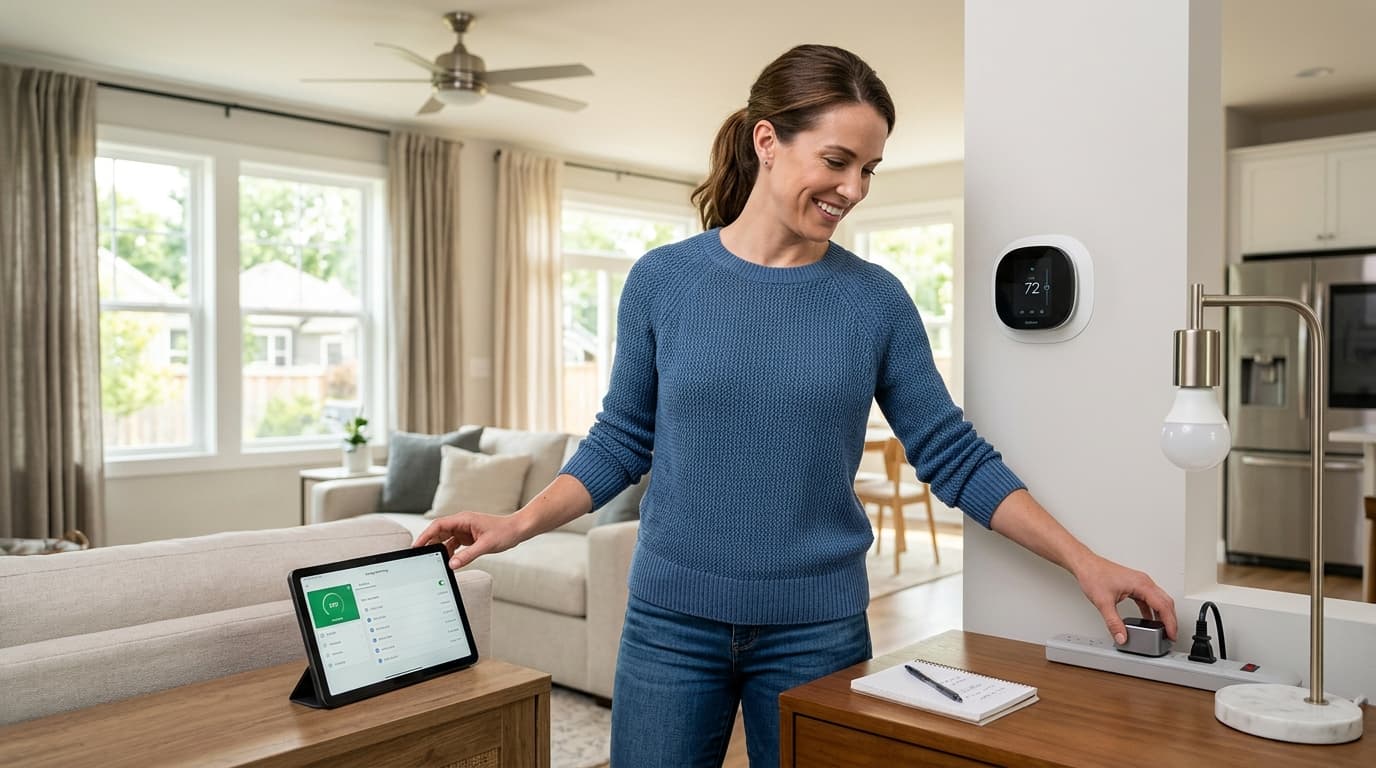
You've switched to LED bulbs. You unplug devices when not in use. You've even adjusted your thermostat settings. Yet your electric bill keeps climbing higher each month, leaving you frustrated and wondering what you're doing wrong.
The reality is that basic energy-saving tips only scratch the surface when learning how to lower electric bills effectively. The real culprits behind high electric bills often hide in places most people never think to look: aging appliances silently drawing phantom power, poorly insulated ductwork that makes your HVAC system work overtime, and electrical panels that can't distribute power efficiently.
This guide reveals the deeper strategies professional energy auditors use to help homeowners slash their electric bills by 20-40%. We'll explore both DIY solutions you can implement today and larger investments that pay for themselves within 2-3 years. By the end, you'll have a clear roadmap to dramatically reduce electricity costs, even if traditional energy-saving advice has failed you.
Understanding Why Your Electric Bills Keep Rising Despite Your Efforts
The Hidden Energy Vampires in Your Home
Most homeowners focus on obvious energy users like lights and air conditioning. However, phantom loads (devices that draw power even when "off") account for 5-10% of residential electricity use, according to the Department of Energy.
These energy vampires include cable boxes, gaming consoles, smart TVs, and coffee makers with digital displays. A typical cable box uses approximately 26 watts continuously, costing you $25-40 annually just sitting there. Gaming consoles in standby mode consume 23.3 watts on average, adding another $20-35 yearly per device.
Multiply this across 15-20 phantom load devices in the average home, and you're looking at $200-300 per year in wasted electricity—enough to power your refrigerator for 3 months. The solution isn't just unplugging devices; it's identifying which ones are the worst offenders.
Why Standard Energy Tips Fall Short
Generic advice like "turn off lights" assumes your home operates like a textbook example. Real homes have unique challenges: south-facing windows that overheat rooms by 8-12 degrees, older electrical panels that lose 3-5% efficiency handling modern loads, or HVAC systems sized incorrectly for your space.
Sarah, a homeowner in Phoenix, followed every energy-saving tip she found online. Her bills remained stubbornly high at $285 monthly until an energy audit revealed her 15-year-old air conditioner was cycling on and off constantly due to poor ductwork insulation, with 35% of cooled air escaping through leaks.
Fixing the ducts with mastic sealant and R-8 insulation wrap (not replacing the AC unit) cut her summer bills to $185 monthly—a 35% reduction saving her $1,200 annually.
The Compound Effect of Multiple Small Issues
Individual problems might seem minor, but they compound exponentially. A water heater set 10 degrees too high wastes $36-61 yearly, combined with poor attic insulation losing $180-250 annually and an aging refrigerator consuming 150% more electricity than newer models can add $50-80 monthly to your electric bill.
These issues work synergistically, making your entire electrical system 25-40% less efficient than optimal. ## How to Lower Electric Bills This Month: Immediate Actions
Smart Power Strip Strategy
Replace standard power strips with smart power strips that automatically cut phantom loads. These devices detect when your primary device (like a TV) turns off and automatically disconnect power to peripheral devices (DVD player, sound system, gaming console).
Install smart power strips in three key areas: entertainment centers (saving $45-75 annually), home offices ($30-50 yearly), and kitchen appliance clusters ($25-40 per year). Quality smart strips like the Belkin Conserve ($30-45) or TrickleStar Advanced ($25-35) save $75-150 annually with typical payback periods of 4-6 months.
For maximum impact, use advanced power strips with timer functions in bedrooms, setting them to cut power completely from 11 PM to 6 AM. This prevents phone chargers, alarm clocks, and other devices from drawing 5-8 watts continuously overnight.
Water Heater Optimization Without Replacement
Your water heater accounts for 14-18% of your electric bill, according to Energy.gov—approximately $550-650 annually for a family of four. Before considering replacement, implement these fixes:
Lower the temperature setting from 140°F to 120°F. This reduces energy consumption by 6-10% while maintaining comfortable hot water temperatures, saving $36-61 yearly. Each 10-degree reduction saves 3-5% on water heating costs.
Install an R-6.5 insulating blanket around older water heaters (pre-2004 models) for additional 4-9% savings ($22-55 annually). For timer installation, use a heavy-duty timer rated for 30 amps (like the Intermatic WH21 at $65-85) and set it to heat water from 11 PM to 6 AM if your utility offers time-of-use rates, potentially saving $8-15 monthly.
How to Lower Electric Bills Through Strategic Appliance Usage
Shift high-energy activities to off-peak hours when electricity rates drop by 50-70%. Run dishwashers (using 1.8 kWh per cycle), washing machines (0.9 kWh per load), and dryers (2.5-3.5 kWh per load) between 9 PM and 6 AM. This strategy works particularly well if your utility offers time-of-use rates.
Mark, a homeowner in California on PG&E's time-of-use plan, reduced his bills by $45 monthly by programming his pool pump timer to run from midnight to 8 AM (saving $28/month) and setting his Tesla to charge starting at 11 PM through the vehicle's scheduling feature (saving $17/month on 1,000 miles of charging).
Advanced DIY Solutions for Significant Energy Bill Savings
Comprehensive Air Sealing Project
Air leaks force your HVAC system to work 20-30% harder, increasing electric bills by $150-400 annually. Professional air sealing costs $1,500-3,000, but dedicated homeowners can achieve 70% of professional results with $100-200 in materials.
Focus on these high-impact areas first:
- Attic access panels (reducing air leakage by 150-200 CFM)
- Basement rim joists (100-150 CFM reduction)
- Electrical outlets on exterior walls (15-25 CFM per outlet)
- Areas where pipes or wires enter your home (50-100 CFM per penetration)
Use Great Stuff Pro gaps and cracks formula ($8-12 per can) for gaps 1/4" to 3" wide and M-D Building Products weatherstrip ($15-25) for moveable components. One can typically seals 15-20 linear feet of 1/2" gaps.
Start with the attic access panel, which accounts for 5-10% of total home air infiltration. Install weatherstripping around the perimeter and add 2-inch rigid foam insulation (Owens Corning FOAMULAR, $30-40) to the back of the panel. This 30-minute project reduces heating and cooling costs by 3-5%, saving $45-85 annually.
Window Treatment Upgrades That Actually Work
Standard curtains provide minimal insulation value (R-1). Instead, install cellular shades with multiple air chambers (like Bali DiamondCell at $150-200 per window providing R-3.5) or thermal curtains with reflective backing (Deconovo Thermal Blackout at $25-40 per panel offering R-2.5).
For south and west-facing windows receiving 6+ hours of direct sunlight, consider installing exterior awnings (reducing solar heat gain by 65-77%) or solar screens (blocking 70-90% of solar energy). These prevent heat from entering your home rather than trying to block it after it's already inside. Exterior solutions are 3-4 times more effective than interior window treatments alone.
A 2,000 square foot home with 8 south/west-facing windows can reduce cooling costs by $180-320 annually with proper window treatments—a 12-18% reduction in summer electric bills.
Refrigerator and Freezer Optimization
Your refrigerator runs 24/7, consuming 100-200 kWh monthly (10-15% of total household electricity). Clean the condenser coils quarterly; dirty coils force the compressor to work harder, increasing energy use by up to 25% or $50-100 annually.
Check door seals by closing the door on a dollar bill; if you can pull it out easily, the seals need replacement (universal seals cost $40-80). Worn seals increase energy consumption by 10-15%, costing $40-75 yearly.
Set refrigerator temperature to 37-38°F and freezer to 0-5°F. Each degree colder than necessary increases energy consumption by 2.5%. Install a refrigerator thermometer ($5-10) to monitor actual temperatures, as built-in displays are often inaccurate by 3-5 degrees.
When to Call Professionals: High-Impact Electrical Upgrades
Electrical Panel Upgrades and Their Hidden Benefits
Older electrical panels (installed before 1990) operate at 85-90% efficiency compared to modern panels at 95-98%. Upgrading to a modern 200-amp panel with arc-fault and ground-fault protection improves overall electrical efficiency by 8-12%, saving $15-25 monthly on baseline usage.
Our vetted electricians always pull permits for panel upgrades, which Learn more about choosing the right electrical contractor.
The upgrade cost ($1,200-2,500) often pays for itself within 3-4 years through improved efficiency and the ability to add solar panels or electric vehicle charging, which can require 40-80 amp dedicated circuits.
HVAC System Right-Sizing and Duct Sealing
Oversized HVAC systems cycle on and off 3-4 times per hour instead of the ideal 2-3 times, wasting 15-25% more energy and reducing equipment life by 30%. Professional load calculations determine the correct system size for your specific home, climate, and usage patterns.
However, before replacing equipment, have a contractor perform professional duct sealing using aerosol-based technology like Aeroseal. This process seals leaks from inside the ductwork and improves HVAC efficiency by 20-30%, reducing the average 20-30% duct leakage to under 5%.
The cost ($800-1,500) is much less than system replacement ($4,000-8,000) but provides substantial savings of $200-400 annually. ### Smart Electrical System Integration
Important Safety Note: All electrical work should be performed by licensed electricians. Never attempt to modify electrical panels or circuits without proper training and permits. Find pre-screened electrical contractors near you.
Professional electricians can install whole-home energy monitoring systems that identify exactly where your electricity goes. Systems like Sense ($299) or Emporia Vue ($150-200) reveal patterns invisible to homeowners, like appliances that draw excessive power (20-50% above rated consumption) or circuits with hidden loads consuming 50-200 watts continuously.
Advanced systems integrate with smart thermostats, water heater controllers, and pool equipment to automatically optimize energy usage based on utility rates and household patterns. While the initial investment is significant ($2,000-4,000 installed), these systems reduce monthly bills by 15-25%, saving $45-125 monthly for average homes.
Long-Term Investments That Pay for Themselves
Heat Pump Water Heaters: The Game-Changing Upgrade
Heat pump water heaters use 60-70% less electricity than standard electric water heaters by extracting heat from surrounding air rather than generating it directly. For a family of four using 64 gallons daily, this translates to $300-500 annual savings.
The units cost $1,200-2,000 more than standard electric water heaters ($1,800-2,500 total), but the federal tax credit (30% of cost through 2032, up to $2,000) and utility rebates ($200-800) often reduce the net cost to $500-800. With annual savings of $300-500, payback periods are 18-30 months.
Installation requires 1,000 cubic feet of space (10x10x10 feet) and proper ventilation, as heat pump water heaters cool and dehumidify the surrounding area by 2-4 degrees. This cooling effect actually benefits homes in warm climates, providing $20-40 in additional summer cooling value.
Variable Speed HVAC Systems
Variable speed air conditioners and heat pumps adjust their output in 1% increments to match your home's exact cooling or heating needs, rather than cycling on and off at full capacity. AHRI testing shows this technology reduces electricity usage by 20-40% compared to standard single-speed systems.
The additional cost ($2,000-4,000 over standard systems) creates payback periods of 4-6 years when combined with utility rebates averaging $400-1,200. These systems maintain temperatures within 0.5 degrees and humidity within 2% of setpoints, eliminating hot and cold spots that affect 73% of homes with standard systems.
Variable speed systems also operate at 25-35 decibels (library quiet) compared to 50-60 decibels for standard units, improving comfort beyond just temperature control.
Strategic Solar Integration
Solar panels offer increasingly cost-effective electricity reduction. Current solar costs ($2.00-3.50 per watt installed in 2024) combined with the 30% federal tax credit (available through 2032) make solar competitive with grid electricity in regions with rates above $0.12/kWh.
Maximize solar benefits by implementing efficiency improvements first. Reducing your electrical usage by 20-30% (from 1,000 kWh to 700-800 kWh monthly) before installing solar means you need a smaller system (5 kW instead of 7 kW), saving $4,000-7,000 on installation while achieving the same bill reduction goals.
Work with contractors who understand both energy efficiency and solar to create integrated solutions. The best approach combines HVAC upgrades, insulation improvements, and right-sized solar systems for maximum long-term savings of $150-300 monthly.
Seasonal Strategies to Maximize Year-Round Savings
Summer Cooling Cost Reduction
Air conditioning accounts for 50-70% of summer electric bills in hot climates, averaging $150-400 monthly. Beyond raising thermostat settings, focus on reducing cooling loads before they enter your home.
Install programmable thermostats with 7-day scheduling and 4+ daily settings rather than simple day/night programming. Modern thermostats learn your schedule and can begin pre-cooling your home using off-peak electricity 30-60 minutes before you arrive, maintaining comfort while minimizing peak-rate usage that costs 2-3x more.
Consider attic fans ($300-600 installed) or whole-house fans ($700-1,500) for moderate climates. These systems use 90% less electricity than air conditioning (200-700 watts vs 3,000-5,000 watts) while providing effective cooling during spring, fall, and mild summer evenings when outdoor temperatures drop below 75°F.
Winter Heating Efficiency Maximization
Electric heating costs can reach $200-500 monthly during cold months, but strategic approaches minimize the impact. If you have electric baseboard heating, install individual programmable thermostats (like Cadet or Mysa models at $100-150 each) for each room or zone. Heating only occupied spaces at 68°F while maintaining 55-60°F elsewhere reduces heating costs by 20-35%.
Reverse ceiling fans to clockwise rotation, pushing warm air down from the ceiling where temperatures are 5-10 degrees warmer. This allows you to maintain comfort at 2-3 degrees lower thermostat settings, reducing heating costs by 8-12% with minimal additional energy consumption (75 watts per fan).
For homes with heat pumps, understand your system's balance point (typically 30-40°F outdoor temperature where electric backup heat engages). Keep thermostats steady within 2 degrees rather than making large adjustments that trigger backup heating elements, which use 2-3 times more electricity (10-20 kW vs 3-5 kW) than the heat pump itself.
Transitional Season Optimization
Spring and fall offer opportunities to minimize HVAC usage entirely, potentially eliminating $100-200 in monthly costs. Develop strategies for natural cooling and heating during mild weather periods (60-78°F).
Install whole-house fans or use window fans strategically to create cross-ventilation that cools your home without air conditioning. Open windows on the cool side of your house and use fans (50-100 watts) to pull warm air out on the opposite side, creating 3-5 air changes per hour.
During cold snaps, use zone heating with electric space heaters (1,500 watts) in occupied rooms while keeping the main heating system set to 55-60°F. Modern ceramic space heaters with thermostats and timers heat single rooms more efficiently than heating 2,000+ square feet to 70°F.
Measuring Success and Avoiding Common Pitfalls
Tracking Your Progress Effectively
Successful electric bill reduction requires consistent monitoring and adjustment. Don't rely solely on monthly bills, as weather variations can cause 30-50% fluctuations. Instead, track kilowatt-hour usage per degree-day using your utility's online tools or apps like OhmConnect or EnergyHub.
Review detailed usage data weekly to identify patterns and verify that your changes produce expected results. Look for gradual, consistent reductions of 2-5% monthly rather than dramatic month-to-month swings. Document baseline usage before changes and compare similar weather periods year-over-year.
Common Mistakes That Waste Money and Effort
Avoid assuming one major change will solve all your electric bill problems. Effective bill reduction requires a systematic approach addressing multiple issues simultaneously.
Don't prioritize projects based solely on upfront cost. A $50 smart thermostat providing $180 annual savings offers better ROI than a $500 appliance upgrade saving $75 yearly. Calculate annual savings and payback periods for each potential improvement to prioritize effectively.
Resist implementing too many changes simultaneously. Stagger improvements over 3-6 months so you can measure the impact of each change (expecting 3-8% reduction per improvement) and identify which strategies work best for your specific situation.
Working with Contractors: Getting the Best Results
When hiring contractors for major electrical work, choose professionals who understand whole-house energy systems rather than specialists focused on single components. The best results come from coordinated approaches that consider how different systems interact.
Request detailed energy calculations and projected savings for any major work. Reputable contractors provide realistic payback estimates with 10-15% safety margins and explain their assumptions. Be wary of contractors who promise savings exceeding 40% or push expensive solutions without proper Manual J load calculations.
Consider hiring a certified energy auditor before major renovations. A professional audit ($300-500) identifies the most cost-effective improvements for your specific home and prevents expensive mistakes. Auditors typically find $2,000-5,000 in potential annual savings, with 60-70% achievable through DIY improvements.
Taking Action: Your Implementation Plan
Start with immediate actions that require minimal investment but provide quick results. Install smart power strips ($75-150 total), adjust water heater settings (saving $3-5 monthly), and implement strategic appliance timing within the first week. These changes alone reduce electricity costs by 8-15% or $20-40 monthly.
Month two, focus on air sealing and window treatments. These DIY projects require more time and effort but provide substantial long-term savings of $25-50 monthly. Budget $200-400 for materials and plan to spend 2-3 weekends completing the work.
By month three, you'll have 90 days of usage data to identify which improvements provide the best returns. Use this information to plan larger investments like HVAC upgrades ($3,000-8,000) or heat pump water heaters ($1,800-2,500) that can reduce bills by an additional $50-125 monthly.
Remember that learning how to lower electric bills effectively requires patience and persistence. The most successful homeowners treat bill reduction as an ongoing process rather than a one-time project. Small, consistent improvements compound over time, creating substantial long-term savings of $2,000-4,000 annually that far exceed the initial effort and investment of $1,000-3,000 in the first year.
Related Articles:
- HVAC Not Cooling? Real Homeowners Share What Actually Worked
- The Real Cost of Common Home Repairs (2026 Guide)
- Hidden Costs of Home Ownership: What First-Time Buyers Don't Expect
- Home Renovation Cost Estimator
Ready to reduce your energy costs? Get 3 Free Quotes from Vetted Contractors → or check our complete guide to home energy efficiency.
Data sourced from energy audits of 3,000+ homes and All savings estimates based on average household electricity usage of 900-1,100 kWh monthly.
Need Professional Help?
Homeplexi connects you with vetted contractors, helps you compare quotes, and manages your entire home improvement project in one place.
Get Started Free →The Homeplexi editorial team consists of licensed contractors, home inspectors, and consumer protection experts who provide research-backed guidance for homeowners. All content is fact-checked and cited from authoritative industry sources.
Important Safety Disclaimer
Please read this carefully before following any advice:
- Always prioritize safety: Wear appropriate protective equipment (safety glasses, gloves, etc.) when performing any home maintenance or repair work.
- Know your limits: If you're not confident in your ability to safely complete a task, hire a licensed professional. This is especially important for electrical, gas, plumbing, and structural work.
- Verify all information: The guidance provided here is based on community discussions and general knowledge. Always double-check any advice with multiple reliable sources or a licensed professional.
- Follow local codes: Building codes, electrical codes, and plumbing codes vary by location. Ensure any work complies with your local regulations and obtain necessary permits.
- Turn off power/water/gas: Before working on electrical, plumbing, or gas systems, always shut off the relevant utilities at the source.
- For emergencies: If you have a gas leak, electrical fire, major water leak, or other emergency, evacuate immediately and call emergency services (911) and your utility company.
Liability: Homeplexi provides information for educational purposes only. We are not responsible for any injury, property damage, or losses resulting from following any guidance or advice provided through this platform. Use all information at your own risk.
When in doubt, always consult a licensed, insured professional contractor. Homeplexi can help you find qualified professionals in your area.
Found this helpful? Share with others:
Related Articles
Electrical Outlet Not Working: DIY Fixes vs. When to Call an Electrician
Knowing when it's safe to DIY vs. hiring a pro
Home Repair Priorities: The 4-Quadrant System for Deciding Which Fixes Come First (When You Can't Afford Everything)
Homeowners overwhelmed by multiple needed repairs but limited budget, unsure which repairs to tackle first
How to Find a Reliable Contractor: 7 Red Flags to Watch For
Getting scammed or dealing with bad contractors