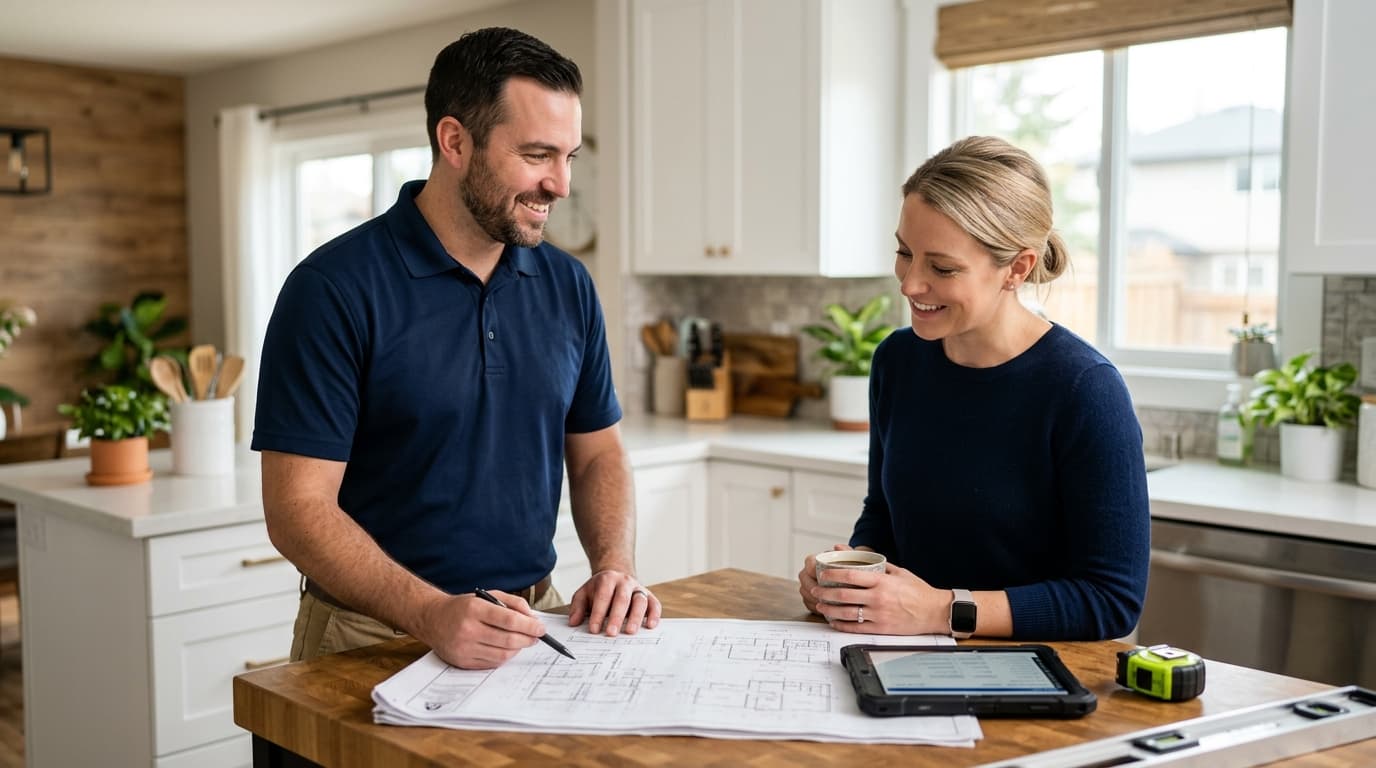
Sarah's heart sank as she stared at the half-finished kitchen renovation. The contractor she'd hired three months ago had disappeared after taking $15,000 upfront, leaving behind crooked cabinets, exposed wiring, and a mess that would cost even more to fix. "I should have seen the warning signs," she told her neighbor, thinking back to the door-to-door salesman who promised a "great deal" if she signed immediately.
If this scenario sounds familiar, you're not alone. Every year, thousands of homeowners fall victim to contractor scams. According to the Federal Trade Commission, consumers reported 81,925 cases of home improvement fraud in 2024, with total fraud losses across all categories reaching $12.5 billion—a 25% increase over 2023. But with the right knowledge, you can spot red flags early and find a reliable contractor who will complete your project professionally, on time, and within budget. Whether you're planning a kitchen remodel, roof replacement, or simple home repair, knowing how to find a reliable contractor is essential for protecting your investment.
Why Finding a Reliable Contractor Matters More Than Ever
The home improvement industry has exploded in recent years. According to the Joint Center for Housing Studies at Harvard University, Americans spent an estimated $603 billion on home remodeling projects in 2024, with spending projected to reach $524 billion in early 2026. Unfortunately, this boom has attracted both skilled professionals and opportunistic scammers. A bad contractor doesn't just waste your money—they can create safety hazards, legal problems, and stress that lasts for months.
From contractors who abandon projects mid-way to those who use substandard materials that fail within months, the damage extends far beyond financial loss. Poor workmanship can:
- Decrease your home's value instead of increasing it
- Create dangerous conditions like faulty electrical work or structural damage
- Void manufacturer warranties on materials and appliances
- Lead to code violations that prevent you from selling your home
- Cause insurance claims to be denied due to improper installation
The good news? Reliable contractors far outnumber the bad ones. You just need to know how to separate the wheat from the chaff. Through our platform, we've tracked thousands of contractor interactions and identified clear patterns that distinguish professionals from pretenders.
The 7 Red Flags That Signal an Unreliable Contractor
1. Door-to-Door Sales Tactics
Legitimate contractors are usually booked weeks or months in advance—they don't need to knock on random doors looking for work. Be especially wary of contractors who:
- Show up unannounced claiming to have "leftover materials" from a nearby job
- Create artificial urgency with "today only" pricing
- Refuse to provide written estimates or references
- Claim they "noticed" problems with your roof, siding, or driveway while "in the neighborhood"
- Offer suspiciously low prices for immediate cash payment
Real-world example: Tom from Michigan shared his experience with Homeplexi: "A roofing crew knocked on my door after a hailstorm, claiming they were already working on my neighbor's house. They offered to inspect my roof for free and found 'severe damage' that needed immediate repair. When I asked for their license number to verify, they suddenly had to leave for another appointment. I later found out they'd hit five houses on my street with the same story—none of my neighbors had hired them."
What to do instead: Find contractors through referrals, online reviews, or professional associations. Take time to research before making any decisions. A reliable contractor will:
- Schedule appointments at your convenience
- Provide detailed written estimates without pressure
- Welcome questions about their credentials and experience
- Give you time to compare quotes and check references
2. Demands for Large Upfront Payments
While it's normal for contractors to ask for some money upfront for materials, requesting more than 10-15% of the total project cost is a major red flag. Scammers often take large payments and disappear.
The Better Business Bureau warns that almost 80% of companies dealt with attempted fraud in 2024, with fraud cases soaring in spring and summer.
The Better Business Bureau warns that almost 80% of companies dealt with attempted fraud in 2024, with fraud cases soaring in spring and summer.
Red flag payments include:
- Demanding full payment before starting work
- Asking for cash-only transactions
- Requiring payment for the entire materials cost upfront
- Pressuring you to pay before permits are obtained
- Requesting payment to a personal account rather than a business account
- Changing payment terms after the contract is signed
Industry insight: Through Homeplexi's data, Some may request 10-15% upfront for material deposits, especially for custom orders.
Protect yourself financially:
- Never pay more than your state allows by law (many states cap deposits at 10% or $1,000)
- Use credit cards when possible for added protection
- Consider using escrow services for large projects
- Document all payments with receipts
- Tie payments to specific completed milestones, not dates
3. No Proper Licensing or Insurance
Every legitimate contractor should have:
- Valid state and local licenses for their trade
- General liability insurance (minimum $500,000, though $1-2 million is better)
- Workers' compensation insurance if they have employees
- Bonding for larger projects (requirements vary by state)
- Current business registration with the state
Don't just take their word for it—ask to see certificates and verify them independently with the issuing agencies. Many states have online databases where you can verify contractor licenses in minutes.
How to verify credentials:
- Ask for license numbers and insurance policy numbers
- Contact the state licensing board directly or check their website
- Call the insurance company to verify coverage is current
- Request certificates of insurance naming you as "additional insured"
- Check if any complaints or disciplinary actions exist
Warning signs to watch for:
- Reluctance to provide license or insurance information
- Expired or suspended licenses
- Insurance that doesn't cover your type of project
- Using another contractor's license number
- Claims that licensing "isn't required" for your project (always verify this yourself)
4. Verbal Estimates and Handshake Deals
Professional contractors provide detailed written estimates that include:
- Specific materials and brands to be used
- Labor costs broken down by task
- Project timeline with key milestones
- Cleanup and disposal responsibilities
- Change order procedures
- Payment schedule tied to completion milestones
- Warranty terms for both labor and materials
- Who obtains necessary permits
- Start and estimated completion dates
If they can't put it in writing, don't hire them. Verbal agreements are nearly impossible to enforce legally and leave you vulnerable to:
- Price increases mid-project
- Substitution of inferior materials
- Extended timelines without recourse
- Disputes over what was included in the original scope
- No legal protection if work is substandard
What a professional estimate should look like: A reliable contractor's estimate will be thorough and specific. For example, instead of "install new kitchen cabinets - $5,000," it should read: "Remove and dispose of existing cabinets. Install 12 linear feet of Maple Shaker cabinets (Brand X, Model Y) including soft-close hardware. Install crown molding. Level and secure all units. Total labor: $2,000. Materials: $3,000."
5. Unusually Low Bids
While everyone loves a good deal, bids that are significantly lower than others (more than 20-30% below the average) often indicate:
- Low-quality materials that will need replacement soon
- Cutting corners on safety or building codes
- Hidden costs that will emerge mid-project
- Inexperience with the true scope of work
- Unlicensed workers or no insurance coverage
- Bait-and-switch tactics where the price increases dramatically once work begins
Case study from Homeplexi users: Jennifer received three quotes for bathroom renovation: $12,000, $13,500, and $6,000. The low bidder promised the same quality but started finding "unexpected issues" immediately. Her final cost? $18,000 for substandard work that needed another $8,000 to fix properly.
Remember: good work isn't cheap, and cheap work isn't good. When evaluating bids:
- Compare what's included in each estimate line by line
- Ask low bidders to explain their pricing
- Verify they're using the same quality materials
- Check if they're properly accounting for permits and disposal fees
- Consider the contractor's overhead—legitimate businesses have real costs
6. Poor Communication and Professionalism
Pay attention to how contractors interact with you during the bidding process:
- Do they return calls and emails promptly?
- Are they punctual for appointments?
- Do they ask thoughtful questions about your project?
- Can they explain their approach clearly?
- Do they respect your property during site visits?
- Are they professional in appearance and demeanor?
- Do they listen to your concerns and preferences?
Poor communication early on usually gets worse once the project starts. Red flags include:
- Taking days to return calls
- Showing up late without calling
- Being evasive about project details
- Getting defensive when you ask questions
- Pressuring you to make quick decisions
- Speaking negatively about previous clients
- Appearing intoxicated or unprofessional
**No Local References or Established Business Presence
Reliable contractors have:
- Local references from recent projects you can visit
- Established business addresses (not just P.O. boxes)
- Consistent online presence with reviews across multiple platforms
- Relationships with local suppliers who can vouch for them
- Portfolio of completed work with before/after photos
- Membership in professional associations or trade organizations
Be suspicious of contractors who can't provide local references or seem to operate from out of town. "Storm chasers" often follow severe weather events, offering quick repairs but disappearing before warranties can be enforced.
How to check references effectively:
- Ask for at least 5 references from the past year
- Request references for projects similar to yours
- Actually call the references and ask specific questions:
- Was the project completed on time and on budget?
- How did the contractor handle unexpected issues?
- Would you hire them again?
- Can you see the completed work?
- Drive by or visit completed projects if possible
- Check with local suppliers about the contractor's payment history
How to Find Reliable Contractors: Your Action Plan
Start with Trusted Sources
Finding a reliable contractor begins with knowing where to look. Skip the random online searches and start with verified sources:
-
Ask friends, family, and neighbors for referrals
- Look for contractors who've done similar projects
- Ask about their experience, not just the outcome
- Find out if issues arose and how they were handled
-
Check with local hardware stores and building supply companies
- Long-established suppliers know which contractors pay bills and do quality work
- Ask for contractors who specialize in your type of project
- Inquire about any contractors they'd avoid
-
Contact professional associations
- Better Business Bureau for complaint history
- National Association of Home Builders (NAHB)
- National Association of the Remodeling Industry (NARI)
- Trade-specific organizations for specialized work
-
Use vetted contractor platforms that pre-screen professionals
- Look for platforms that verify licenses and insurance
- Check if they track customer satisfaction
- See if they offer any guarantees or dispute resolution
Do Your Due Diligence
Before hiring anyone, create a contractor evaluation checklist:
License and Insurance Verification:
- Current state license verified
- Local business license confirmed
- General liability insurance verified
- Workers' comp coverage confirmed
- Bond verification (if required)
Reference and Review Check:
- Called at least 3 recent references
- Checked reviews on multiple platforms
- Searched for complaints with BBB
- Verified no outstanding liens or lawsuits
Business Verification:
- Physical business address confirmed
- Years in business verified
- Checked for any name changes or previous businesses
- Confirmed they use written contracts
Project-Specific Evaluation:
- Experience with your type of project
- Proper equipment and crew size
- Realistic timeline provided
- Detailed written estimate received
Structure the Contract Properly
A good contract protects both you and the contractor. Never proceed without a comprehensive written agreement that includes:
Essential contract elements:
- Detailed scope of work - Every task spelled out clearly
- Materials specifications - Exact brands, models, colors, and quantities
- Payment schedule - Tied to completed milestones, not dates
- Timeline - Start date, milestone dates, and completion date
- Change order procedures - How modifications will be handled and priced
- Warranty information - Length and coverage for labor and materials
- Permit responsibility - Who obtains and pays for required permits
- Cleanup terms - Daily cleanup and final disposal responsibilities
- Dispute resolution - How disagreements will be handled
- Lien waiver process - Protection from subcontractor claims
Payment structure best practices:
- Never pay more than 10-15% upfront
- Tie payments to completed work, not calendar dates
- Hold back 10-15% until all work is complete and approved
- Get lien waivers from subcontractors and suppliers
- Document all payments and changes
Red Flags vs. Green Flags: Quick Reference
| Red Flags | Green Flags |
|---|---|
| Door-to-door sales | Referral-based business |
| Cash-only payments | Multiple payment options |
| No written estimates | Detailed written contracts |
| Unlicensed/uninsured | Fully licensed and insured |
| High-pressure tactics | Patient, consultative approach |
| No local references | Multiple local references |
| Unusually low bids | Competitive but reasonable pricing |
| Poor communication | Prompt, professional responses |
| No physical address | Established local presence |
| Demands large deposits | Reasonable payment terms |
When to Walk Away
Trust your instincts. If something feels off, it probably is. It's better to start your search over than to hire the wrong contractor. Walk away immediately if:
- They refuse to provide licensing or insurance information
- They pressure you to sign immediately
- They ask for cash-only payments
- They can't provide local references
- They won't put agreements in writing
- They make you feel uncomfortable or unsafe
- They claim permits aren't needed (always verify yourself)
- Their story changes or doesn't add up
Common Contractor Scams to Avoid
Understanding common scams helps you spot them before becoming a victim:
The Disappearing Deposit: Contractor takes a large upfront payment and vanishes. Protect yourself by never paying more than your state allows and using credit cards when possible.
The Endless Project: Work drags on for months with constant requests for more money. Prevent this with clear timelines and payment milestones in your contract.
The Bait and Switch: Low bid suddenly increases due to "unforeseen" issues. Avoid by getting detailed estimates and understanding what's included.
The Permit Skip: Contractor claims permits aren't needed to save money. This can result in fines, failed inspections, and having to redo work. Always verify permit requirements yourself.
The Material Downgrade: Contractor substitutes cheaper materials while charging for premium ones. Prevent by specifying exact materials in the contract and inspecting deliveries.
Take Action: Protect Yourself and Your Investment
Finding a reliable contractor doesn't have to be overwhelming. By watching for these seven red flags and following proper vetting procedures, you can confidently hire professionals who will deliver quality work on time and on budget.
Remember: the cheapest option is rarely the best value, and the most expensive isn't always the highest quality. Focus on finding contractors who demonstrate professionalism, transparency, and expertise in your specific type of project.
The time you invest in finding a reliable contractor pays dividends in peace of mind, quality work, and avoided disasters. Start your search early, do your homework, and never let anyone pressure you into quick decisions. Your home is likely your biggest investment—protect it by hiring only qualified, professional contractors who earn your trust through their actions, not just their words.
Need help finding a reliable contractor? Homeplexi connects you with vetted professionals, helps you compare quotes, and manages your entire home improvement project in one place. Our platform pre-screens contractors for licensing, insurance, and customer satisfaction, so you can skip the guesswork and get straight to quality professionals who meet our strict standards. Get started free →
Related Articles:
- Essential Questions to Ask Contractors Before Hiring: Your Complete Vetting Guide
- The Complete Homeowner's Guide to Contractor License Verification: Protect Your Investment and Peace of Mind
- 12 Critical Contractor Red Flags That Could Cost You Thousands (And How to Spot Them Before It's Too Late)
- How to Get Multiple Quotes for Home Repairs Without the Hassle
Need Professional Help?
Homeplexi connects you with vetted contractors, helps you compare quotes, and manages your entire home improvement project in one place.
Get Started Free →The Homeplexi editorial team consists of licensed contractors, home inspectors, and consumer protection experts who provide research-backed guidance for homeowners. All content is fact-checked and cited from authoritative industry sources.
Important Safety Disclaimer
Please read this carefully before following any advice:
- Always prioritize safety: Wear appropriate protective equipment (safety glasses, gloves, etc.) when performing any home maintenance or repair work.
- Know your limits: If you're not confident in your ability to safely complete a task, hire a licensed professional. This is especially important for electrical, gas, plumbing, and structural work.
- Verify all information: The guidance provided here is based on community discussions and general knowledge. Always double-check any advice with multiple reliable sources or a licensed professional.
- Follow local codes: Building codes, electrical codes, and plumbing codes vary by location. Ensure any work complies with your local regulations and obtain necessary permits.
- Turn off power/water/gas: Before working on electrical, plumbing, or gas systems, always shut off the relevant utilities at the source.
- For emergencies: If you have a gas leak, electrical fire, major water leak, or other emergency, evacuate immediately and call emergency services (911) and your utility company.
Liability: Homeplexi provides information for educational purposes only. We are not responsible for any injury, property damage, or losses resulting from following any guidance or advice provided through this platform. Use all information at your own risk.
When in doubt, always consult a licensed, insured professional contractor. Homeplexi can help you find qualified professionals in your area.
Found this helpful? Share with others:
Related Articles
How to Lower Electric Bills: Proven Strategies That Actually Work When Basic Tips Fail
Electric bills climbing higher than expected despite energy-saving efforts
Electrical Outlet Not Working: DIY Fixes vs. When to Call an Electrician
Knowing when it's safe to DIY vs. hiring a pro
Home Repair Priorities: The 4-Quadrant System for Deciding Which Fixes Come First (When You Can't Afford Everything)
Homeowners overwhelmed by multiple needed repairs but limited budget, unsure which repairs to tackle first