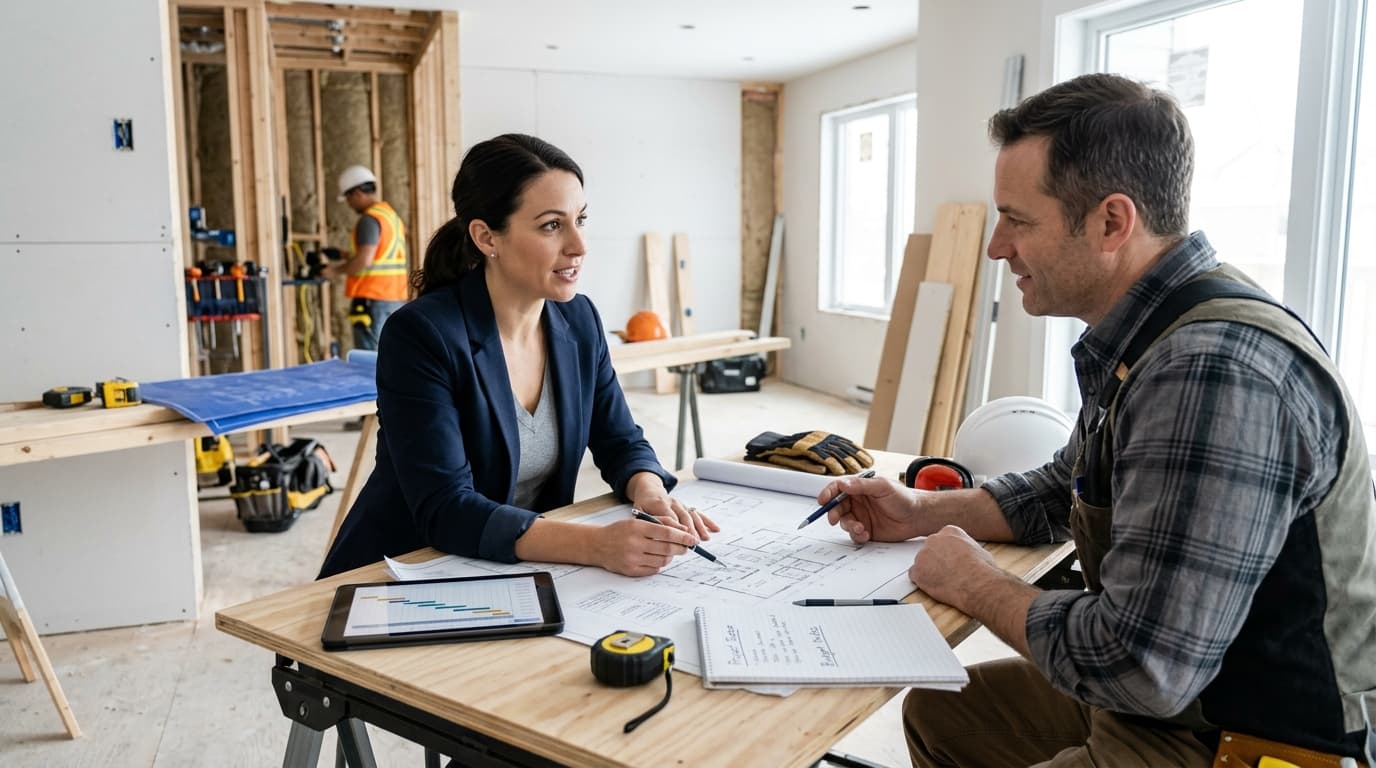
Picture this: You're sitting across from a contractor who just quoted $8,500 for your bathroom renovation. Your stomach drops. The number feels high, but you have no idea if it's fair. Do you accept it? Push back? The silence stretches uncomfortably as you realize you're completely unprepared for this moment. Understanding how to negotiate with contractors effectively can mean the difference between overpaying by thousands or getting fair value for quality work.
If this scenario makes your palms sweat, you're not alone. Most homeowners find discussing pricing and scope changes with contractors intimidating. The good news? Learning how to negotiate with contractors isn't about becoming a master dealmaker—it's about having honest, productive conversations that protect your interests while building a working relationship.
This guide will walk you through every aspect of contractor negotiations, from preparation to closing the deal. You'll learn practical strategies that work in real-world situations, not just in theory. ## Understanding How to Negotiate with Contractors: The Foundation
Before diving into negotiation tactics, it's crucial to understand what contractors face daily. This knowledge transforms you from an adversary into an informed partner.
The Reality of Construction Estimates and Contractor Pricing
Contractors don't just pull numbers from thin air. According to the National Association of Home Builders, their quotes typically break down into three main categories:
- Materials (usually 30-40% of total cost)
- Labor (40-50% of total cost)
- Overhead and profit (20-30% of total cost)
When a contractor quotes $15,000 for your kitchen remodel, they're not pocketing that entire amount. After materials, worker wages, insurance, equipment, and business expenses, their actual profit might be $2,000-$3,000.
Understanding this breakdown helps you negotiate more effectively. Instead of asking for a blanket 20% discount, you can focus on areas with real flexibility. From our data ### Critical Contractor Concerns That Impact Your Negotiations
Experienced contractors have heard every negotiation tactic imaginable. They're particularly wary of:
- Homeowners who seem to prioritize price over quality
- Projects with unclear scope that might expand unexpectedly
- Clients who might be difficult to work with or slow to pay
When you approach negotiations professionally and show you understand their challenges, contractors are more likely to work with you on pricing. Learning how to negotiate with contractors means recognizing their legitimate business concerns while advocating for your interests.
Seasonal and Market Factors
Timing affects your negotiating power significantly. Contractors are typically more flexible on pricing during:
- Winter months (except for emergency repairs)
- Economic downturns
- When they have gaps in their schedule
Conversely, expect less flexibility during peak seasons or when materials costs are rising rapidly. Our ## Preparing for Successful Home Improvement Negotiations
Preparation is your secret weapon in contractor negotiations. The homeowners who get the best deals aren't necessarily the best negotiators—they're the best prepared.
Research Market Rates Thoroughly
Before any negotiation, you need baseline knowledge of fair home improvement pricing. Start by gathering multiple quotes for your project. Three quotes is the minimum; five is better for larger projects.
When comparing quotes, look beyond the bottom line. A $12,000 quote that includes premium materials and a two-year warranty might be better value than a $10,000 quote with basic materials and no warranty.
Use online resources, but take them with a grain of salt. National averages don't account for local labor costs or material availability. A bathroom renovation that costs $8,000 in rural Ohio might cost $15,000 in San Francisco. The HomeAdvisor True Cost Guide provides localized pricing data that can help you understand regional variations.
Document Everything in Detail
Create a detailed scope of work before getting quotes. This document should include:
- Specific materials (brand names, model numbers, colors)
- Exact work to be performed
- Timeline expectations
- Who provides what materials
- Cleanup responsibilities
The more specific your scope, the more accurate your quotes will be. This also prevents the "scope creep" that leads to uncomfortable pricing discussions mid-project. Knowing how to negotiate with contractors starts with clear documentation that protects both parties.
Understand Your Budget Reality
Be honest about your budget constraints. Having a clear budget range helps you negotiate more effectively.
If your maximum budget is $20,000, don't pretend you can spend $30,000 to get a lower starting quote.
Consider creating three budget scenarios:
- Minimum viable project: The absolute basics to solve your problem
- Preferred project: What you really want within reason
- Dream project: Everything you'd love if money weren't an issue
This framework helps you negotiate by understanding what you can compromise on versus what's non-negotiable.
Research Your Contractor's Background
Understanding your contractor's situation gives you negotiating insights. Are they a large company with steady work or a smaller operation that might need the job? Have they been in business for decades or are they building their reputation?
This isn't about taking advantage—it's about understanding what motivates them. A newer contractor might be more flexible on price but offer additional value through extra attention to your project. ## Timing Your Contractor Negotiations for Maximum Impact
When you negotiate matters almost as much as how you negotiate. Strategic timing can save you thousands without any confrontational tactics.
The Sweet Spot for Initial Discussions
The best time to negotiate is after you've received quotes but before you've made your final decision. This is when contractors are most motivated to win your business.
Avoid negotiating during the initial consultation. Contractors need time to properly assess your project and provide accurate quotes. Premature price discussions often lead to inflated quotes that account for uncertainty.
Seasonal Negotiation Advantages
Winter negotiations often yield the best results for indoor projects. Contractors typically have lighter schedules and may offer discounts to keep their crews busy.
One homeowner saved $3,500 on a kitchen remodel by scheduling it for January instead of May. Understanding how to negotiate with contractors includes recognizing these seasonal patterns and using them to your advantage.
For outdoor projects, late fall can be ideal. Contractors want to book spring projects during the slower winter months. You might secure better renovation costs for a deck or patio by negotiating in November for April completion.
Project Size and Timing Considerations
Larger projects give you more negotiating power, but they also require more careful timing. A $50,000 renovation affects a contractor's schedule significantly, so they're more likely to negotiate to secure the work.
Smaller projects under $5,000 have less negotiating room. The contractor's profit margin is smaller, and the time spent negotiating might not be worth their effort.
End-of-Month and Quarter Considerations
Some contractors have monthly or quarterly goals that can work in your favor. If you're flexible on start dates, mentioning that you're ready to sign a contract immediately can sometimes yield last-minute concessions.
However, don't assume this applies to all contractors. Many successful contractors don't operate under these pressures and won't be influenced by artificial urgency.
Effective Negotiation Strategies That Actually Work
The most successful contractor negotiations feel more like collaborative problem-solving than adversarial bargaining. Here are strategies that work in real-world situations.
The Value-First Approach
Instead of starting with price, begin by discussing value. Ask questions like:
- "Can you help me understand what makes this project worth $X?"
- "What would happen to the quality if we reduced the budget by 15%?"
- "Are there areas where we could achieve similar results for less cost?"
This approach shows you're interested in getting good value, not just the lowest price. Contractors respond better to this because it respects their expertise. Mastering how to negotiate with contractors means focusing on value rather than just haggling over price.
Strategic Scope Adjustments
One of the most effective ways to negotiate is by adjusting the project scope. Instead of asking for a discount on the same work, explore alternatives:
Example: If a bathroom renovation quote is $15,000 and your budget is $12,000, ask:
- "What if we kept the existing vanity and just updated the countertop?"
- "Could we use a different tile that achieves a similar look?"
- "What if we did the painting ourselves?"
This approach often yields better results than requesting a straight discount. ### The Multiple Option Strategy
Ask contractors to provide multiple pricing options. For example:
- Option A: Full scope as discussed
- Option B: Modified scope within your budget
- Option C: Bare minimum to solve the immediate problem
This gives contractors a chance to be creative with solutions while staying within your budget. It also shows you're serious about moving forward, just within financial constraints.
Bundling and Timing Flexibility
If you have multiple projects, bundling them can create negotiating opportunities. A contractor might offer better pricing for a kitchen renovation if you also hire them for bathroom updates.
Similarly, offering flexibility on timing can reduce costs. If you're not in a rush, contractors might fit your project into their schedule when they have downtime, potentially at a lower rate.
The Honest Budget Discussion
Sometimes the most effective approach is complete honesty: "I really want to work with you, but my budget is $X. Is there a way to make this work?"
This only works if your budget is reasonable and you're genuinely interested in hiring that contractor. It's not a negotiation tactic—it's a straightforward business discussion that demonstrates you understand how to negotiate with contractors professionally.
Navigating Scope Changes and Additional Costs
Scope changes are where many homeowner-contractor relationships get strained. Learning how to negotiate with contractors during these situations is crucial for project success.
Establishing Change Order Procedures Upfront
Before work begins, discuss how changes will be handled. Agree on:
- How changes will be documented
- How additional costs will be calculated
- Approval process for changes over certain dollar amounts
- Timeline impacts of changes
Having these procedures in place prevents uncomfortable surprise negotiations later.
Understanding Legitimate vs. Questionable Changes
Not all change orders are created equal. Legitimate changes include:
- Unforeseen conditions (like discovering water damage during renovation)
- Homeowner-requested modifications
- Code requirement changes
- Material availability issues
Questionable changes might include:
- Work that should have been included in original scope
- Excessive charges for minor modifications
- "Discoveries" that an experienced contractor should have anticipated
Negotiating Fair Change Order Pricing
When scope changes arise, use these strategies:
Get detailed breakdowns: Ask for material and labor costs separately. This helps you understand if the pricing is fair.
Compare to original pricing: If the original quote included similar work, use that as a baseline for new pricing.
Consider alternatives: Before approving expensive changes, ask if there are other solutions that achieve the same goal for less money.
Negotiate timing: If the change isn't urgent, you might get better pricing by waiting until the contractor has a gap in their schedule.
Handling Unexpected Discoveries
When contractors discover unexpected issues (like electrical problems behind walls), you have several options:
- Get a second opinion: For major discoveries, consider having another contractor assess the situation
- Explore temporary solutions: Ask if there's a way to address the issue temporarily and handle it in a future project
- Negotiate the markup: Contractors often mark up subcontractor work. Ask if you can hire the electrician or plumber directly
- Consider DIY elements: Some aspects of addressing the new issue might be suitable for DIY work
Setting Boundaries on Scope Creep
Protect yourself by establishing clear boundaries:
- Set a dollar limit for changes that don't require your approval
- Require written estimates for any change over $500
- Build a contingency budget (typically 10-20% of project cost) for unexpected issues
- Regular check-ins to discuss any potential changes before they become necessary
Common Negotiation Mistakes to Avoid
Even well-intentioned homeowners can damage their negotiating position with common mistakes. Avoiding these pitfalls will improve your results significantly.
The Lowest Bidder Trap
Choosing the lowest bid often backfires. Contractors who significantly underbid either:
- Made mistakes in their estimates (leading to change orders later)
- Plan to cut corners on quality
- Are desperate for work (which might indicate business problems)
Instead of focusing solely on price, evaluate the total value proposition. A contractor who charges 15% more but includes better materials and stronger warranties might be the better deal. Our Homeplexi performance data shows that the lowest bidder has a 40% higher rate of project disputes and delays.
Over-Negotiating Small Amounts
Trying to negotiate every small expense can damage your relationship with contractors. If a contractor quotes $8,500 for a project and you spend an hour negotiating to get it down to $8,200, you might save money but lose goodwill.
Focus your negotiating energy on significant items. It's better to negotiate one $500 reduction than five $20 reductions. Understanding how to negotiate with contractors includes knowing when to push and when to accept reasonable pricing.
Comparing Apples to Oranges
When using other quotes as negotiating leverage, make sure you're comparing equivalent work. Saying "Contractor B quoted $2,000 less" doesn't help if Contractor B's quote excludes work that Contractor A includes.
Create a detailed comparison sheet that breaks down what each contractor includes. This makes negotiations more productive and shows contractors you're being fair in your comparisons.
Negotiating After Work Begins
Your negotiating power drops significantly once work starts. Contractors know that switching mid-project is expensive and disruptive for homeowners.
Handle all major negotiations before signing contracts and work begins. Once the project starts, focus on collaborative problem-solving rather than adversarial negotiating.
Using Misleading Tactics
Avoid tactics like:
- Claiming you have lower quotes when you don't
- Threatening to hire someone else unless you get a discount
- Making unreasonable demands just to see if they'll agree
- Pretending your budget is lower than it actually is
These tactics might work short-term but often lead to problems later. Contractors remember difficult clients and might be less willing to work with you in the future.
Ignoring Red Flags for Lower Prices
Don't let negotiation success blind you to contractor red flags. A contractor who agrees to reduce their price by 30% might be:
- Planning to cut corners
- Desperate for work due to business problems
- Inexperienced with pricing
- Planning to make up the difference with change orders
When contractors make significant concessions, understand why. Sometimes it's legitimate (they really want the work), but other times it's a warning sign.
Building Long-Term Contractor Relationships Through Fair Negotiations
The best contractor negotiations create win-win situations that lead to ongoing relationships. When you find good contractors, maintaining those relationships saves time and money on future projects.
The Value of Contractor Loyalty
Contractors often give their best pricing and priority scheduling to repeat customers. One homeowner saved over $5,000 on a deck project because the contractor knew him from previous kitchen work and trusted that payment would be prompt and the project would go smoothly.
Long-term relationships also mean:
- Contractors understand your preferences and standards
- Less time spent vetting and getting quotes
- Priority service for emergency repairs
- Honest advice about what repairs are necessary versus nice-to-have
Negotiating for Future Considerations
When negotiating current projects, think about future needs. You might say: "I'm planning a bathroom renovation next year. If we can work something out on this kitchen project, I'd love to discuss the bathroom with you too."
This isn't about making promises you won't keep—it's about showing contractors that good work and fair pricing lead to more business. Knowing how to negotiate with contractors includes building relationships that benefit both parties long-term.
Maintaining Professional Relationships
Even during negotiations, maintain professionalism:
- Respond promptly to communications
- Be clear about your needs and constraints
- Respect their expertise and experience
- Pay promptly when work is completed satisfactorily
Contractors talk to each other. Building a reputation as a good client makes future negotiations easier because contractors want to work with you.
Learning from Each Negotiation
After each project, reflect on what worked and what didn't in your negotiations. Did you focus too much on price and not enough on quality? Did you miss opportunities to bundle projects for better pricing? Did the contractor deliver on their promises?
This learning helps you become more effective in future negotiations while building better contractor relationships.
Putting It All Together: Your Negotiation Action Plan
Now that you understand the principles, here's a step-by-step approach to implement when you need to negotiate with contractors.
Phase 1: Pre-Negotiation Preparation (1-2 weeks)
- Define your project scope in detail, including specific materials and finishes
- Research market pricing through online resources and initial contractor conversations
- Set your budget range with minimum, preferred, and maximum scenarios
- Identify 3-5 potential contractors and request detailed quotes
- Prepare questions about their pricing, timeline, and approach
Phase 2: Information Gathering (1 week)
- Meet with contractors for detailed consultations and quotes
- Ask clarifying questions about anything unclear in their proposals
- Verify licensing and insurance for your top candidates
- Check references from recent similar projects
- Compare quotes using a detailed breakdown sheet
Phase 3: Negotiation Discussions (3-5 days)
- Start with your preferred contractor based on overall value, not just price
- Use value-focused questions to understand their pricing
- Explore scope modifications if the price exceeds your budget
- Discuss timing flexibility that might reduce costs
- Get any agreements in writing before moving forward
Phase 4: Final Decision and Contract (2-3 days)
- Review the final proposal carefully, including all negotiated changes
- Clarify change order procedures and approval processes
- Establish communication protocols for the project
- Sign contracts only when you're completely comfortable with terms
- Plan for ongoing collaboration rather than adversarial oversight
Sample Negotiation Conversations
Here are examples of effective negotiation conversations:
Scenario 1: Budget Constraints "I really appreciate the detailed quote. The work scope is exactly what we need, but the total is about 20% above our budget. Are there ways we could modify the project to get closer to $X without compromising the main goals?"
Scenario 2: Comparing Quotes "I've received several quotes, and yours includes some elements others don't, which I appreciate. However, there's a significant price difference. Can you help me understand what accounts for that difference?"
Scenario 3: Timing Flexibility "We're not in a rush for this project. If you have any gaps in your schedule over the next few months where you could fit this in, we'd be happy to work around your timing for a better rate."
These conversations focus on collaboration rather than confrontation, leading to better outcomes for everyone involved.
Conclusion: Confident Negotiations Start with Preparation
Learning how to negotiate with contractors doesn't require becoming a master dealmaker. Success comes from preparation, understanding, and approaching negotiations as collaborative problem-solving rather than adversarial bargaining.
Remember these key principles:
- Prepare thoroughly with market research and clear project scope
- Focus on value rather than just price
- Build relationships that benefit both parties
- Stay professional even when discussions get challenging
- Document everything and follow through on commitments
The homeowners who get the best results aren't necessarily the toughest negotiators—they're the most prepared and professional. When you show contractors that you understand their business and respect their expertise while protecting your own interests, negotiations become productive conversations that lead to successful projects.
Start applying these strategies on your next project, whether it's a small repair or major renovation. With practice, discussing pricing and scope changes with contractors will feel natural rather than intimidating. Your next step is to begin preparing for your upcoming project using the action plan above. The time you invest in preparation will pay dividends in better pricing, clearer communication, and successful project outcomes.
Related Articles:
- Essential Questions to Ask Contractors Before Hiring: Your Complete Vetting Guide
- How to Get Multiple Quotes for Home Repairs Without the Hassle
- How to Find a Reliable Contractor: Your Complete Guide to Avoiding Scams and Hiring with Confidence
- The Complete Home Renovation Cost Estimator Guide: Budget Like a Pro in 2026
Need Professional Help?
Homeplexi connects you with vetted contractors, helps you compare quotes, and manages your entire home improvement project in one place.
Get Started Free →The Homeplexi editorial team consists of licensed contractors, home inspectors, and consumer protection experts who provide research-backed guidance for homeowners. All content is fact-checked and cited from authoritative industry sources.
Important Safety Disclaimer
Please read this carefully before following any advice:
- Always prioritize safety: Wear appropriate protective equipment (safety glasses, gloves, etc.) when performing any home maintenance or repair work.
- Know your limits: If you're not confident in your ability to safely complete a task, hire a licensed professional. This is especially important for electrical, gas, plumbing, and structural work.
- Verify all information: The guidance provided here is based on community discussions and general knowledge. Always double-check any advice with multiple reliable sources or a licensed professional.
- Follow local codes: Building codes, electrical codes, and plumbing codes vary by location. Ensure any work complies with your local regulations and obtain necessary permits.
- Turn off power/water/gas: Before working on electrical, plumbing, or gas systems, always shut off the relevant utilities at the source.
- For emergencies: If you have a gas leak, electrical fire, major water leak, or other emergency, evacuate immediately and call emergency services (911) and your utility company.
Liability: Homeplexi provides information for educational purposes only. We are not responsible for any injury, property damage, or losses resulting from following any guidance or advice provided through this platform. Use all information at your own risk.
When in doubt, always consult a licensed, insured professional contractor. Homeplexi can help you find qualified professionals in your area.
Found this helpful? Share with others:
Related Articles
12 Critical Contractor Red Flags That Could Cost You Thousands (And How to Spot Them Before It's Too Late)
The warning signs pros know to spot, and how they save thousands by walking away before it's too late.
How to Lower Electric Bills: Proven Strategies That Actually Work When Basic Tips Fail
Electric bills climbing higher than expected despite energy-saving efforts
Foundation Repair Cost: What You Should Actually Pay in Your Region
Foundation repair quotes vary wildly by region and homeowners don't know what's fair pricing vs price gouging