Picture this: It's 2 AM, and you're lying in bed listening to that relentless sound of water continuously flowing in your bathroom. Your toilet keeps running, and it's driving you absolutely crazy. You jiggle the handle (again), and the sound stops... for about five minutes. Then it starts all over again.
If this scenario sounds familiar, you're not alone. A toilet that keeps running is one of the most common plumbing issues homeowners face, and it's more than just an annoying nighttime soundtrack. According to the EPA WaterSense program, a running toilet can waste 200-250 gallons per day, translating to over 6,000 gallons per month and hundreds of dollars in unnecessary water bills. That constant water flow is literally flushing money down the drain. According to the EPA WaterSense program, an average leaking toilet can waste about 200 gallons of water every day—that's over 6,000 gallons per month, costing homeowners hundreds of dollars annually.
The good news? Most running toilet problems have simple fixes you can tackle yourself in under 30 minutes. Let's dive into why your toilet keeps running and how you can stop it once and for all.
Understanding Why Your Toilet Keeps Running
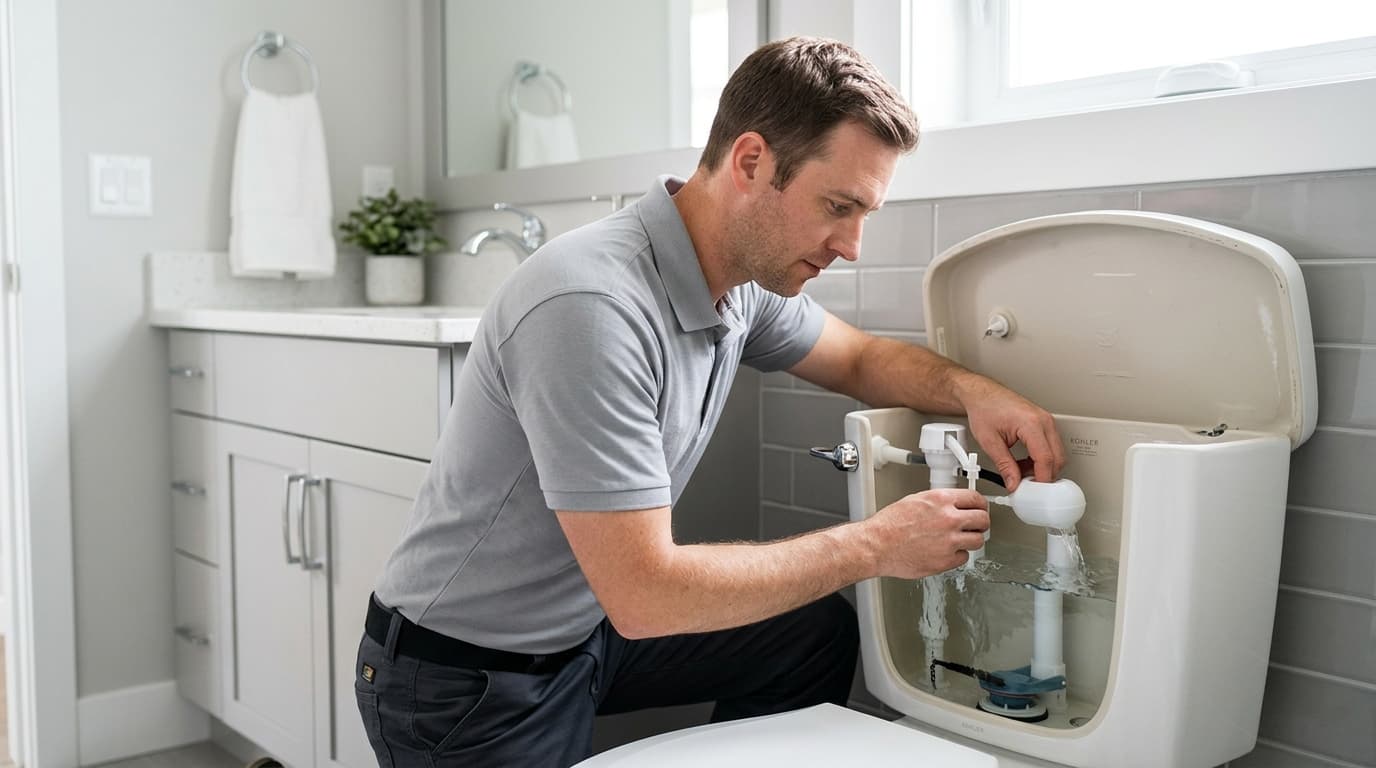
Before we jump into solutions, it helps to understand how your toilet actually works. Inside that tank behind you sits a surprisingly simple mechanism:
- Flapper: A rubber seal that covers the flush valve
- Chain: Connects the flush handle to the flapper
- Fill valve: Controls water flowing into the tank
- Float: Signals when the tank is full
- Flush valve: The opening where water flows into the bowl
When everything works properly, flushing lifts the flapper, water rushes into the bowl, the flapper closes, and fresh water refills the tank until the float tells it to stop. But when any part of this system gets out of whack, your toilet keeps running.
The 5 Most Common Causes (And Quick Fixes)
1. Warped or Misaligned Flapper
The Problem: Your flapper isn't sealing properly against the flush valve seat, allowing water to continuously leak into the bowl.
How to Fix It:
- Remove the toilet tank lid and look at the rubber flapper
- Check if it's warped, cracked, or sitting crooked
- Gently press it down against the valve seat – if the running stops, you've found your culprit
- Quick fix: Clean around the valve seat with a pumice stone to remove mineral buildup
- Permanent fix: Replace the flapper (about $5 at any hardware store)
2. Chain Problems
The Problem: The chain connecting your handle to the flapper is either too long, too short, or has come disconnected.
How to Fix It:
- Too long: The flapper can't lift properly when you flush
- Too short: The flapper can't close completely after flushing
- Just right: About ½ inch of slack when the flapper is closed
- Adjust the chain length by moving it to a different hole on the flush arm
- Replace broken chains with a new one from the hardware store
3. Faulty Fill Valve
The Problem: An old or broken fill valve doesn't know when to stop filling the tank.
How to Fix It:
- Lift the float arm gently – if the water stops running, the fill valve needs adjustment or replacement
- Quick fix: Bend the float arm down slightly to make the valve shut off sooner
- Better fix: Replace the entire fill valve assembly (typically $10-15 and takes about 20 minutes)
4. Incorrect Water Level
The Problem: If your water level is too high, it continuously flows into the overflow tube.
How to Fix It:
- Check if water is flowing into the tall tube in the center of your tank
- The water level should be about 1 inch below the rim of the tank
- Adjust by: Bending the float arm down (older toilets) or adjusting the screw on newer fill valves
- If you can't get the level right, you likely need a new fill valve
5. Handle Issues
The Problem: A loose, stuck, or broken handle can prevent proper flushing and closing.
How to Fix It:
- Loose handle: Tighten the mounting nut inside the tank (remember: it's reverse-threaded, so turn it counter-clockwise to tighten)
- Sticky handle: Clean around the mechanism and lubricate with a small amount of petroleum jelly
- Broken handle: Replace the entire handle assembly (usually under $10)
When to DIY vs. When to Call a Pro
Safe to DIY When:
- You can clearly see the problem (broken chain, warped flapper, etc.)
- The fix involves adjusting or replacing small parts
- You're comfortable working with basic tools
- The toilet is functioning normally otherwise
Call a Professional When:
- Multiple toilets are affected (could indicate a main line issue)
- You notice water damage around the toilet base
- The toilet rocks or moves when you sit on it
- You've tried multiple fixes but your toilet keeps running
- You're not comfortable working around water and plumbing
Pro Tips to Prevent Future Problems
Regular Maintenance (every 6 months):
- Remove mineral deposits from the flush valve seat
- Check that all components move freely
- Test the flush mechanism and adjust as needed
Smart Upgrades:
- Consider replacing old toilet components with modern, more reliable parts
- Install a dual-flush system to save even more water
- Upgrade to a high-efficiency toilet if yours is more than 20 years old
Water Quality Matters:
- If you have hard water, expect to replace rubber components more frequently
- Consider a water softener if mineral buildup is a recurring problem
The Bottom Line: Stop Wasting Money Today
According to EPA WaterSense, a toilet that keeps running can waste 200+ gallons of water per day—approximately 200 to 250 gallons daily for a typical running toilet. At average water rates, that's over $300 per year literally going down the drain. Most of the time, a $5 part and 15 minutes of your time can solve the problem completely.
Start with the simplest solutions first – check your flapper, adjust the chain, and verify your water level. These three fixes solve about 80% of running toilet issues. If you're still hearing that dreaded sound after trying these solutions, or if you discover additional problems like leaks or structural issues, it's time to bring in a professional.
Remember: catching plumbing problems early saves money. What starts as a minor running toilet can escalate into more serious (and expensive) issues if left unchecked.
Related Articles:
- 5 Plumbing Problems Homeowners Fixed
- Why Does My Dishwasher Have Standing Water?
- How to Find a Reliable Contractor
Need help finding a reliable contractor? Homeplexi connects you with vetted professionals, helps you compare quotes, and manages your entire home improvement project in one place. Get started free →
Need Professional Help?
Homeplexi connects you with vetted contractors, helps you compare quotes, and manages your entire home improvement project in one place.
Get Started Free →The Homeplexi editorial team consists of licensed contractors, home inspectors, and consumer protection experts who provide research-backed guidance for homeowners. All content is fact-checked and cited from authoritative industry sources.
Important Safety Disclaimer
Please read this carefully before following any advice:
- Always prioritize safety: Wear appropriate protective equipment (safety glasses, gloves, etc.) when performing any home maintenance or repair work.
- Know your limits: If you're not confident in your ability to safely complete a task, hire a licensed professional. This is especially important for electrical, gas, plumbing, and structural work.
- Verify all information: The guidance provided here is based on community discussions and general knowledge. Always double-check any advice with multiple reliable sources or a licensed professional.
- Follow local codes: Building codes, electrical codes, and plumbing codes vary by location. Ensure any work complies with your local regulations and obtain necessary permits.
- Turn off power/water/gas: Before working on electrical, plumbing, or gas systems, always shut off the relevant utilities at the source.
- For emergencies: If you have a gas leak, electrical fire, major water leak, or other emergency, evacuate immediately and call emergency services (911) and your utility company.
Liability: Homeplexi provides information for educational purposes only. We are not responsible for any injury, property damage, or losses resulting from following any guidance or advice provided through this platform. Use all information at your own risk.
When in doubt, always consult a licensed, insured professional contractor. Homeplexi can help you find qualified professionals in your area.
Found this helpful? Share with others:
Related Articles
How to Lower Electric Bills: Proven Strategies That Actually Work When Basic Tips Fail
Electric bills climbing higher than expected despite energy-saving efforts
Electrical Outlet Not Working: DIY Fixes vs. When to Call an Electrician
Knowing when it's safe to DIY vs. hiring a pro
Home Repair Priorities: The 4-Quadrant System for Deciding Which Fixes Come First (When You Can't Afford Everything)
Homeowners overwhelmed by multiple needed repairs but limited budget, unsure which repairs to tackle first