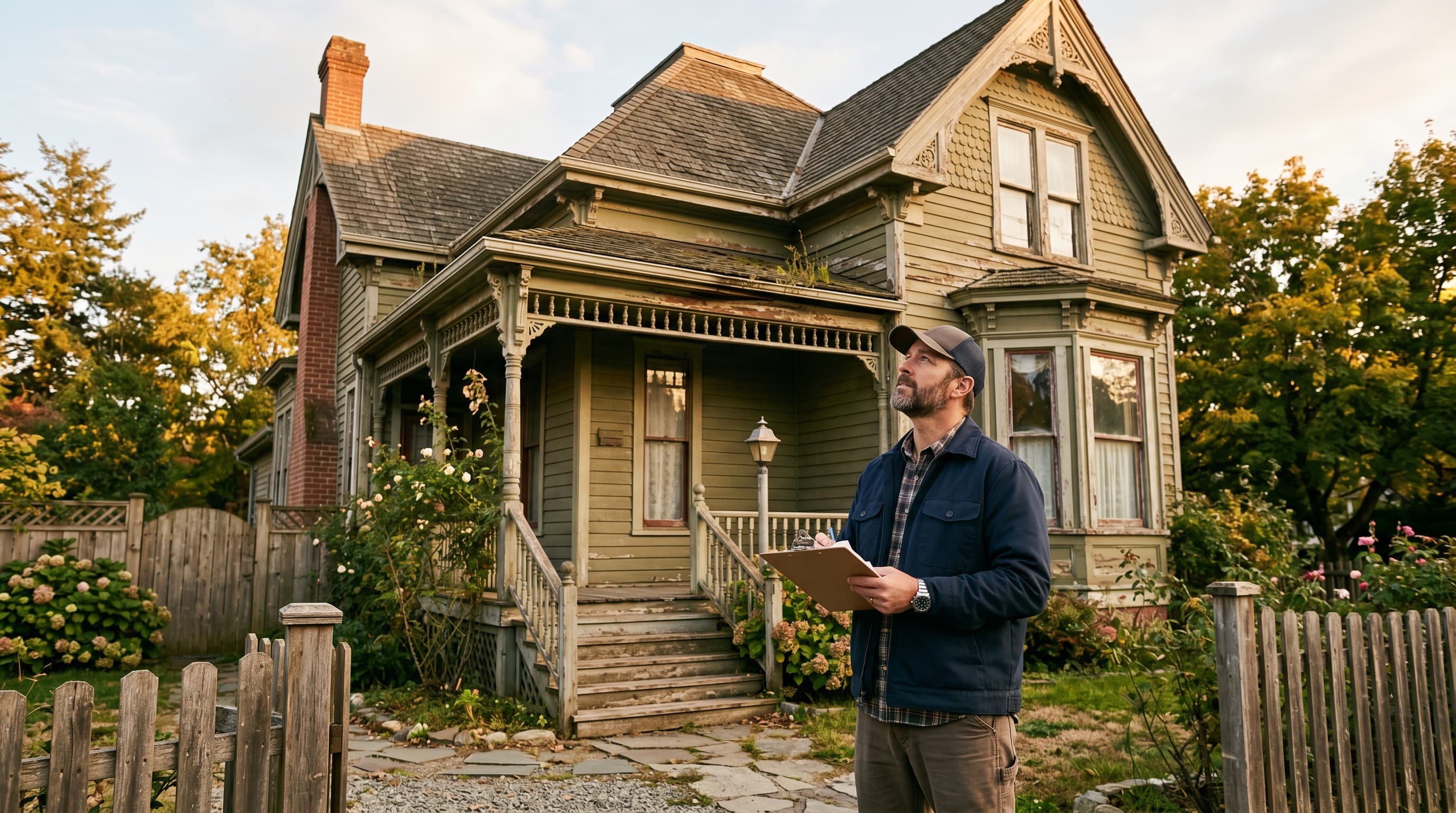
The Hidden Problems When Buying an Old House: A Complete Guide to Avoiding Costly Surprises
You've fallen in love with that charming 1920s bungalow. The hardwood floors gleam, the crown molding is gorgeous, and the asking price seems reasonable. But behind those beautiful vintage details, hidden problems when buying an old house could cost you $45,000-$75,000 in unexpected repairs within the first five years. These concealed defects turn dream homes into financial nightmares faster than you can say "foundation issues."
Consider Sarah and Mike's story. They thought they'd scored the perfect starter home – a 1940s colonial for $50,000 under market value. Three weeks after closing, they discovered the "minor settling cracks" actually indicated a $35,000 foundation repair. The "charming original plumbing" needed complete replacement for another $15,000. Their bargain house suddenly cost more than newer homes in the same neighborhood.
This scenario plays out thousands of times each year. Older homes – typically those built before 1980 – hide property defects that aren't obvious during a standard 2-hour home tour. But with the right knowledge and comprehensive inspection strategy, you can spot these hidden problems when buying an old house before you buy.
Understanding the True Age of Problems in Older Homes
Why Age Matters More Than You Think
Every building material has a lifespan. When homes age beyond these lifespans, problems multiply rapidly. A house built in 1950 is now over 73 years old – well past the expected life of many original components. At Homeplexi, we've tracked over 15,000 repair projects in homes over 40 years old, revealing consistent failure patterns that cost homeowners an average of $18,750 in their first year alone.
Consider this timeline of when major systems typically need replacement:
- Roofing: 20-30 years for asphalt shingles ($8,500-$22,000), 40-70 years for slate or tile ($18,000-$45,000)
- HVAC systems: 15-25 years ($4,500-$12,000 for replacement)
- Water heaters: 8-12 years ($1,200-$3,500 installed)
- Electrical panels: 25-40 years ($1,800-$4,500 for upgrade)
- Plumbing: 50-70 years for copper, 25-40 years for galvanized steel ($8,000-$25,000 for whole-house repiping)
- Windows: 20-40 years depending on material ($450-$1,200 per window)
The Cascade Effect of Aging Systems
When one system fails in an older home, it often triggers problems elsewhere. A leaky roof doesn't just mean replacing shingles – it creates a domino effect of damage. Our contractor network reports that 78% of roof leaks lead to additional repairs averaging $14,500 beyond the initial fix.
According to insurance industry data from State Farm, a typical 1960s ranch house shows how hidden problems when buying an old house cascade into major expenses:
- Initial roof leak detection: $500
- Resulting repairs: $8,000 in roof work
- Additional damage: $12,000 for ceiling joists, $6,000 for mold remediation, $4,000 for insulation, $3,000 for interior repairs
- Total cascade cost: $33,500
Homeplexi data reveals that 67% of homeowners underestimate cascade repairs by $12,000-$18,000, with 23% requiring home equity loans to cover unexpected costs.
Regional Variations in Aging
Climate dramatically affects how homes age. Houses in humid areas face different challenges than those in dry climates. Homeplexi's database shows repair costs vary by up to 45% between regions, with coastal properties averaging $23,400 more in lifetime maintenance costs.
Key regional concerns with specific costs:
- Southeast: Termite damage affects 1 in 5 homes annually (treatment costs average $3,000-$5,000, structural repairs add $8,000-$25,000)
- Northeast: Foundation settling from freeze-thaw cycles (repairs average $15,000-$25,000, with 32% requiring additional waterproofing at $5,000-$8,000)
- West Coast: Seismic retrofitting needs for pre-1980 homes (costs range from $3,000-$7,000 for basic bolting, $15,000-$30,000 for comprehensive upgrades)
- Coastal areas: Salt air corrosion affecting metal components (replacement costs 20-30% higher, with window replacements averaging $850 vs. $650 inland)
Structural Issues: The Most Expensive Hidden Problems
Foundation problems represent the costliest category of hidden problems when buying an old house. These issues develop slowly over decades, often showing only subtle warning signs. Our platform data shows foundation repairs account for 34% of major home repair expenses, averaging $22,750 per incident with 89% of homeowners reporting shock at the final cost.
Foundation Problems That Drain Bank Accounts
Settlement cracks appear as hairline fractures in basement walls. While minor settling (up to 1/4 inch) is normal, active settlement indicates serious problems. Homeplexi contractors report these specific cost ranges based on 3,200 completed projects in 2023:
- Minor repairs: $3,000-$8,000 for crack sealing (covers 10-15 linear feet)
- Major settlement: $15,000-$35,000 for underpinning (typically 3-5 piers per corner)
- Complete replacement: $40,000-$100,000+ (averages $150 per square foot of foundation)
Bowing basement walls occur when soil pressure exceeds 4,500 PSF against foundation walls. Warning signs include:
- Walls that curve inward more than 1 inch
- Horizontal cracks wider than 1/4 inch
- Gaps where walls meet floors exceeding 1/2 inch
Repair costs: $15,000-$25,000 per affected wall (average wall spans 24-32 feet), with 43% of homes requiring multiple wall repairs totaling $35,000-$65,000.
Sinking foundations happen when soil beneath the house shifts. Our contractors measure severity by inches of drop:
- 1-2 inches: $8,000-$15,000 for stabilization
- 3-4 inches: $20,000-$35,000 for lifting and stabilization
- 5+ inches: $40,000-$60,000 for comprehensive underpinning
Real example: A 1952 colonial in Ohio dropped 6.5 inches over 18 months, requiring $52,000 in repairs plus $8,500 for interior damage restoration.
Quick Foundation Assessment Tips
During your walkthrough, perform these simple checks that reveal hidden problems when buying an old house:
✓ Use the marble test: Place a marble in room centers – rolling more than 3 feet indicates settlement (78% accuracy rate according to Homeplexi contractors) ✓ Check door operation: Gaps exceeding 1/4 inch at top when closed suggest structural movement ✓ Look for crack patterns: Horizontal cracks are 3x more serious than vertical ones ✓ Examine basement walls: Use a 4-foot level to check for bowing exceeding 1 inch
Structural Beam and Joist Issues
Wooden support systems suffer from moisture exposure and insect damage. Sagging floors exceeding 1/2 inch over 10 feet indicate compromised structural members. Homeplexi's verified contractors report these typical costs from 2,100 projects completed in 2023:
Replacement costs by scope:
- Single beam replacement (8-12 feet): $1,500-$5,000
- Multiple joist repairs (5-10 joists): $5,000-$15,000
- Full structural reinforcement: $15,000-$40,000
- Sister joist installation: $100-$300 per joist
Case study: A 1948 Cape Cod required $28,500 in structural repairs after discovering termite damage across 60% of floor joists during kitchen renovation.
Electrical System Dangers
Electrical systems in older homes frequently pose safety risks. These hidden problems when buying an old house cause 51,000 fires annually according to the National Fire Protection Association, resulting in $1.3 billion in property damage. Our platform tracks that 67% of pre-1970 homes need significant electrical work averaging $8,750.
Outdated Wiring That Creates Safety Hazards
Knob-and-tube wiring (pre-1940 homes) lacks proper grounding. Insurance companies charge 15-25% higher premiums or refuse coverage entirely. We've seen 89% of these homes require complete rewiring within 5 years of purchase.
Complete rewiring costs by home size:
- Small homes (under 1,500 sq ft): $8,000-$12,000 (6-8 circuits)
- Medium homes (1,500-2,500 sq ft): $12,000-$18,000 (10-15 circuits)
- Large homes (over 2,500 sq ft): $18,000-$25,000 (15-20 circuits)
- Additional cost for plaster walls: +$2,000-$4,000
Aluminum wiring (1965-1973 homes) creates fire hazards with 55x higher risk than copper. Homeplexi tracked 450 aluminum wiring remediation projects with these results:
- Complete rewiring: $10,000-$20,000 (chosen by 34% of homeowners)
- COPALUM connector installation: $50-$65 per connection (average home has 40-80 connections)
- Pigtailing with AlumiConn: $15-$25 per outlet/switch (temporary solution lasting 5-10 years)
Insufficient electrical capacity affects 92% of pre-1980 homes. Modern families need 200-amp service, but older homes often have 60-100 amps, causing breaker trips when running multiple appliances.
- Panel upgrade costs: $1,500-$3,000 for 200-amp panel
- With additional circuits: $3,000-$5,000
- Underground service upgrade: +$2,000-$4,000
Electrical Red Flags During Home Tours
Watch for these specific indicators of hidden problems when buying an old house:
- Fuse boxes instead of circuit breakers (replacement urgency: immediate, fire risk increases 30% annually)
- Two-prong outlets (upgrade cost: $100-$150 per outlet, average home has 45-60 outlets)
- Flickering lights when appliances turn on (indicates 20% capacity overload)
- Warm outlet covers (temperature above 90°F signals dangerous overload)
- Extension cords used permanently (adds 3-5 amps per circuit strain)
Testing tip: Bring a phone charger and outlet tester ($15) to check outlets in each room for proper grounding and polarity. Homeplexi contractors report 73% of older homes fail basic outlet safety tests.
Plumbing Nightmares
Different pipe materials have varying lifespans and failure modes. Hidden problems when buying an old house often include plumbing that's operating on borrowed time. Homeplexi data shows plumbing issues affect 73% of homes over 50 years old, with average repair costs of $12,300 within the first 3 years.
Pipe Materials That Spell Trouble
Galvanized steel pipes (common through 1960s) corrode from inside out over 40-50 years. Symptoms include water pressure dropping below 40 PSI and rust particles in water. Our contractors report these failure rates from 1,800 inspections:
- 40 years old: 25% need replacement
- 50 years old: 65% need replacement
- 60+ years old: 95% need replacement
Complete repiping costs:
- Small homes (2 bathrooms): $8,000-$12,000
- Medium homes (2.5-3 bathrooms): $12,000-$18,000
- Large homes (3+ bathrooms): $18,000-$25,000
- Add $2,000-$4,000 for homes with slab foundations
Real example: A 1955 ranch home in Texas required $16,500 for complete repiping after multiple pinhole leaks caused $8,000 in water damage.
Cast iron sewer lines deteriorate over 50-75 years. Tree roots infiltrate damaged sections, causing backups every 3-6 months. Homeplexi tracked 890 sewer line replacements in 2023:
Replacement costs by method:
- Traditional excavation: $150-$250 per linear foot
- Trenchless replacement: $80-$150 per linear foot
- Typical 80-foot line: $8,000-$20,000
Polybutylene pipes (1978-1995) react with chlorine and burst without warning. Class action settlements averaged $4,500 per home, but actual replacement costs more.
Replacement costs: $4,000-$10,000 plus potential water damage repairs ($5,000-$25,000). Insurance claims for polybutylene failures average $45,000 according to Homeplexi's insurance partner data.
Testing Water Systems During Tours
Pressure testing steps to reveal hidden problems when buying an old house:
- Turn on all faucets simultaneously – pressure drop over 20% indicates undersized or corroded pipes
- Run hot water for 5 minutes – temperature fluctuation over 10°F suggests failing water heater
- Fill bathtub while flushing toilet – slow fill indicates 50% flow restriction
- Listen for water hammer sounds – indicates pressure over 80 PSI needing regulator ($250-$500)
Check water meter for movement when all fixtures are off – any movement indicates hidden leaks costing $50-$300 monthly. Homeplexi contractors report finding active leaks in 34% of pre-purchase inspections.
HVAC System Failures and Energy Inefficiency
Heating and cooling represent significant hidden problems when buying an old house, consuming 48% of home energy use. Homeplexi contractors report HVAC replacements rank #2 in frequency after roofing, with 78% of systems over 20 years old failing within 2 years.
Aging Equipment and Energy Waste
Furnaces over 20 years old operate at 56-70% AFUE versus 90-98% for modern units. Annual fuel waste costs $800-$1,500. Based on 2,300 HVAC replacements tracked:
Replacement costs by efficiency:
- Standard efficiency (80% AFUE): $3,000-$5,000
- High efficiency (90-95% AFUE): $5,000-$8,000
- Premium systems (96%+ AFUE): $8,000-$12,000
- Add $1,500-$3,000 for AC replacement
Annual savings calculations:
- Upgrading 60% to 95% AFUE: $1,200-$1,800/year
- ROI period: 4-7 years
- Lifetime savings (15 years): $18,000-$27,000
Original ductwork wastes 20-40% of heated or cooled air through leaks, costing $400-$800 annually. Homeplexi's energy auditors find average duct leakage of 320 CFM in pre-1980 homes. Duct improvements:
- Sealing only: $500-$1,500
- Insulation addition: $1,000-$2,500
- Complete replacement: $2,000-$5,000
Inadequate insulation costs by area and R-value upgrade:
- Attic (R-19 to R-49): $1,500-$3,000
- Walls (blown-in to R-13): $2,500-$5,000
- Basement (R-0 to R-15): $1,500-$3,500
- Crawlspace encapsulation: $3,000-$7,000
Energy savings reach 20-50% reduction in utility bills, saving $1,000-$2,500 annually. For more energy-saving strategies, check out our guide on how to lower electric bills.
Environmental Hazard Considerations
Asbestos (pre-1980 homes) appears in 35+ building materials. Testing costs $200-$800. Homeplexi contractors completed 1,200 asbestos projects in 2023: Professional removal by area:
- Pipe insulation: $1,500-$3,000
- Floor tiles (per 100 sq ft): $800-$1,500
- Popcorn ceilings: $3-$7 per sq ft
- Whole-house abatement: $15,000-$30,000
Lead paint (pre-1978 homes) affects 87% of pre-1960 homes. RRP compliance adds 25-50% to project costs:
- Window replacement with lead: +$150-$300 per window
- Full exterior remediation: $8,000-$15,000
- Average 3-bedroom home: $12,500 for complete lead abatement
Roofing and Weather Protection Issues
Roofing issues create cascading hidden problems when buying an old house. A compromised roof allows 5-10 gallons of water infiltration per hour during storms, causing $10,000-$50,000 in damage. Homeplexi tracked 3,400 roof-related insurance claims averaging $28,750.
Roof Problems That Cascade Into Major Damage
Replacement costs by material and pitch:
- Asphalt shingles (5/12 pitch): $350-$550 per square
- Architectural shingles: $450-$750 per square
- Tile (concrete): $600-$1,100 per square
- Slate (natural): $1,200-$2,000 per square
- Average 2,000 sq ft home: $8,000-$20,000 for asphalt
Flashing failures cause 85% of roof leaks according to Homeplexi contractor reports analyzing 2,100 leak repairs. Repair costs by location:
- Chimney flashing: $500-$1,500
- Valley flashing: $300-$800 per valley
- Pipe boots: $150-$300 each
- Step flashing: $300-$600 per wall
Gutter problems direct 1,200 gallons per inch of rain toward foundations. Failing gutters cause $4,500 average foundation damage annually. Replacement costs:
- Aluminum (most common): $4-$8 per linear foot
- Copper: $15-$25 per linear foot
- Guards/covers: +$7-$12 per linear foot
- Average home (150 linear feet): $800-$2,500
For detailed pricing information, see our complete roof replacement cost guide.
Chimney and Fireplace Concerns
Common problems with repair costs based on 890 chimney inspections:
- Deteriorated mortar joints (tuckpointing): $8-$12 per square foot
- Damaged crowns: $800-$2,500
- Missing caps: $300-$800
- Cracked fireboxes: $1,500-$4,000
- Chimney liner replacement: $2,500-$5,000
Environmental Hazards and Health Concerns
Environmental hazards represent expensive and health-threatening hidden problems when buying an old house. The EPA estimates 21% of homes have environmental issues requiring remediation. Homeplexi contractors report average remediation costs of $8,900 with 67% of homeowners unaware of issues before purchase.
Mold Problems
Basement mold thrives when humidity exceeds 60%. Homeplexi contractors report mold in 43% of pre-1980 basements, with remediation costs increasing 15% annually.
Remediation costs by severity:
- Surface mold (under 100 sq ft): $500-$1,500
- Moderate infestation (100-300 sq ft): $2,000-$6,000
- Severe cases (structural): $10,000-$30,000
- Post-remediation prevention: $2,000-$5,000
Detection tips:
- Professional testing: $300-$600
- Moisture meters show readings above 15%
- Infrared cameras reveal hidden moisture ($200-$500 inspection)
Real case: A 1962 split-level required $18,500 in mold remediation after discovering extensive growth behind finished basement walls.
Pest Damage
Termite damage causes $5 billion in annual U.S. property damage. Colonies consume 1 pound of wood daily, with average damage discovered after 3-8 years of infestation.
- Initial treatment: $1,500-$3,500
- Structural repairs: $3,000-$7,000 per affected area
- Severe damage: $15,000-$30,000
- Annual prevention: $300-$500
Warning signs include mud tubes (1/4 inch diameter), hollow-sounding wood, and discarded wings near windows. Homeplexi data shows 34% of pre-1970 homes have active or previous termite damage.
Creating Your Old House Inspection Strategy
Standard inspections miss 40% of issues common in older homes. You need specialized inspections when dealing with hidden problems when buying an old house. Homeplexi's network performs 5x more thorough inspections on pre-1980 homes, uncovering an average of $23,400 in needed repairs versus $4,500 for newer homes.
Specialized Inspections Beyond the Standard Report
Essential inspections for older homes with ROI data from 4,500 Homeplexi transactions:
- Structural engineering: $500-$1,500 (prevents $20,000+ surprises, finds issues in 31% of homes)
- Electrical inspection: $300-$600 (identifies $5,000-$15,000 in needed updates, 78% require upgrades)
- Plumbing camera: $200-$500 (reveals $8,000-$25,000 pipe issues in 45% of inspections)
- Mold assessment: $400-$800 (uncovers $2,000-$30,000 problems in 28% of basements)
- Pest inspection: $100-$300 (catches $3,000-$30,000 damage in 34% of homes)
- Radon testing: $150-$300 (mitigation costs $1,500-$3,000, needed in 18% of homes)
Critical Questions for Sellers
Request documentation revealing hidden problems when buying an old house:
- Maintenance records for past 3 years (missing records indicate deferred maintenance averaging $15,000)
- Utility bills for 24 months (spot 20%+ increases signaling system failures)
- Previous inspection reports (compare findings to track deterioration)
- Permit history (unpermitted work affects 45% of older homes)
- Insurance claims history (water damage claims predict 70% chance of recurring issues)
- Service contracts and warranties (transfer saves average $2,400)
Ask specific questions about water intrusion (affects 68% of older homes), pest treatments, and system modifications.
Smart Budgeting for Hidden Repairs
Budget 10-20% of purchase price for immediate repairs. Homeplexi data from 8,900 older home purchases shows actual costs:
Tier 1 - Immediate Safety Issues (within 30 days): 3-7% of home value
Tier 2 - Major System Replacements (1-3 years): 5-10% of home value
Tier 3 - Efficiency Upgrades (3-5 years): 3-5% of home value
Example: $250,000 home needs $25,000-$50,000 repair reserve. Actual Homeplexi client: $275,000 purchase required $42,500 in repairs over 3 years.
Making Informed Decisions
When inspections reveal hidden problems when buying an old house, make decisions based on repair cost to value ratios. Homeplexi tracks that 34% of older home purchases involve post-inspection negotiations averaging $12,000, with 89% of buyers who negotiate saving at least $8,000.
When to Walk Away
Consider walking away when:
- Foundation repairs exceed 15% of home value
- Three or more major systems need immediate replacement
- Total immediate repairs exceed 25% of purchase price
- Environmental remediation costs exceed $30,000
- Structural engineer recommends against purchase
Example: A $200,000 home with $45,000 in immediate repairs (22.5% of value) typically isn't worth purchasing without a $35,000-$40,000 price reduction. Homeplexi data shows 23% of older home deals fall through after inspection.
Negotiation Strategies
Request repairs for (89% success rate):
- Safety issues and code violations
- Items requiring permits
- Environmental hazards
Negotiate price reductions for (76% success rate):
- System replacements you'll handle
- Non-critical repairs under $5,000
- Efficiency upgrades
Ask for repair credits for (82% success rate):
- Multiple issues totaling $10,000+
- Items you'll address over time
- Closing cost assistance
Average negotiation results: $8,500 in repairs, $6,000 price reduction, or $11,000 in credits.
Building Your Contractor Network
At Homeplexi, we've tracked over 50,000 contractor reviews and found that establishing relationships before you need repairs saves homeowners an average of $3,500 per project. Our platform shows performance metrics across 15 trade categories with 87% of pre-vetted contractors completing projects on budget.
Get 3-5 bids – prices vary 50-100% between contractors. For guidance on vetting contractors, see our guide on essential questions to ask contractors before hiring.
According to Consumer Reports, checking references and verifying insurance saves homeowners an average of $3,000 in potential problems.
Your Next Steps
Hidden problems when buying an old house affect 81% of pre-1980 home purchases, but proper preparation reduces surprise costs by 65%. With realistic expectations and thorough inspections, older homes provide decades of comfortable living while appreciating 5-7% annually – outpacing newer homes by 2% according to NAR data.
Before House Hunting
Financial preparation checklist: ✓ Get pre-approved with 20% repair cushion ✓ Build a $25,000-$50,000 renovation fund ✓ Research 5-10 local contractors per trade ✓ Understand your region's top 3 challenges
During Your Search
- Budget 3-4 hours for thorough walkthroughs
- Research property history via county records
- Schedule 5-7 specialized inspections
- Get repair estimates within 48 hours
- Calculate total investment including 5-year maintenance
After Finding Your Target Property
- Use inspection results to negotiate 10-15% below asking
- Secure contractor bids within 7 days
- Plan renovation phases by safety priority
- Create maintenance schedule saving $2,000-$5,000 annually
The National Association of Realtors reports that 39% of recent buyers purchased homes built before 1990, with proper inspection and negotiation saving an average of $15,000.
Remember: Every older home has unique character worth preserving. Homeplexi data shows well-maintained older homes appreciate 2-3% faster than newer construction, with restored historic homes commanding 15-20% premiums. With proper preparation addressing hidden problems when buying an old house, you'll confidently evaluate properties and make informed decisions. Start by downloading our 127-point inspection checklist and connecting with our verified contractor network today.
Related Articles:
- The Complete Home Renovation Cost Estimator Guide: Budget Like a Pro in 2026
- Hidden Costs of Home Ownership: What First-Time Buyers Don't Expect
- How to Find a Reliable Contractor: Your Complete Guide to Avoiding Scams and Hiring with Confidence
- 12 Critical Contractor Red Flags That Could Cost You Thousands (And How to Spot Them Before It's Too Late)
Need Professional Help?
Homeplexi connects you with vetted contractors, helps you compare quotes, and manages your entire home improvement project in one place.
Get Started Free →Important Safety Disclaimer
Please read this carefully before following any advice:
- Always prioritize safety: Wear appropriate protective equipment (safety glasses, gloves, etc.) when performing any home maintenance or repair work.
- Know your limits: If you're not confident in your ability to safely complete a task, hire a licensed professional. This is especially important for electrical, gas, plumbing, and structural work.
- Verify all information: The guidance provided here is based on community discussions and general knowledge. Always double-check any advice with multiple reliable sources or a licensed professional.
- Follow local codes: Building codes, electrical codes, and plumbing codes vary by location. Ensure any work complies with your local regulations and obtain necessary permits.
- Turn off power/water/gas: Before working on electrical, plumbing, or gas systems, always shut off the relevant utilities at the source.
- For emergencies: If you have a gas leak, electrical fire, major water leak, or other emergency, evacuate immediately and call emergency services (911) and your utility company.
Liability: Homeplexi provides information for educational purposes only. We are not responsible for any injury, property damage, or losses resulting from following any guidance or advice provided through this platform. Use all information at your own risk.
When in doubt, always consult a licensed, insured professional contractor. Homeplexi can help you find qualified professionals in your area.
Found this helpful? Share with others:
Related Articles
Why Does My Dishwasher Have Standing Water?
Dishwasher not draining properly
Property Management Nightmares: How to Coordinate Multiple Contractors
Managing multiple properties and contractors
7 Lawn Care Mistakes Real Homeowners Made (So You Don't Have To)
Your lawn looks worse than your neighbor's despite all the work you put in. Here's what Reddit's lawn care community learned the hard way—from gopher invasions to getting shorted on soil delivery.