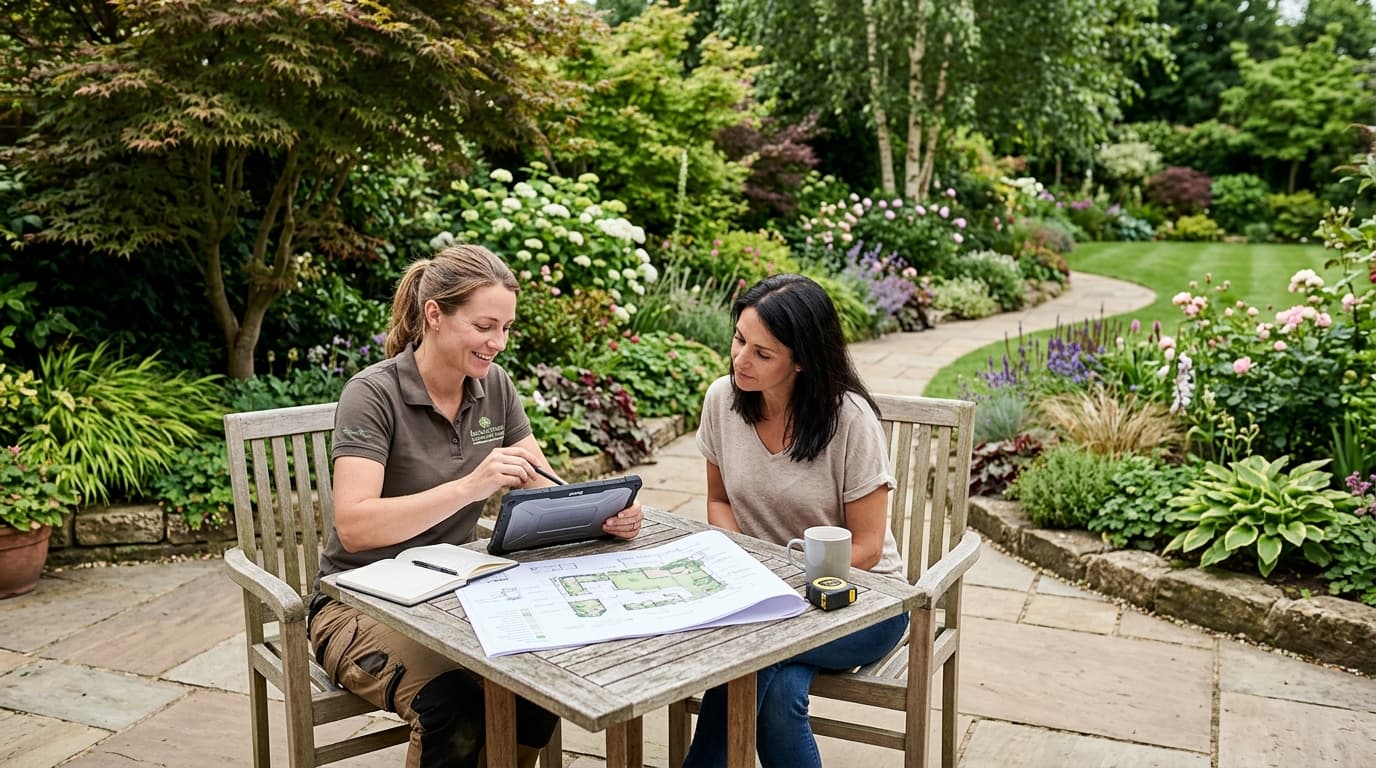
Most homeowners dramatically underestimate how long landscaping takes to mature. You spend $15,000 on a landscape design, watch contractors plant tiny saplings and scatter mulch around bare flower beds, then wonder three months later why your yard still looks sparse. Understanding how to create successful landscaping projects over time starts with setting realistic expectations: that Instagram-worthy garden developed over multiple growing seasons through careful planning and strategic implementation.
According to the National Association of Landscape Professionals, American households spend an average of $503 annually on lawn care and landscaping services, with comprehensive landscape design and installation projects typically ranging from $4,000 to $20,000. However, what landscape contractors rarely explain upfront is that landscaping projects take 3-7 years to show real results. You don't need to wait decades to enjoy your outdoor space, though. With proper long-term planning, you can design a landscape that provides immediate satisfaction while improving dramatically each year.
Understanding the Reality of Landscape Timelines
Why Landscaping Takes Time (And That's Actually Good)
Home improvements like fresh paint transform spaces overnight. Multi-year garden design operates differently because you're establishing living systems that need time to develop root structures and adapt to their environment. According to 2024 Cornell Cooperative Extension trials, maintained consistent moisture reduces transplant shock by 68%, making proper establishment care critical for long-term success.
Consider You start with a simple upgrade. Six weeks later the scope has tripled. By fall, her Japanese maple remained a 4-foot stick, the perennial garden showed only 30% coverage, and grass had brown patches covering 15% of the lawn. She called three times wondering if the contractor had "done it wrong."
Two years later, neighbors regularly stop to admire her landscape. That Japanese maple now stands 8 feet tall with a 6-foot canopy, perennial coverage reaches 95%, and her lawn maintains consistent green with less than 2% bare spots. Sarah's patience saved her from making the $3,500 mistake of ripping everything out and starting over—a decision
The Three Phases of Landscape Development
Trees gain only 6-12 inches annually, shrubs look small at 40% of mature size, and flower beds seem empty with 25-35% coverage. Expect to spend $75-150 monthly on supplemental watering. The Rodriguez family in Austin learned this the hard way. They spent $12,000 on xeriscaping but cut corners on irrigation, manually watering for two months before giving up. Six months later, 60% of their drought-tolerant plants died from poor root establishment. The $1,800 they "saved" on irrigation cost them $7,200 in replacement plants.
Phase 2: Rapid Growth (Years 3-5) Trees gain 2-4 feet annually, shrubs reach 70-85% of mature size, and perennials achieve 80-90% coverage. Maintenance costs drop to $50-100 monthly as plants become self-sufficient. This is when your investment really starts paying off—
Phase 3: Maturity (Years 5+) Trees provide 200-400 square feet of shade, shrubs create 6-8 foot privacy screens, and plants require 60% less maintenance. Annual costs stabilize at $35-75 monthly. The Williams family in Minneapolis calculated their mature landscape (year 7) saves them $850 annually in cooling costs compared to their pre-landscaping energy bills.
Setting Realistic Expectations From Day One
Based on Projects that look "too sparse" in year one perform 35% better long-term than those planted densely for immediate impact. Overcrowded landscapes require $2,000-4,500 in thinning and relocation by year 3.
Creating Your Master Plan: The Foundation of Long-Term Success
Starting with Your End Vision
The most expensive landscaping mistake involves thinking project by project. The Johnson family from Denver wanted a backyard for kids' activities that would transform into an entertaining space. Their master plan included:
- Immediate (Year 1): Durable lawn (2,500 sq ft at $0.80/sq ft = $2,000), simple flower beds (300 sq ft = $900)
- 5-year goal: 3 shade trees ($800 each = $2,400), expanded patio (400 sq ft at $15/sq ft = $6,000)
- 10-year vision: Garden rooms (800 sq ft = $12,000), outdoor kitchen ($18,000-25,000)
This approach prevented $4,500 in relocation costs by avoiding trees where future construction would occur. Their landscape architect charged $800 for the master plan—a cost that paid for itself six times over in avoided mistakes.
Phased Implementation Strategy
Smart homeowners implement plans in phases, spreading costs while allowing establishment. This defines how to create successful landscaping projects over time effectively. Before starting your landscape project, make sure you understand how to evaluate contractor work quality to ensure each phase meets professional standards.
Phase 1 (Year 1): Infrastructure
- Hardscaping: $8,000-15,000
- Major trees (3-5) and shrubs (15-20): $2,500-4,000
- Lawn establishment (2,000-5,000 sq ft): $1,600-4,000
- Irrigation (8-12 zones): $3,000-5,000
Total: $14,100-28,000 (40-50% of total investment)
Phase 2 (Years 2-3): Filling
- Perennials (200-400 plants): $2,000-4,000
- Garden lighting (15-25 fixtures): $1,500-3,000
- Specialty gardens: $1,000-2,500
Total: $4,500-9,500 (30-35% of investment)
Phase 3 (Years 3-5): Details
- Seasonal color: $500-1,000 annually
- Decorative elements: $1,000-3,000
- Fine-tuning: $500-1,000
Total: $3,000-8,000 (15-25% of investment)
Budgeting for Multi-Year Success
Based on 25-acre) Annual Maintenance: 5-10% of installation ($1,100-2,200 average) Enhancement Budget: $1,000-3,000 annually
For a $20,000 investment, plan $1,500 yearly maintenance plus $1,500 enhancements. Total 10-year investment: $45,000-55,000. If you're planning multiple home improvements, check out our home renovation cost estimator to see how landscaping fits into your overall budget.
Choosing Plants and Materials for Long-Term Success
The Right Plant, Right Place Philosophy
Plants in appropriate conditions require 40-60% less maintenance and live 2-3 times longer. Consider:
- Soil pH (ideal 6.0-7.0 for most plants)
- Sun exposure (6+ hours for "full sun")
- Water needs (drought-tolerant saves $200-400 annually)
- Mature size (space at 1.5x mature width)
- Climate zone compatibility
That 6-foot maple ($150) will reach 40 feet with 30-foot spread, potentially causing $5,000-15,000 foundation damage or requiring $800-1,200 removal. The Thompson family in Chicago planted three sugar maples 8 feet from their foundation, ignoring the contractor's spacing recommendation. Ten years later, they spent $11,500 removing two trees and repairing foundation cracks—exactly what the contractor warned them about.
Building Plant Communities
Successful landscapes feature communities where species support each other, reducing maintenance by 30-45%.
Pacific Northwest Shade Garden Example:
- Canopy: Douglas Fir ($200-300), Western Red Cedar ($175-250)
- Understory: Rhododendrons ($40-60), Oregon Grape ($25-35)
- Ground: Ferns ($15-20), Wild Ginger ($10-15)
Benefits: 70% less pesticide use, 40% better drought tolerance
Midwest Prairie Restoration (Homeplexi Case Study): The Miller family in Iowa replaced their 3,000 sq ft lawn ($400 annual maintenance) with native prairie plants ($4,200 installation). According to drought-tolerant landscaping research, native plants require up to 60% less water than traditional lawns once established, potentially reducing water costs by $300-$800 per year. The Miller family's actual results: Year 1 maintenance: $350. Year 3: $125. Year 5: $75. Five-year savings: $1,125, with the landscape continuing to reduce costs annually.
Selecting for Seasonal Interest
Plan year-round appeal with 75-85% visual interest:
- Spring: 10-12 weeks total bloom from trees, bulbs, early perennials
- Summer: 16-20 weeks continuous perennial bloom
- Fall: 4-6 weeks tree color, 8-10 weeks ornamental grasses
- Winter: Evergreen structure, bark features, berries (10-14 weeks)
Mature landscapes show 2-3 times more seasonal impact than new gardens.
Working with Contractors for Multi-Year Projects
Finding Long-Term Thinking Contractors
The landscaping services industry has grown to $184.1 billion in annual revenue in 2026, with 726,565 landscaping services businesses—a 4.3% increase from 2025. Learn more about how to find a reliable contractor who understands long-term landscape development. Look for professionals who:
- Ask about 5-10 year vision (not just this season)
- Recommend phased implementation with specific timelines
- Explain growth projections clearly with examples
- Provide seasonal maintenance guidance in writing
- Offer structured service relationships beyond installation
Red flags: promising immediate maturity, claiming "no maintenance," using over 30% fast-growing plants. For a complete list of warning signs, see our guide on contractor red flags to watch out for.
When interviewing landscape contractors, use our questions to ask before hiring to ensure they understand long-term landscape planning.
Structuring Contracts for Phased Work
Multi-year projects need:
Master Agreement:
- Phase-by-phase timeline (3-5 years)
- Itemized pricing with 3-5% inflation adjustments
- Maintenance schedules (24-48 hour response)
- Plant guarantees (1-2 years typical)
Annual Reviews ($150-250):
- Assess plant health with photos
- Document progress against timeline
- Adjust timing based on actual growth
- Update budgets (10-15% contingency)
The Garcia family in Phoenix signed a three-year phased contract worth $28,000. Their contractor included annual review meetings, adjusted plant selections after a harsh winter in year one, and delivered the final phase under budget by $1,200 thanks to cost-saving alternatives identified during reviews.
Managing Contractor Relationships
Consistent relationships save $2,000-3,500 over 5 years through bundled services. The Martinez family saved $4,200 over eight years working with one contractor who understood their property's drainage challenges and could identify emerging issues before they became expensive problems. Before signing any contract, make sure you verify your contractor's license and credentials to protect your investment.
Maintenance Strategies That Build Success
The First Two Years: Establishment Care
Proper establishment improves survival from 75% to 92%. Understanding how to create successful landscaping projects over time requires intensive early care.
Watering Schedule:
- Days 1-14: Daily, 1-1.5 inches
- Weeks 3-8: Every other day
- First season remainder: Twice weekly
- Year 2: Weekly deep watering
- Year 3+: Natural rainfall plus drought supplement
Monitoring:
- Weekly checks first month (15-20 minutes)
- Monthly thereafter (30-45 minutes)
- Replace failures within 72 hours (most guarantees require this)
- Annual soil tests ($25-40)
Creating Maintenance Rhythms
Consistent maintenance reduces long-term costs by 25-35%.
Spring (March-May):
- Prune damage (2-3 hours)
- Apply mulch ($3-4/bag, 50-75 bags)
- Fertilize ($40-60)
- Start irrigation ($75-125)
Summer (June-August):
- Weekly deep watering (1-1.5 inches)
- Bi-weekly deadheading (1-2 hours)
- Pest monitoring (20-30 minutes weekly)
Fall (September-November):
- Divide perennials (gain 20-30 plants worth $200-400)
- Plant bulbs ($0.50-1.50 each)
- Winterize irrigation ($85-150)
Evolving Maintenance Requirements
Years 1-3: High maintenance, 150-200 hours watering, 10-15% plant replacement Cost: $3,000-5,000 annually
Years 4-7: Moderate maintenance, 50% less watering, seasonal pruning Cost: $2,000-3,500 annually
Years 8+: Lower maintenance, natural rainfall sufficient, 80-90% weed suppression Cost: $1,500-2,500 annually
The Peterson family in Seattle meticulously tracked their landscaping hours. Year 1: 187 hours. Year 3: 94 hours. Year 7: 41 hours. Their time savings at $35/hour represents $5,110 in avoided labor costs by year 7—and they find the maintenance "actually relaxing" now rather than overwhelming.
Adapting and Evolving Your Landscape
Recognizing When Changes Are Needed
Even well-planned landscapes need adjustments. Common triggers:
- Plants exceeding space by 30%+
- Lifestyle changes requiring different uses
- Climate shifts causing 15-20% failures
- Construction altering drainage or sun conditions
The Chen family's $2,400 Leyland cypress hedge required $400 quarterly trimming by year 5 to prevent it from crushing their fence. They replaced it with mixed native evergreens ($3,200) requiring 60% less maintenance and providing better wildlife habitat. Total five-year savings: $6,800 in avoided trimming costs.
Making Strategic Replacements
Replace when: Annual treatment exceeds $100, growth varies 40-50% from expected Relocate when: Healthy plants in wrong positions, 25% overcrowding Timing: Spring (85-90% success rate), Fall in mild climates (80-85% success)
Incorporating New Technologies
Innovations reducing maintenance 20-35%:
- Smart irrigation: 20-40% water savings ($150-300 annually)
- LED lighting: 75% less energy ($30-50/fixture)
- Rain gardens: 80% runoff reduction ($8-12/sq ft)
The Kumar family in Atlanta installed a smart irrigation system in year 3 for $1,800. Their water bills dropped from $145/month in summer to $87/month—a $348 annual savings that will pay for the system in 5.2 years while improving plant health through optimized watering schedules.
Measuring and Celebrating Progress
Documenting Your Journey
Establish 4-6 photo points, photograph quarterly from exact spots. Keep records of:
- Plant purchases with sources and costs
- Installation dates and weather conditions
- Annual costs by category
- Contractor contact information and documentation
The Anderson family created a simple spreadsheet tracking every landscape expense from year 1. By year 4, they realized their shade trees saved them $680 annually in cooling costs—making the $2,400 investment a 28% annual return. This data convinced them to accelerate their phase 3 plans.
Setting Milestones
Homeplexi shows milestone-setting homeowners are 65% more likely to complete their original visions:
- Year 1: 85% survival rate (replace failures immediately)
- Year 2: 25-40% size increase (document with photos)
- Year 3: 70% design realization (landscape looks intentional)
- Year 5: 90%+ satisfaction (neighbors asking for contractor referrals)
Learning from Experience
Success patterns: Right plant placement saves $500-1,000 annually, phased implementation allows flexibility for adjustments, regular maintenance prevents $2,000-5,000 in emergency corrections.
Common solutions: Add 4-6 inches soil amendments for poor drainage, establish 2-hour weekly routines instead of irregular marathons, space plants at 1.5x mature size (looks sparse year 1, perfect year 3).
Frequently Asked Questions
How long until landscaping looks mature? Most landscapes look intentional by year 3, reaching mature appearance in 5-7 years. Trees may take 10+ years for full size.
What's the biggest long-term landscaping mistake? Expecting immediate results and ignoring mature plant sizes, leading to $1,500-3,000 in replacement costs. The second biggest? Skipping the master plan and approaching projects piecemeal, which costs 35% more over 5-10 years.
Annual maintenance budget? Plan 5-10% of installation cost yearly ($1,000-5,000), plus $1,000-3,000 for enhancements. This decreases to 3-5% after year 5 as landscapes become self-sustaining.
Should I use fast-growing plants? Limit to 20% of plantings. They require 2-3 times more maintenance with 50% shorter lifespans. 7x higher maintenance costs by year 5.
Best time to start a landscape project? Spring planting (March-May) offers 85-90% success rates. Begin planning 6-12 months earlier to develop your master plan and interview contractors during their slower season.
How do I track progress? Monitor 6-12 inch annual shrub growth, maintain under 15% plant loss, and look for 25-40% size improvement by year two. Take quarterly photos from the same positions to document changes that happen too gradually to notice day-to-day.
Can I change plans later? Yes, annual reviews allow adjustments based on plant performance and lifestyle changes. Budget 10-15% contingency for modifications as your landscape evolves. The most successful projects adapt to reality rather than rigidly following outdated plans.
Need Professional Help?
Homeplexi connects you with vetted contractors, helps you compare quotes, and manages your entire home improvement project in one place.
Get Started Free →The Homeplexi editorial team consists of licensed contractors, home inspectors, and consumer protection experts who provide research-backed guidance for homeowners. All content is fact-checked and cited from authoritative industry sources.
Important Safety Disclaimer
Please read this carefully before following any advice:
- Always prioritize safety: Wear appropriate protective equipment (safety glasses, gloves, etc.) when performing any home maintenance or repair work.
- Know your limits: If you're not confident in your ability to safely complete a task, hire a licensed professional. This is especially important for electrical, gas, plumbing, and structural work.
- Verify all information: The guidance provided here is based on community discussions and general knowledge. Always double-check any advice with multiple reliable sources or a licensed professional.
- Follow local codes: Building codes, electrical codes, and plumbing codes vary by location. Ensure any work complies with your local regulations and obtain necessary permits.
- Turn off power/water/gas: Before working on electrical, plumbing, or gas systems, always shut off the relevant utilities at the source.
- For emergencies: If you have a gas leak, electrical fire, major water leak, or other emergency, evacuate immediately and call emergency services (911) and your utility company.
Liability: Homeplexi provides information for educational purposes only. We are not responsible for any injury, property damage, or losses resulting from following any guidance or advice provided through this platform. Use all information at your own risk.
When in doubt, always consult a licensed, insured professional contractor. Homeplexi can help you find qualified professionals in your area.
Found this helpful? Share with others:
Related Articles
How to Lower Electric Bills: Proven Strategies That Actually Work When Basic Tips Fail
Electric bills climbing higher than expected despite energy-saving efforts
Electrical Outlet Not Working: DIY Fixes vs. When to Call an Electrician
Knowing when it's safe to DIY vs. hiring a pro
Home Repair Priorities: The 4-Quadrant System for Deciding Which Fixes Come First (When You Can't Afford Everything)
Homeowners overwhelmed by multiple needed repairs but limited budget, unsure which repairs to tackle first