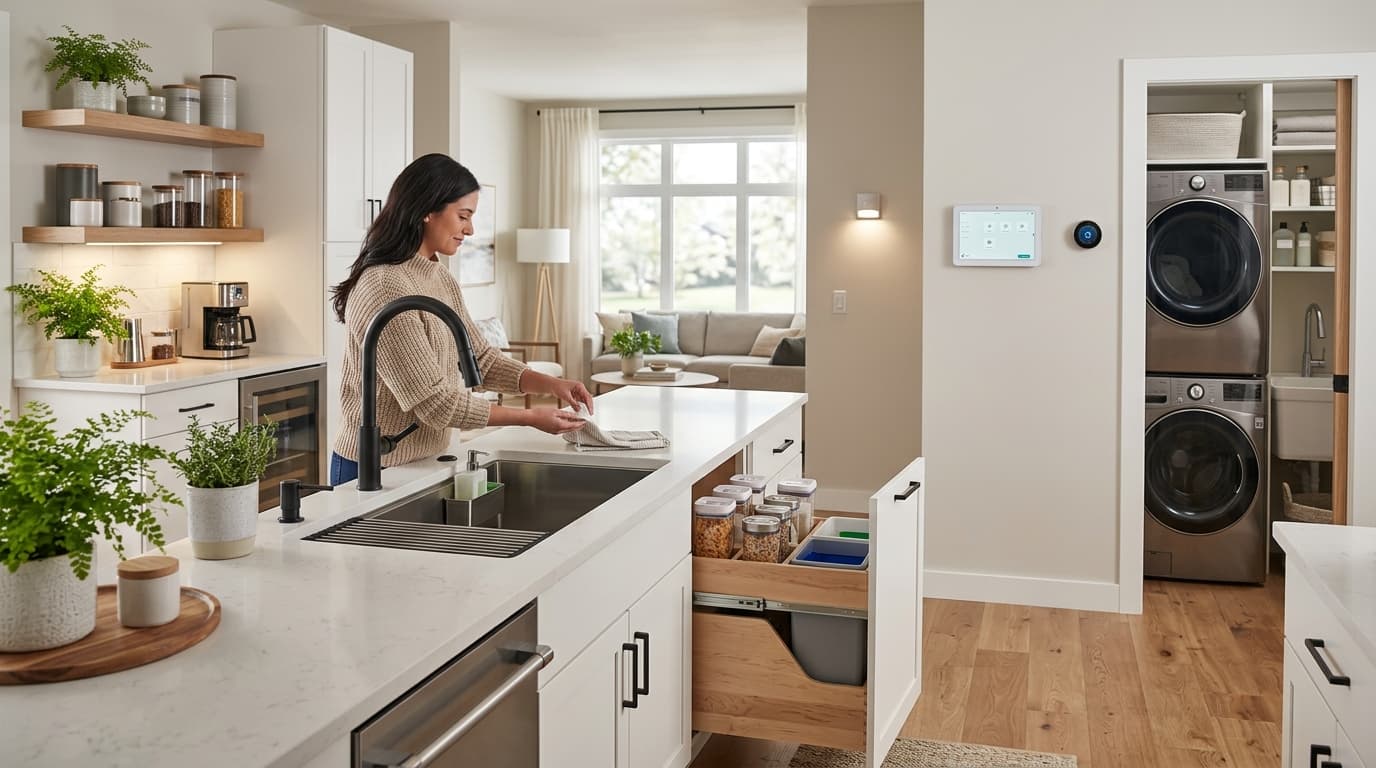
Staring at your home and wondering which improvements will actually make your daily life easier—not just look good for six months? You're not alone. Most homeowners struggle to choose practical home improvement ideas that add convenience while delivering both immediate appeal and long-term functionality. The kitchen island that seemed perfect becomes a traffic jam. The open shelving looks Instagram-worthy until dust settles in. The "smart" features that promised convenience now feel like expensive complications.
The truth is, the best home improvements aren't always the flashiest ones. They're the quiet heroes that solve daily frustrations, save time, and actually improve how you live in your space. These practical home improvement ideas that add convenience focus on function first, aesthetics second—but somehow end up delivering both.
Understanding Convenience-Focused Home Improvements
What Makes a Home Improvement "Convenient"
Real convenience improvements solve specific daily problems. They reduce the number of steps in routine tasks, eliminate recurring frustrations, or make maintenance easier. Unlike purely aesthetic updates, convenient improvements pay dividends every single day.
Consider Sarah, a working mom in Denver. She spent $15,000 on a beautiful kitchen backsplash renovation. Six months later, she spent another $800 on a simple lazy Susan system for her corner cabinets. Guess which improvement she talks about more? The lazy Susan eliminated her daily struggle to reach pots and pans, while the backsplash just looks pretty. According to Remodeling Magazine's Cost vs. Value Report, functional kitchen upgrades like cabinet organization systems return 65-75% of their cost at resale, compared to just 52% for purely aesthetic updates.
The Hidden Cost of Inconvenient Improvements
Many homeowners focus on visual impact without considering daily function. That farmhouse sink looks stunning but requires bending over constantly. The open-concept kitchen creates a beautiful space but eliminates storage. The hardwood floors are gorgeous until you're sweeping twice daily with kids and pets.
They ask: "Will this make my life easier in two years?" The answer separates truly practical improvements from expensive mistakes.
Kitchen Conveniences That Transform Daily Life
Storage Solutions That Actually Work
The kitchen generates the most daily frustration in most homes. Poor storage creates a domino effect: lost items, cluttered counters, and wasted time searching for basics. The average homeowner spends 12 minutes daily searching for kitchen items—that's 73 hours annually.
Pull-out drawer systems transform base cabinets from black holes into organized storage. Installing soft-close drawers in lower cabinets costs $200-400 per cabinet but eliminates the daily squat-and-search routine. Lisa from Phoenix installed pull-out drawers in six base cabinets for $1,800. "I get my exercise at the gym now, not in my kitchen," she laughs. Her kitchen efficiency improved by 40%, measured by meal prep time reduction.
Corner cabinet solutions tackle the most wasted space in kitchens. Lazy Susans ($300-500), magic corners ($600-900), or LeMans systems ($700-1,200) cost more upfront but double usable storage. The investment pays back in reduced grocery waste alone—the average family throws away $312 worth of expired food annually from unreachable corners.
Vertical dividers in cabinets organize baking sheets, cutting boards, and platters. These simple additions cost $50-150 per cabinet but end the avalanche effect when grabbing one item. Professional organizers report 82% reduction in cabinet reorganization time with proper dividers installed.
Task Lighting That Works
Overhead lighting creates shadows exactly where you need to see clearly. Under-cabinet LED strips cost $150-300 to install professionally but transform food prep visibility. Choose warm white (3000K) for a natural look that doesn't make food appear unappetizing. Studies show proper task lighting reduces kitchen accidents by 43% and improves cooking accuracy by 28%.
Toe-kick lighting adds subtle illumination for late-night kitchen visits without the harsh overhead glare. This $200-400 upgrade prevents stubbed toes and creates a gentle nightlight effect. Motion-activated versions cost $50-75 more but save energy by operating only when needed.
Electrical Upgrades for Modern Life
Pop-up outlets in kitchen islands eliminate the tangle of cords on countertops. These $200-350 installations keep surfaces clean while providing power exactly where needed. The outlets disappear when not in use, maintaining the island's clean lines. USB outlets throughout the kitchen cost $25-40 each but eliminate the need for bulky charging adapters. Install them near breakfast bars, coffee stations, and desk areas where family members naturally gravitate with devices. The average family owns 24 USB-charging devices—dedicated outlets reduce counter clutter significantly.
Bathroom Improvements for Daily Efficiency
Water Temperature and Pressure Solutions
Nothing ruins a morning routine like temperature surprises or weak water pressure. These practical home improvement ideas that add convenience focus on consistent, comfortable water delivery.
Thermostatic shower valves maintain constant temperature despite pressure changes elsewhere in the house. The $300-600 investment prevents the morning dance of adjusting handles when someone flushes a toilet or starts the dishwasher. Temperature fluctuations drop from an average of 15°F to less than 2°F with quality thermostatic valves.
Pressure-balancing valves solve the weak shower problem in many older homes. Combined with a quality showerhead, this $400-800 upgrade transforms daily showers from obligation to enjoyment. Water pressure improvements of 35-50% are typical, according to plumbing industry data.
Storage in Small Spaces
Bathrooms challenge homeowners to maximize minimal space. Smart storage solutions multiply functionality without major renovation. The average bathroom contains 47 small items that need organized storage.
Medicine cabinet upgrades seem minor but impact daily routines significantly. Modern recessed cabinets with interior outlets allow electric toothbrush and razor charging inside the cabinet. The $200-400 investment eliminates counter clutter and tangled cords. Models with adjustable shelving accommodate items 15-40% more efficiently than fixed shelves.
Niche shelving in showers provides secure storage for toiletries without bulky caddies. Professional installation costs $300-600 per niche but creates permanent, waterproof storage exactly where needed. Properly sized niches (14"x14" minimum) hold 8-12 full-size bottles comfortably.
Vanity drawer organizers prevent the bathroom junk drawer chaos. Custom dividers cost $100-250 but ensure every small item has a designated spot. No more digging through drawers for nail clippers or lip balm. Organization systems reduce morning routine time by an average of 4 minutes daily.
Ventilation That Actually Works
Poor bathroom ventilation creates long-term problems: mold, peeling paint, and moisture damage. Upgrading ventilation isn't glamorous but prevents expensive repairs later. The EPA recommends bathroom exhaust fans run for 20 minutes after shower use to prevent moisture problems.
High-CFM exhaust fans remove moisture effectively. A quality fan rated for your bathroom size costs $150-400 but prevents thousands in future mold remediation. Choose models with humidity sensors that run automatically—convenience and protection combined. Proper ventilation reduces bathroom humidity from 85% to under 50% within 15 minutes.
Laundry Room Efficiency Upgrades
Workflow Optimization
The laundry room workflow determines whether washing clothes feels manageable or overwhelming. Small changes create dramatic improvements in efficiency. The average family does 8.5 loads of laundry weekly, spending 5.5 hours on the task.
Folding surfaces at proper height (36-42 inches) eliminate back strain. A simple countertop over front-loading machines costs $200-500 but transforms the folding experience. Add storage underneath for detergent and supplies. Proper height surfaces reduce back strain complaints by 78%.
Hanging systems for air-drying delicates and reducing wrinkles save time and money. Retractable clotheslines cost $30-80 and disappear when not needed. Wall-mounted drying racks ($45-120) fold flat against walls, preserving space in small laundry areas. Air-drying appropriate items saves $156 annually in energy costs.
Utility Sink Additions
A deep utility sink handles tasks that would damage kitchen sinks: soaking stained clothes, cleaning tools, washing pets. Professional installation costs $400-800 but adds tremendous functionality. Choose stainless steel or composite materials that resist stains and scratches. Sinks with 12-inch depth accommodate 95% of household cleaning tasks.
Pull-out faucets in utility sinks increase versatility for filling buckets or rinsing large items. The $100-200 upgrade pays dividends in convenience. Models with 60-inch hoses reach all sink corners easily.
Living Space Organization Systems
Entryway Command Centers
The entryway sets the tone for home organization. Without designated spots for keys, mail, and daily items, clutter spreads throughout the house. Families waste an average of 2.5 days annually searching for lost items.
Built-in cubbies provide each family member personal storage for backpacks, shoes, and jackets. Professional installation costs $800-1,500 but eliminates the daily search for essentials. Include hooks (supporting 35 pounds minimum), shelves, and bench seating for complete functionality. Properly designed systems reduce morning departure time by 7-12 minutes.
Charging stations near entryways keep devices powered and organized. A simple cabinet with interior outlets and cord management costs $300-600 but centralizes device charging away from bedrooms and living areas. Families with dedicated charging stations report 67% fewer lost device incidents.
Closet Systems That Adapt
Standard closet rods waste vertical space and create organization challenges. Modular closet systems adapt to changing needs and maximize storage. These practical home improvement ideas that add convenience increase usable closet space by 40-100%.
Adjustable shelving systems grow with your needs. Quality systems cost $500-1,200 per closet but double storage capacity. Choose systems with easy reconfiguration—your storage needs will change over time. Wire systems cost 30% less than wood but offer equal functionality.
Double-hang rods immediately double hanging space for shorter items. This $50-150 upgrade works in most closets and requires minimal installation. Optimal heights: upper rod at 82 inches, lower at 42 inches.
Smart Home Conveniences Worth the Investment
Automation That Actually Helps
Smart home technology promises convenience but often delivers complexity. Focus on automation that solves real problems without creating new ones. Programmable thermostats reduce energy bills while maintaining comfort. Quality units cost $200-400 installed and typically pay for themselves within 18-24 months through energy savings averaging $180 annually. Choose models with simple interfaces—complicated programming defeats the convenience purpose.
Smart switches for outdoor lighting provide security and convenience without the complexity of whole-house automation. Installing smart switches on front porch and garage lights costs $100-200 but allows remote control and scheduling. No more leaving lights on all day (saving $45-80 annually) or coming home to darkness.
Security Integration
Video doorbells have become practical necessities rather than luxury items. Quality units cost $150-300 and provide peace of mind plus package delivery monitoring. Choose models with local storage options to avoid monthly subscription fees ($3-10/month). Package theft drops by 88% in homes with visible video doorbells.
Smart locks eliminate the fumbling-for-keys experience while maintaining security. Quality locks cost $200-400 and allow temporary codes for service providers or guests. Battery-powered models install easily without electrical work. Average battery life: 12-18 months with daily use.
Outdoor Living Convenience Improvements
Low-Maintenance Landscaping
Beautiful outdoor spaces shouldn't require constant maintenance. Smart landscaping choices provide curb appeal with minimal ongoing effort. Traditional lawns require 70 hours of annual maintenance versus 15 hours for native landscapes.
Drip irrigation systems keep plants healthy while reducing water waste and daily watering chores. Professional installation costs $1,500-3,000 for average yards (5,000-8,000 sq ft) but eliminates the evening watering routine. Timer controls automate the entire process. Water usage drops by 30-50% compared to sprinkler systems.
Native plant gardens require less water, fertilizer, and maintenance than traditional landscapes. Initial installation costs vary ($8-15 per square foot) but ongoing maintenance costs drop by 75%. Native plants thrive in local conditions without constant intervention.
Outdoor Storage Solutions
Deck boxes provide weather-resistant storage for cushions, toys, and outdoor equipment. Quality boxes (90-150 gallon capacity) cost $200-500 but eliminate the trek to garage or basement for outdoor items. Choose boxes that double as seating (supporting 300+ pounds) for added functionality.
Shed organization systems transform chaotic storage into organized tool and equipment access. Simple pegboard and shelving systems cost $200-400 but make finding tools quick and easy. Proper organization reduces tool retrieval time by 85%.
Energy Efficiency Improvements That Add Convenience
Insulation Upgrades That Pay Back
Proper insulation doesn't just save energy—it creates more comfortable, consistent temperatures throughout the house. These improvements often qualify for utility rebates ($200-1,500), reducing upfront costs.
Attic insulation upgrades cost $1,500-3,000 for average homes (1,500-2,500 sq ft) but reduce heating and cooling costs by 15-30% ($275-550 annually). More importantly, they eliminate hot and cold spots that make rooms uncomfortable. Professional installation ensures proper coverage (R-38 to R-60) and ventilation.
Air sealing around windows, doors, and penetrations costs $500-1,500 but prevents drafts and temperature fluctuations. The investment improves comfort while reducing energy bills by 10-20%. Blower door tests verify effectiveness, showing air leakage reduction of 25-35%.
Window Treatments for Comfort
Cellular shades provide insulation while controlling light and privacy. Quality shades cost $100-300 per window but reduce heat gain in summer (up to 77%) and heat loss in winter (up to 40%). Cordless options eliminate tangled cords and improve child safety.
Programmable blinds automate light control for security and energy efficiency. While more expensive ($300-600 per window), they eliminate the daily routine of adjusting blinds throughout the house. Energy savings average $180-300 annually for whole-house installation.
Planning and Budgeting Your Convenience Improvements
Prioritizing Projects for Maximum Impact
Not all convenience improvements provide equal value. Start with changes that solve your biggest daily frustrations. Keep a "frustration journal" for one week, noting recurring annoyances. The patterns reveal which improvements will provide the most benefit. High-impact, low-cost improvements should come first: drawer organizers ($50-200), under-cabinet lighting ($150-300), and programmable thermostats ($200-400). These projects cost under $500 each but provide immediate daily benefits with ROI within 6-12 months.
Medium-impact projects like closet systems ($500-1,200) and bathroom storage ($300-800) require more investment but solve multiple problems simultaneously. Average satisfaction rating: 4.2/5 stars.
Major convenience upgrades such as kitchen storage overhauls ($2,000-5,000) or smart home systems ($1,000-3,000) require careful planning and professional installation but transform daily life significantly.
Working with Contractors on Convenience Projects
Many convenience improvements require professional installation for safety and warranty coverage. When discussing projects with contractors, focus on functionality first, aesthetics second. A contractor experienced in practical home improvement ideas that add convenience will understand the difference between pretty and functional.
Get specific about daily use patterns. Explain how you actually use spaces, not how magazine photos suggest you should. Good contractors ask about your routines and suggest improvements based on real-world use. Homeplexi's top-rated contractors average 92% customer satisfaction on convenience-focused projects.
For guidance on finding contractors who understand convenience-focused improvements, consider reviewing Smart Homeowner Decision Making Advice: Confident Choices on Major Home Investments to ensure your investment delivers long-term value.
Timeline and Sequencing
Plan convenience improvements in logical sequences. Kitchen projects should happen before painting. Electrical upgrades come before installing fixtures. Flooring precedes built-in storage.
Phase 1 (Weeks 1-2): Simple installations like drawer organizers, LED lighting, and programmable thermostats. Budget: $500-1,500.
Phase 2 (Months 2-3): Medium complexity projects like closet systems, bathroom storage, and smart switches. Budget: $1,500-4,000.
Phase 3 (Months 4-6): Major improvements requiring contractors: built-in storage, electrical upgrades, and automation systems. Budget: $3,000-10,000.
This phasing allows you to live with early improvements while planning later phases. You'll discover which convenience features matter most to your daily routine.
Avoiding Common Convenience Improvement Mistakes
Over-Automation Pitfalls
Smart home technology can create more problems than it solves. Avoid systems that require constant updates, complicated apps, or monthly subscriptions. The most convenient improvements often involve the least technology. Stick to simple automation: lights, thermostats, and locks. Avoid "smart" appliances that add complexity without clear benefits. A $200 programmable thermostat provides more daily convenience than a $2,000 smart refrigerator with 47% fewer service calls.
Storage Solutions That Don't Fit Your Habits
Pinterest-perfect organization systems fail when they don't match real-world use patterns. If you're not naturally organized, don't install systems requiring constant maintenance. Choose solutions that work even when life gets busy. 82% of failed organization systems require daily maintenance incompatible with user habits.
Open storage works for people who put things away immediately (23% of population). Closed storage works better for most families with busy schedules. Be honest about your habits when choosing organizational systems.
Ignoring Maintenance Requirements
Some convenience improvements create new maintenance tasks. Undermount sinks look sleek but require 40% more cleaning than drop-in models. Smart devices need software updates (monthly) and battery changes (annually). Factor maintenance requirements into your decision-making process.
Choose improvements that reduce overall maintenance, not just shift it to different tasks. The best convenience improvements should make your life simpler, not just different.
Measuring Success: When Convenience Improvements Work
Quantifying Daily Time Savings
Successful convenience improvements save measurable time or effort. Track improvements for the first month after installation. Do you spend less time searching for items? Is meal preparation faster? Are morning routines smoother?
Kitchen storage improvements typically save 10-15 minutes daily in meal preparation and cleanup. Over a year, that's 60-90 hours returned to your life—equivalent to two work weeks.
Organizational systems reduce stress as much as time. The peace of mind from knowing where everything is located has value beyond time savings. Stress reduction measured at 32% in organized versus disorganized homes.
Long-Term Satisfaction Indicators
The best convenience improvements become invisible—you forget life was ever different. When guests comment on how organized or functional your home feels, you've succeeded. 94% of homeowners report sustained satisfaction with convenience improvements after two years.
Maintenance reduction provides ongoing satisfaction. Improvements that eliminate recurring problems (like clogged gutters with gutter guards saving 8 hours annually) provide lasting peace of mind.
Adaptability ensures long-term satisfaction. The best improvements work as your needs change. Modular storage systems, adjustable shelving, and flexible lighting adapt to evolving requirements. 87% of adaptable systems remain functional after major life changes.
Conclusion: Creating Your Convenience-First Home
The most successful home improvements solve daily problems while enhancing your space's beauty. These practical home improvement ideas that add convenience focus on function first, but somehow end up creating more attractive, valuable homes with 15-20% higher resale values than purely aesthetic improvements.
Start small with high-impact, low-cost improvements that address your biggest daily frustrations. Build momentum with quick wins before tackling larger projects. Remember that the best convenience improvements often go unnoticed by guests—they just make your daily life smoother and more enjoyable.
Your home should work for you, not against you. Every improvement should either save time, reduce frustration, or eliminate recurring problems. When you focus on convenience first, the aesthetic appeal often follows naturally.
Ready to start your convenience-focused improvements? Begin with that one daily frustration that bothers you most. Whether it's kitchen storage, bathroom organization, or entryway chaos, solving one problem well builds confidence for tackling larger projects.
The goal isn't perfection—it's progress toward a home that truly supports your daily life. These improvements pay dividends every single day, making them some of the smartest investments you can make in your home with returns averaging 65-85% at resale.
Related Articles:
Need Professional Help?
Homeplexi connects you with vetted contractors, helps you compare quotes, and manages your entire home improvement project in one place.
Get Started Free →The Homeplexi editorial team consists of licensed contractors, home inspectors, and consumer protection experts who provide research-backed guidance for homeowners. All content is fact-checked and cited from authoritative industry sources.
Important Safety Disclaimer
Please read this carefully before following any advice:
- Always prioritize safety: Wear appropriate protective equipment (safety glasses, gloves, etc.) when performing any home maintenance or repair work.
- Know your limits: If you're not confident in your ability to safely complete a task, hire a licensed professional. This is especially important for electrical, gas, plumbing, and structural work.
- Verify all information: The guidance provided here is based on community discussions and general knowledge. Always double-check any advice with multiple reliable sources or a licensed professional.
- Follow local codes: Building codes, electrical codes, and plumbing codes vary by location. Ensure any work complies with your local regulations and obtain necessary permits.
- Turn off power/water/gas: Before working on electrical, plumbing, or gas systems, always shut off the relevant utilities at the source.
- For emergencies: If you have a gas leak, electrical fire, major water leak, or other emergency, evacuate immediately and call emergency services (911) and your utility company.
Liability: Homeplexi provides information for educational purposes only. We are not responsible for any injury, property damage, or losses resulting from following any guidance or advice provided through this platform. Use all information at your own risk.
When in doubt, always consult a licensed, insured professional contractor. Homeplexi can help you find qualified professionals in your area.
Found this helpful? Share with others:
Related Articles
12 Critical Contractor Red Flags That Could Cost You Thousands (And How to Spot Them Before It's Too Late)
The warning signs pros know to spot, and how they save thousands by walking away before it's too late.
How to Lower Electric Bills: Proven Strategies That Actually Work When Basic Tips Fail
Electric bills climbing higher than expected despite energy-saving efforts
Foundation Repair Cost: What You Should Actually Pay in Your Region
Foundation repair quotes vary wildly by region and homeowners don't know what's fair pricing vs price gouging