You're staring at a leaky faucet that's been dripping for weeks, a squeaky door that drives everyone crazy, and a bathroom tile that's been loose since you moved in. The thought of calling contractors for these "small" issues makes your wallet hurt before you even get quotes. Sound familiar? You're not alone. Most homeowners face a constant stream of unexpected repairs that can drain savings faster than that leaky faucet drains your patience. But here's the truth: implementing smart DIY home improvement money saving tips can keep thousands of dollars in your pocket while maintaining your home's value.
The good news? Many home improvement projects don't require a contractor's expertise or budget-busting price tag. With the right DIY home improvement money saving tips, proper planning, and basic tools, you can tackle numerous household problems yourself while saving 50-80% compared to professional services. This comprehensive guide will show you exactly how to approach DIY projects strategically, avoid costly mistakes, and know when to call in the pros.
Understanding the True Cost of Home Repairs
Before diving into specific DIY home improvement money saving tips, let's look at the numbers. According to HomeAdvisor's 2024 True Cost Report, the average American household spends $3,192 annually on home maintenance and repairs. That's over $266 per month just keeping your home in good condition. When you factor in larger improvement projects, that number can easily double or triple to $6,000-$10,000 annually.
Consider these common scenarios: A simple faucet replacement that costs $15-$25 in parts becomes a $175-$250 service call. Painting a 12x12 bedroom that requires $40-$60 in supplies turns into a $600-$800 contractor bill. Caulking around windows and doors—a $8-$12 tube of caulk versus $275-$350 for professional weatherization of an average 2,000 square foot home.
The Hidden Costs of Avoiding DIY
Here's what many homeowners don't realize: avoiding simple DIY projects often leads to bigger, more expensive problems. That loose bathroom tile? Ignore it long enough, and water damage could require a complete bathroom renovation costing $8,000-$15,000. The squeaky door hinge? Eventually, it might cause the door to hang improperly, requiring frame adjustments ($300-$500) or door replacement ($200-$800 installed).
A $50 gutter cleaning becomes a $5,000 foundation repair. A $20 faucet cartridge replacement turns into $1,500 in water damage repairs.
Essential Tools That Pay for Themselves
Smart DIY home improvement money saving tips start with smart tool investment. You don't need a contractor-level workshop, but having the right basic tools makes the difference between successful projects and frustrating failures.
The $200 Starter Toolkit
This initial investment covers 80% of common home repairs:
Power Tools ($120):
- Cordless drill/driver ($60-$80): Choose 18-20 volt for versatility
- Circular saw ($40-$60): For lumber cuts and basic carpentry
Hand Tools ($50):
- Adjustable wrench set ($12-$18)
- Screwdriver set ($15-$25): Phillips and flathead, various sizes
- Hammer ($10-$15): 16 oz is perfect for most tasks
- Level ($8-$12): 24-inch minimum
- Tape measure ($5-$10): 25-foot
- Utility knife with extra blades ($5-$8)
Safety Equipment ($30):
- Safety glasses ($5-$10)
- Work gloves ($8-$12)
- Dust masks ($7-$10)
- First aid kit ($10-$15)
This $200 investment typically pays for itself with just two or three projects. Compare that to calling contractors for basic tasks like hanging shelves ($100-$150), installing ceiling fans ($200-$300), or basic deck repairs ($300-$500).
Room-by-Room Money-Saving Projects
Kitchen Improvements on a Budget
The kitchen offers numerous DIY opportunities that deliver high impact for low cost. These DIY home improvement money saving tips can transform your kitchen for 75% less than professional renovation.
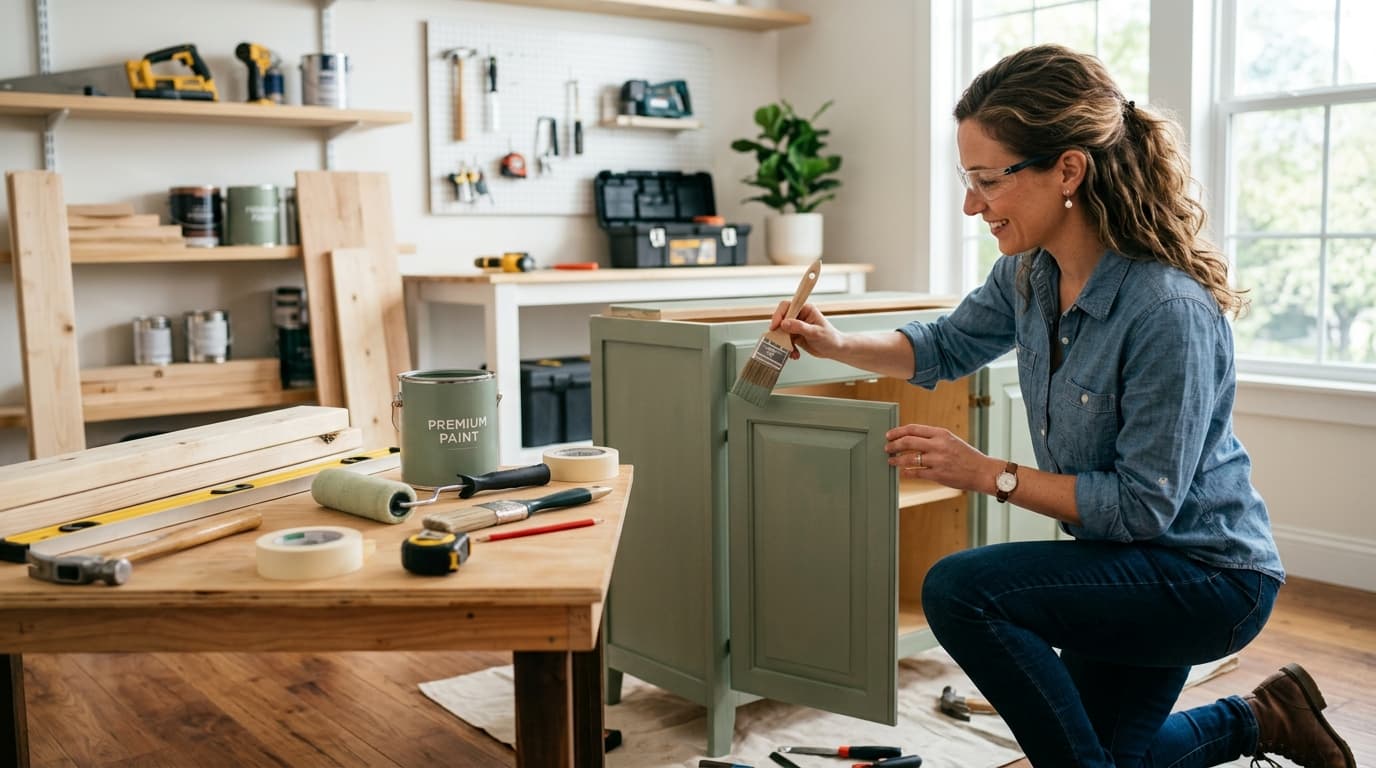
Cabinet Refresh ($100-$300 vs $3,000-$8,000 replacement): Instead of replacing cabinets, transform them with paint and new hardware. Sand lightly (120-grit), apply primer ($20-$30/gallon), then paint with high-quality cabinet paint ($35-$50/gallon). Add soft-close hinges ($3-$5 each × 25 hinges = $75-$125) and modern pulls ($2-$10 each × 30 pulls = $60-$300). This project typically takes 20-30 hours over a weekend but saves $2,700-$7,700 compared to cabinet replacement.
Backsplash Installation ($200-$500 vs $800-$1,500 professional): Subway tile ($0.50-$3/sq ft) and peel-and-stick options ($5-$15/sq ft) make backsplash installation accessible for beginners. For a typical 30 square foot backsplash: materials cost $150-$450, plus $50 in supplies. Professional installation adds $10-$25/sq ft ($300-$750 labor).
Bathroom Updates That Add Value
Bathroom improvements provide 65-70% ROI according to Remodeling Magazine, and many are DIY-friendly with proper DIY home improvement money saving tips.
Toilet Replacement ($150-$400 vs $400-$700 installed): Toilets cost $100-$350, with installation adding $200-$350. The process involves disconnecting water supply, removing 2-3 bolts, lifting the old toilet, installing a new wax ring ($5-$10), and connecting the new toilet. Total time: 1-2 hours.
Vanity Installation ($200-$800 vs $600-$1,500 installed): Pre-fabricated vanities ($150-$700) simplify installation. Labor typically adds $400-$800. If existing plumbing lines up with the new vanity, it's straightforward. Consider hiring a plumber just for connections ($150-$250) if needed.
Living Areas and Bedrooms
Interior Painting ($100-$300 vs $800-$2,000 per room): A 12x12 room requires 2-3 gallons of paint ($30-$50/gallon), primer ($20-$30/gallon), and supplies ($30-$50). Professional painters charge $2-$6/sq ft, totaling $800-$2,000 for walls and ceiling. Quality preparation makes the difference: fill holes with spackle ($5-$10), sand rough spots, prime stained areas, and use painter's tape ($5-$10/roll) correctly.
For detailed techniques on achieving professional painting results, check out our guide on Interior Painting: How to Get Pro Results (Without Hiring a Painter).
Flooring Installation ($800-$2,500 vs $2,000-$6,000 installed): Luxury vinyl plank (LVP) costs $2-$5/sq ft, laminate runs $1-$4/sq ft. Professional installation adds $2-$8/sq ft. For a 300 sq ft room: materials cost $600-$1,500, professional installation adds $600-$2,400. Click-lock systems make DIY installation possible in 1-2 days.
Plumbing Projects You Can Handle
Plumbing intimidates many homeowners, but numerous common issues are DIY-friendly. These DIY home improvement money saving tips can prevent expensive water damage.
Leaky Faucets ($5-$20 vs $150-$250 service call): Most leaks result from worn washers ($0.50-$2), O-rings ($1-$3), or cartridges ($15-$40). Plumber minimum service calls run $100-$200 plus parts. Turn off water supply valves, disassemble the faucet systematically, and replace worn components.
Running Toilets ($10-$30 vs $100-$200 service call): Running toilets waste 200-4,000 gallons monthly, adding $5-$80 to water bills. Flapper replacements cost $5-$15, fill valves run $10-$20, and complete rebuild kits cost $20-$30. These components install without special tools in 15-30 minutes.
For a detailed troubleshooting guide, see our article on Why Your Toilet Keeps Running (And How to Fix It).
When to Stop and Call a Professional
Some plumbing projects require professional expertise:
- Main line repairs or replacements ($1,500-$4,000)
- Gas line work ($500-$2,000)
- Permit-required installations
Electrical Work: Safe DIY Boundaries
Electrical work offers significant savings but requires strict safety adherence. According to the Electrical Safety Foundation International, home electrical problems cause 51,000 fires annually.
Outlet and Switch Replacement ($5-$25 vs $100-$200 per outlet): Basic outlets cost $3-$10, switches run $5-$15, while electricians charge $100-$150 per device. Always turn off power at the breaker, test with a voltage tester ($15-$25), and connect wires to matching terminals.
Light Fixture Installation ($30-$200 vs $150-$400 installed): Fixtures range from $25-$150, with installation adding $125-$250. Most fixtures connect with wire nuts ($5-$10/pack) and mount to ceiling boxes rated for 35-50 pounds.
Never attempt panel upgrades ($1,500-$3,000), new circuits ($500-$1,500), or any work requiring permits without professional help.
Exterior Projects That Protect Your Investment
Exterior maintenance prevents small problems from becoming expensive disasters. These DIY home improvement money saving tips protect your home's envelope.
Gutter Cleaning and Minor Repairs ($50-$100 vs $200-$400 service): Gutter cleaning supplies cost $30-$50, while professionals charge $150-$350. Clean gutters twice yearly to prevent water damage costing $2,500-$7,500. Replace damaged sections ($8-$12/linear foot), secure loose brackets ($2-$5 each).
Caulking and Weatherstripping ($30-$80 vs $300-$600 professional): Quality caulk costs $5-$10/tube, weatherstripping runs $20-$40 per door/window set. Professional weatherization typically costs $300-$600 for a 2,000 sq ft home. This can reduce energy bills by 10-20% ($200-$400 annually).
Exterior Painting ($300-$800 vs $2,000-$6,000 professional): For a 1,500 sq ft home exterior: paint costs $150-$300 (5-10 gallons at $30-$50/gallon), primer runs $100-$150, supplies add $50-$100. Professional painting costs $1.50-$4/sq ft. Power wash surfaces ($40-$80 rental), scrape loose paint, prime bare wood, and use high-quality exterior paint.
HVAC Maintenance That Saves Money
Regular DIY maintenance extends HVAC equipment life by 5-10 years and improves efficiency by 10-25%, implementing key DIY home improvement money saving tips.
Regular Filter Changes ($20-$60 annually vs $200-$400 service calls): Filters cost $5-$20 each. Dirty filters reduce efficiency by 5-15% and shorten lifespan by 2-5 years. Mark calendar reminders or set up automatic filter delivery ($60-$120 annually).
Outdoor Unit Maintenance ($50-$100 vs $200-$350 service): Coil cleaner costs $10-$15. Professional cleaning runs $150-$300. Keep units clear of debris, trim vegetation 24 inches away, and gently clean coils annually.
For guidance on major HVAC decisions, see our comprehensive guide on HVAC System Replacement Cost: What to Expect When Quotes Leave You Speechless.
Smart Shopping Strategies for DIY Materials
Material costs can make or break DIY project budgets. Strategic shopping keeps projects affordable without sacrificing quality.
Big Box Stores: Best for common materials and tools. Contractor packs save 10-20% on bulk items like outlets ($2 vs $3 individual).
Specialty Suppliers: Better selection for specific materials with 15-25% markups vs 40-50% at big boxes.
Salvage and Reclaimed: 50-80% savings on unique materials. Habitat ReStores report average savings of $500-$2,000 per kitchen remodel.
Timing Purchases: Buy paint in October-November (20-40% off), outdoor materials in August-September (30-50% off).
Project Planning That Prevents Costly Mistakes
Successful DIY projects start with thorough planning. Research Phase: Understand project scope, watch 3-5 tutorial videos, create detailed material lists with 10-15% overage.
Material Acquisition: Purchase all materials and tools, prepare work area, schedule time blocks (estimate 2.5x YouTube video time).
Common Mistakes: Most DIY projects take 2-3 times longer than expected. Required permits ($50-$500) protect you legally—unpermitted work can cost $1,000-$5,000 to remediate during home sales.
Creating Your DIY Action Plan
Transform your home improvement wishlist into an actionable plan using proven DIY home improvement money saving tips.
Priority Assessment: Address safety issues first—water leaks cause $2,500 average damage within 24 hours. Focus on high-impact, low-cost projects that deliver 300-400% visual impact return like paint.
Budget Allocation: Tools and equipment (20%), materials (60%), contingency (20%). Projects average 15-25% cost overruns without contingency planning.
Skill Development: Start with simple projects in low-visibility areas. Success rate improves 40% with each completed project. If overwhelmed, stopping and calling professionals costs 30-50% less than fixing DIY disasters.
Conclusion: Your Path to Smart Home Improvement Savings
DIY home improvement money saving tips aren't just about cutting costs—they're about taking control of your home's maintenance while building valuable skills. The homeowner who learns to handle basic repairs saves $2,000-$5,000 annually while gaining confidence for increasingly complex projects.
Start with simple projects matching your current skill level. Build your tool collection gradually, focusing on versatile, quality items. Most importantly, approach each project with patience and realistic expectations.
Your home is likely your largest investment—taking an active role in its care saves money and helps you understand your property better.
Ready to start? Begin with a simple project this weekend. Whether it's caulking windows ($30 savings), replacing a faucet aerator ($150 savings), or touching up paint ($500 savings), every small success builds toward bigger savings and greater confidence.
Related Articles:
Need Professional Help?
Homeplexi connects you with vetted contractors, helps you compare quotes, and manages your entire home improvement project in one place.
Get Started Free →The Homeplexi editorial team consists of licensed contractors, home inspectors, and consumer protection experts who provide research-backed guidance for homeowners. All content is fact-checked and cited from authoritative industry sources.
Important Safety Disclaimer
Please read this carefully before following any advice:
- Always prioritize safety: Wear appropriate protective equipment (safety glasses, gloves, etc.) when performing any home maintenance or repair work.
- Know your limits: If you're not confident in your ability to safely complete a task, hire a licensed professional. This is especially important for electrical, gas, plumbing, and structural work.
- Verify all information: The guidance provided here is based on community discussions and general knowledge. Always double-check any advice with multiple reliable sources or a licensed professional.
- Follow local codes: Building codes, electrical codes, and plumbing codes vary by location. Ensure any work complies with your local regulations and obtain necessary permits.
- Turn off power/water/gas: Before working on electrical, plumbing, or gas systems, always shut off the relevant utilities at the source.
- For emergencies: If you have a gas leak, electrical fire, major water leak, or other emergency, evacuate immediately and call emergency services (911) and your utility company.
Liability: Homeplexi provides information for educational purposes only. We are not responsible for any injury, property damage, or losses resulting from following any guidance or advice provided through this platform. Use all information at your own risk.
When in doubt, always consult a licensed, insured professional contractor. Homeplexi can help you find qualified professionals in your area.
Found this helpful? Share with others:
Related Articles
12 Critical Contractor Red Flags That Could Cost You Thousands (And How to Spot Them Before It's Too Late)
The warning signs pros know to spot, and how they save thousands by walking away before it's too late.
How to Lower Electric Bills: Proven Strategies That Actually Work When Basic Tips Fail
Electric bills climbing higher than expected despite energy-saving efforts
Foundation Repair Cost: What You Should Actually Pay in Your Region
Foundation repair quotes vary wildly by region and homeowners don't know what's fair pricing vs price gouging